What Happened

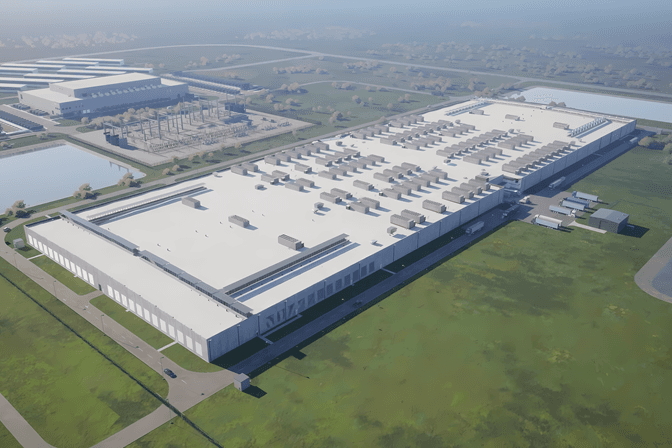
Applied Digital Corporation has signed a 300-megawatt (MW) lease with an unnamed “investment-grade” hyperscaler at its Delta Forge 1 data center campus in Louisiana, according to a report from Data Center Dynamics. The deal, valued at $7.5 billion according to a separate report from Quartz, involves a customer widely assumed to be a major tech company — though Applied Digital has not disclosed the name.
The lease represents a significant chunk of the total planned capacity at Delta Forge 1, which is designed to support high-density AI workloads. The site is part of Applied Digital’s broader push into purpose-built AI data centers, moving beyond its earlier focus on cryptocurrency mining.
Key Numbers
Lease capacity 300 MW Total reported deal value $7.5 billion Customer type Investment-grade hyperscaler (unnamed) Location Delta Forge 1, LouisianaContext
Applied Digital has been pivoting aggressively toward AI infrastructure. The company previously operated primarily as a Bitcoin mining host, but rising energy costs and the post-halving squeeze on margins pushed it to repurpose its sites for AI and HPC workloads. The Louisiana campus is one of several projects in its pipeline, alongside facilities in North Dakota and Texas.
The $7.5 billion figure, if accurate, would make this one of the largest single data center leases on record. For comparison, a typical hyperscale lease in the 100–200 MW range often runs into the low billions over a 10–15 year term. The high per-MW value here suggests either a long lease duration, premium pricing for AI-ready power and cooling, or both.
What This Means in Practice
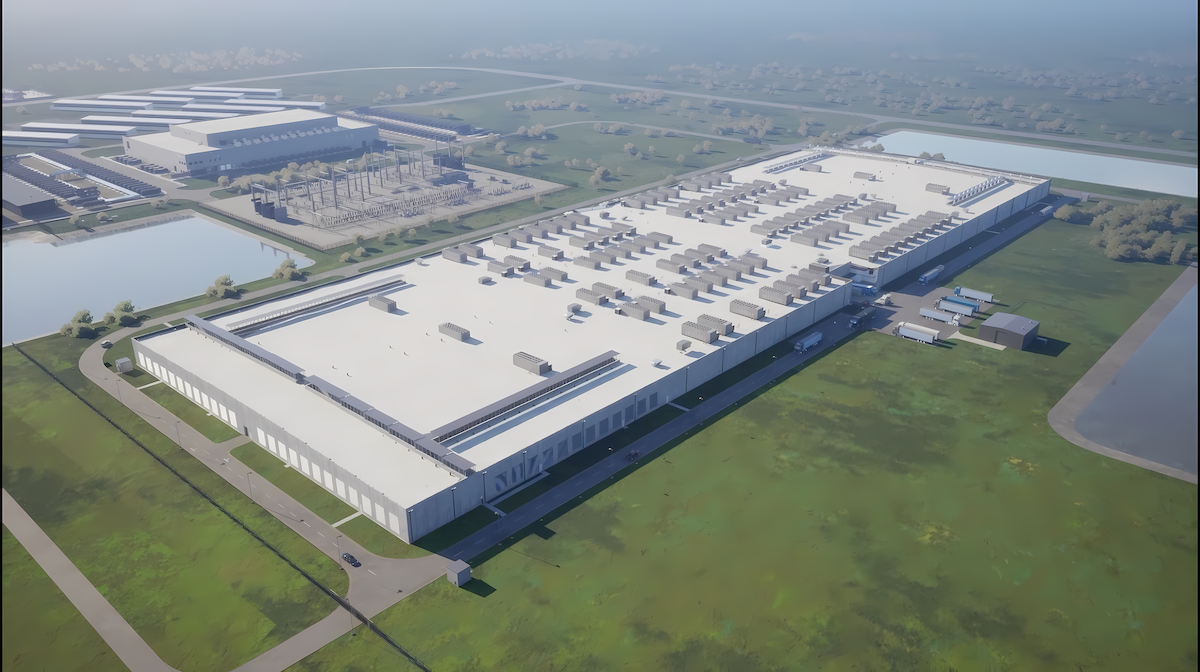
Hyperscalers are scrambling to secure large blocks of power capacity, especially in regions with available grid interconnection and favorable permitting. Louisiana offers relatively low electricity rates and a business-friendly regulatory environment, making it attractive for energy-intensive AI training clusters. Applied Digital’s ability to land a 300MW commitment signals that its pivot is gaining traction with top-tier cloud and AI companies.
Frequently Asked Questions
Who is the unnamed hyperscaler that signed the lease?
Applied Digital has not disclosed the customer’s identity, but industry speculation points to one of the major US cloud providers — Amazon Web Services, Microsoft Azure, or Google Cloud — all of which are aggressively expanding AI data center capacity. The “investment-grade” designation typically refers to companies with strong credit ratings.
How does this compare to other data center leases?
At 300 MW, this lease is among the largest single-site commitments in the current AI infrastructure boom. Most hyperscale leases range from 50–150 MW for a single building. The $7.5 billion valuation implies a per-MW cost of $25 million, which is high but plausible for a fully built-out AI facility with advanced cooling and high-density power delivery.
What is Applied Digital’s background?
Applied Digital started as a Bitcoin mining company (formerly Applied Blockchain) and has been transitioning to AI data centers since 2023. The company operates facilities in North Dakota, Texas, and Louisiana. Its pivot reflects a broader industry trend where crypto mining infrastructure is being repurposed for AI workloads due to overlapping requirements for cheap power and high-density computing.
When will the Louisiana data center be operational?
Applied Digital has not provided a specific timeline for Delta Forge 1. Typical construction timelines for large-scale data centers range from 18 to 36 months after lease signing, depending on permitting and grid interconnection lead times. The 300MW lease likely covers multiple phases.
gentic.news Analysis
This lease is the latest signal that the AI infrastructure arms race has entered a new phase — one where capacity, not just compute, is the bottleneck. Applied Digital’s ability to secure a $7.5 billion commitment from an unnamed hyperscaler underscores the premium that cloud providers are willing to pay for ready-or-nearly-ready power capacity in locations with available grid interconnection.
The Louisiana site benefits from the state’s relatively low industrial electricity rates (around 6–7 cents/kWh versus 10–12 cents in many other regions) and a regulatory environment that expedites permitting for large energy users. This follows a pattern we’ve seen with other AI data center projects in the US Southeast and Midwest, where hyperscalers are placing large bets on regions with cheap power and willing utilities.
From a competitive standpoint, Applied Digital is racing against other AI infrastructure plays like CoreWeave, Crusoe Energy, and Lancium, all of which are building large-scale AI data centers. The key differentiator will be execution — whether Applied Digital can deliver the facility on time and on budget, and whether it can secure additional capacity at other sites. The $7.5 billion figure also raises questions about financing: Applied Digital will need to raise significant capital to build out the site, likely through a combination of debt, equity, and customer prepayments.
For AI practitioners, this deal reinforces a simple reality: training frontier models requires not just algorithmic innovation, but massive physical infrastructure. The availability of power and data center space is becoming a strategic constraint, and companies that control that infrastructure will have leverage in the AI supply chain.