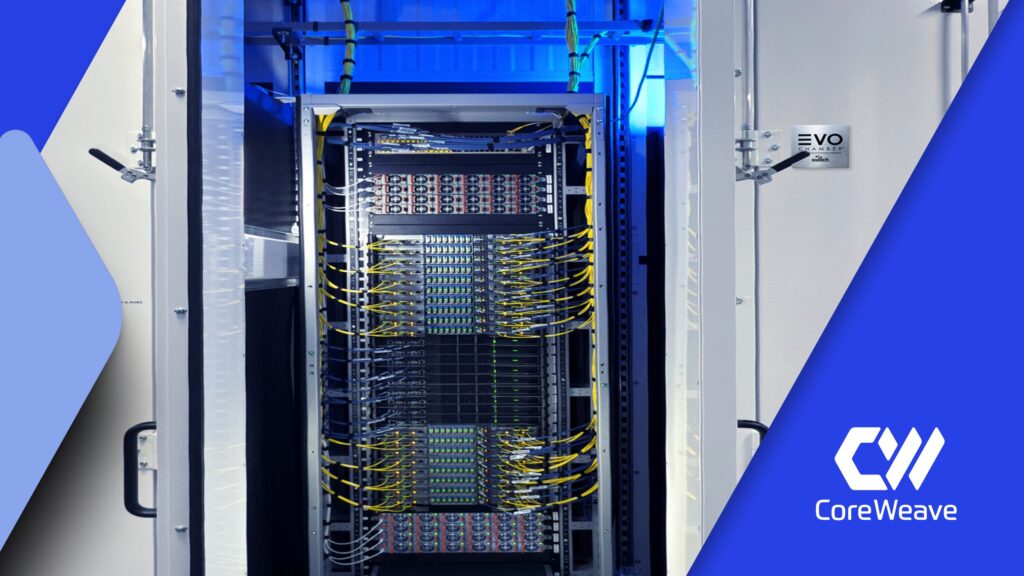
In a move that underscores the staggering capital intensity of the AI infrastructure race, GPU cloud provider CoreWeave and tech giant Google have jointly raised $6.7 billion through a high-yield debt offering, according to a report. The offering, structured as a private placement of junk bonds, saw Google raise the lion's share at $5.7 billion, with CoreWeave securing the remaining $1 billion.
This capital injection is explicitly targeted at accelerating the construction and provisioning of data centers to host next-generation AI workloads. The use of high-yield "junk" bonds—debt with a lower credit rating and higher interest rate due to perceived greater risk—highlights the aggressive, growth-at-all-costs financing strategy both companies are employing to capture market share in the AI compute layer.
Key Takeaways
- Google and GPU cloud provider CoreWeave have jointly raised $6.7 billion through a junk bond offering, with Google taking $5.7 billion.
- The capital is earmarked for a significant build-out of AI data center infrastructure.
The Deal Structure

The $6.7 billion offering was a private placement of senior secured notes, a common instrument for large-scale corporate debt. The "junk" designation (typically below investment grade: BB+ or lower by S&P, or Ba1 or lower by Moody's) indicates that lenders are demanding a higher yield to compensate for the perceived risk associated with the companies' aggressive expansion plans. For context, investment-grade corporate bonds for a firm like Microsoft might yield around 5-6%, while high-yield offerings can command 8-12% or more.
- Google's Portion: $5.7 billion. This debt is likely earmarked for its own AI infrastructure build-out, which includes its Tensor Processing Unit (TPU) pods and GPU clusters powering Google Cloud, Gemini, and other internal AI services.
- CoreWeave's Portion: $1 billion. This capital will fuel CoreWeave's rapid expansion of its GPU-as-a-service cloud, which is built almost exclusively on NVIDIA H100, H200, and Blackwell architecture GPUs.
What the Capital Funds: An AI Infrastructure Sprint
The funds are not for general corporate purposes but are specifically tied to building physical data center capacity. This involves:
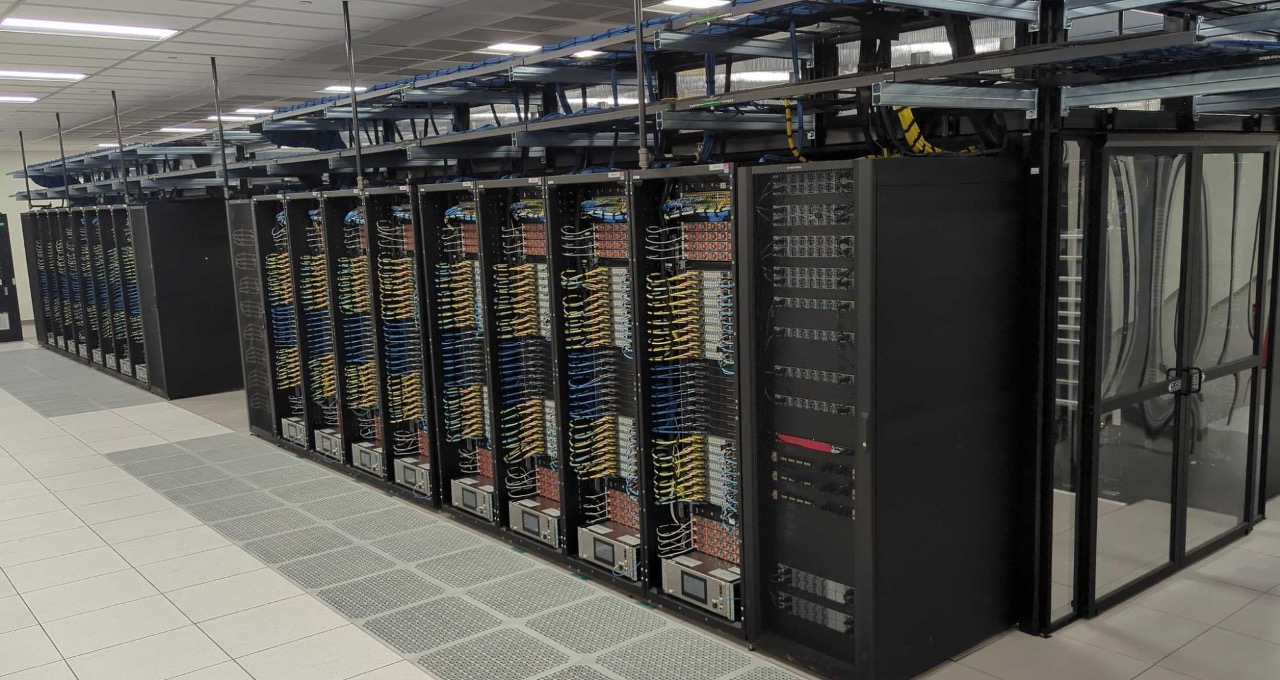
- Procuring Hardware: Bulk purchases of NVIDIA GPUs, networking equipment (like InfiniBand), and servers.
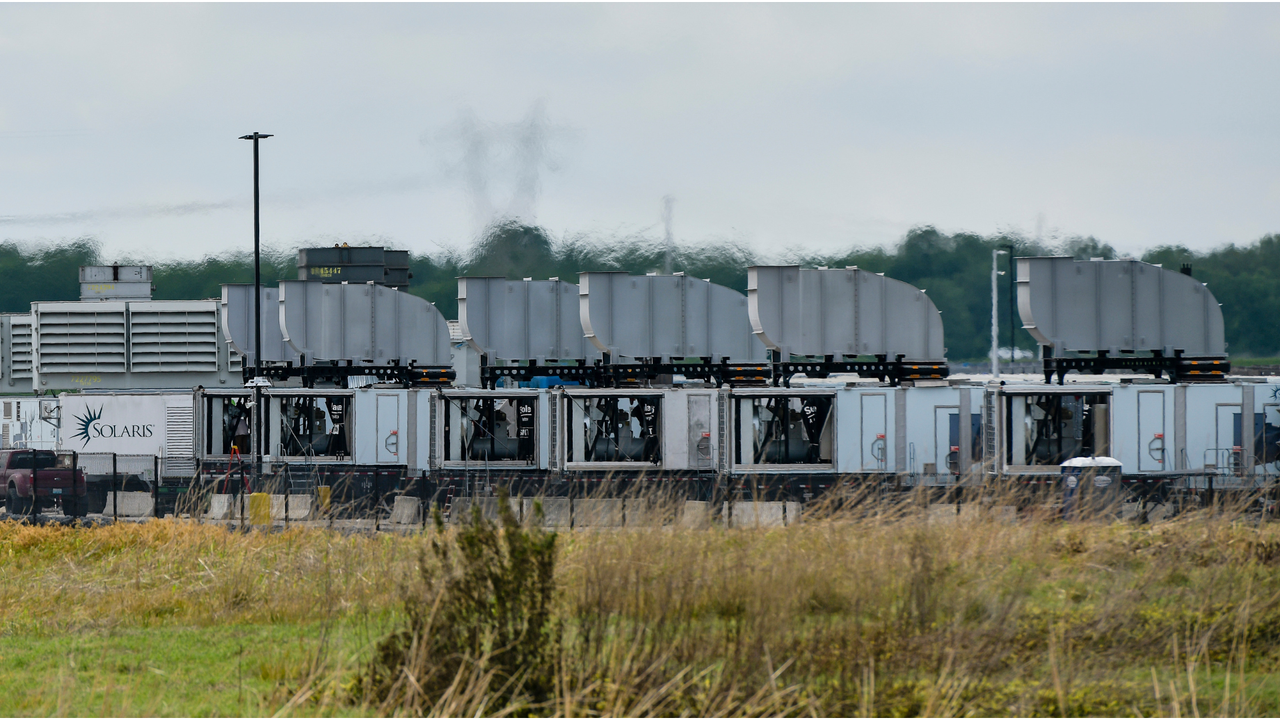
- Constructing Facilities: Building or leasing data center space, which includes significant costs for power infrastructure and cooling systems.
- Operational Scaling: Hiring technical staff and covering pre-revenue operational costs for new facilities coming online.
For CoreWeave, this follows a breakneck fundraising trajectory. The company was valued at $19 billion in its last equity round. This $1 billion debt raise adds to its war chest without further diluting equity, a strategic move to finance hyper-growth.
For Google, the $5.7 billion debt raise is a tactical component of its broader $50 billion capital expenditure plan for 2026, the majority of which is directed toward AI and cloud infrastructure. It allows Google to leverage debt markets alongside its massive cash reserves to outspend competitors on physical capacity.
The Competitive Context: Why Junk Bonds?
The choice of high-yield debt is a clear signal:
- Speed Over Cost of Capital: Both companies prioritize rapid expansion over minimizing financing costs. The AI compute market is seen as a land-grab opportunity where being first and biggest can create durable moats. They are willing to pay higher interest rates to get capital immediately.
- Market Confidence in AI Growth: Despite the "junk" label, the successful placement of $6.7 billion indicates strong institutional investor belief in the long-term revenue growth of AI cloud services. Lenders are betting that the future cash flows from AI workloads will comfortably cover the debt payments.
- Direct Competition with Azure and AWS: Google Cloud is in a fierce battle with Microsoft Azure (and its partner OpenAI) and Amazon Web Services. CoreWeave, while a partner to all three, is also a competitor in the high-performance GPU cloud niche. This capital raise intensifies the spending war.
gentic.news Analysis
This junk bond offering is a definitive milestone in the AI infrastructure phase, moving it from a venture-capital-funded experiment to a debt-market-financed industrial build-out. The sheer scale—$6.7 billion in a single debt placement—rivals the largest tech LBOs and signals that Wall Street is now the primary bankroller for the AI hardware race.
Connecting to the broader timeline, this move is a direct escalation. It follows CoreWeave's $7.5 billion debt facility secured in late 2025 and Google's parent Alphabet's $10 billion bond issuance in early 2026. The trend is clear: equity funding established the players (like CoreWeave's $19B valuation), and now debt funding is financing the execution. This aligns with our previous coverage on Microsoft and OpenAI's "Stargate" data center project, rumored to cost over $100 billion. The entire industry is engaging in parallel, massive capital commitments, betting that AI demand will scale to fill this unprecedented supply.
For AI practitioners and companies, the implication is twofold. First, compute capacity will become more available but also more concentrated among a few well-funded giants and specialists like CoreWeave. Second, the cost of this capital will eventually factor into cloud pricing models. The high interest rates on this debt create pressure to monetize infrastructure efficiently, which could influence future pricing for GPU instances. The era of "cheap" AI training, subsidized by equity-funded growth, may be giving way to an era where the full capital cost is reflected in usage fees.
Frequently Asked Questions
What is a junk bond offering?
A junk bond, or high-yield bond, is a type of corporate debt that carries a higher risk of default than investment-grade bonds. Because of this increased risk, they offer higher interest rates to attract investors. Companies often use them to raise large amounts of capital quickly for aggressive expansion, acquisitions, or other major projects.
Why would Google, a cash-rich company, use junk bonds?
While Google's parent Alphabet has over $100 billion in cash, raising debt is a strategic financial tool. It allows Google to fund massive, specific capital expenditures (like $50B in 2026 Capex) without depleting its cash reserves, which are used for other purposes like stock buybacks, acquisitions, and operational flexibility. Using debt also can be more tax-efficient due to interest deductibility.
How does this affect the AI model development landscape?
This massive infrastructure build-out primarily benefits large-scale model training and inference. It means more GPU capacity will be available for rent, potentially reducing wait times and increasing availability for companies training frontier models. However, it also raises the stakes, as the companies controlling this capital-intensive infrastructure (Google, CoreWeave, Microsoft, AWS) will wield significant power over the cost and access to the computational engine of AI.
Is CoreWeave a competitor or partner to Google Cloud?
The relationship is complex and embodies "coopetition." CoreWeave is a partner—it runs a significant portion of its infrastructure on Google Cloud's underlying platform. However, CoreWeave also directly competes with Google Cloud's own GPU offerings (A3 VMs, TPU v5p) by providing a specialized, NVIDIA-focused cloud service. Google benefits from selling underlying cloud resources to CoreWeave, while also competing with them for end-customer AI workload dollars.