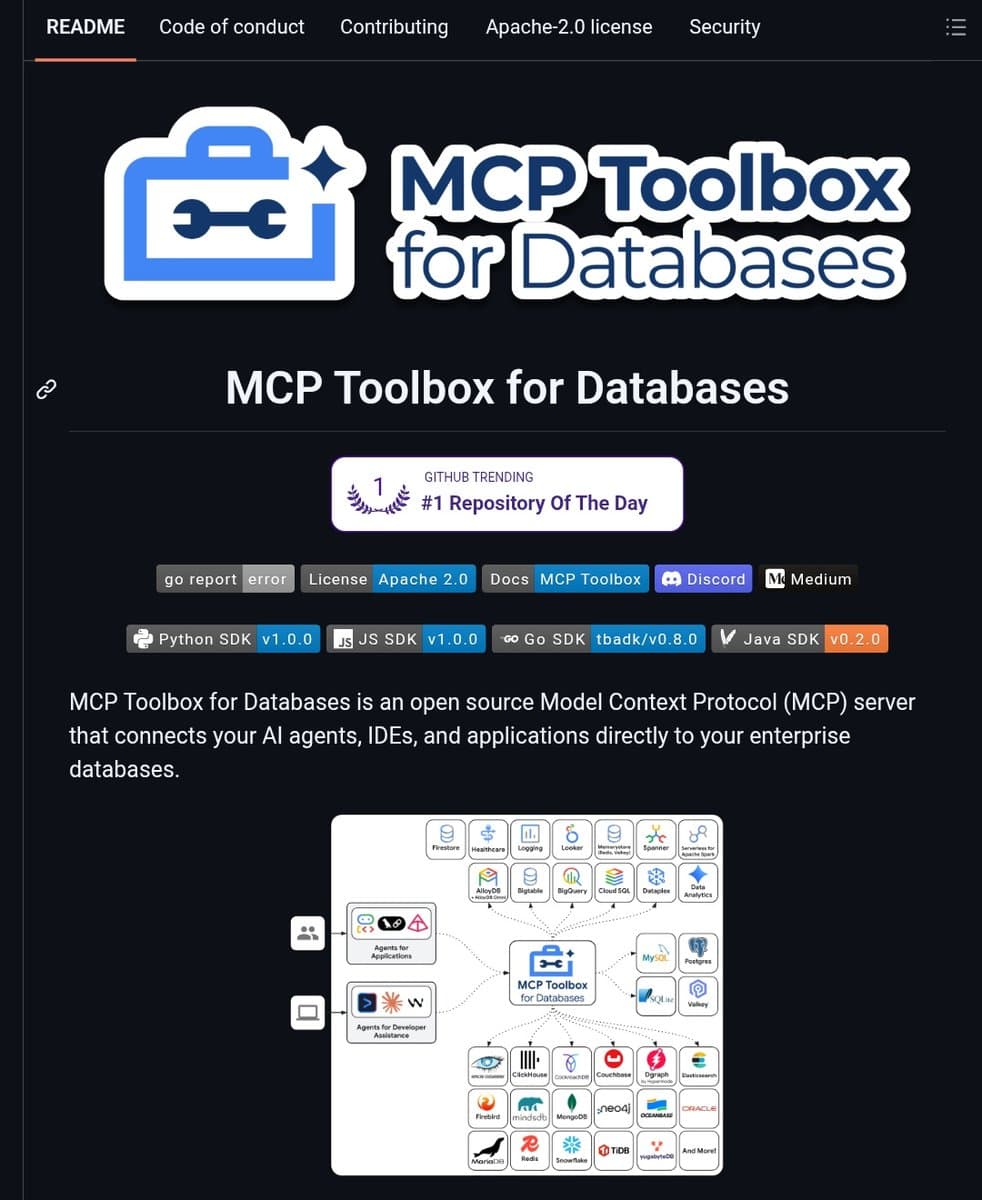
Google has released an open-source tool designed to eliminate one of the most tedious parts of building production AI agents: connecting them to live, enterprise data. The MCP Toolbox is a Model Context Protocol (MCP) server that gives AI agents direct, secure access to over 20 types of databases—including Postgres, MySQL, MongoDB, BigQuery, and Snowflake—using plain English queries, with built-in connection pooling, authentication, and observability.
The announcement, made via the @_vmlops X account, positions the toolbox as a solution to the custom connector and boilerplate code problem that plagues agent development. The core promise is operational simplicity: developers can equip an agent with full database interaction capabilities in less than 10 lines of code.
Key Takeaways
- Google released MCP Toolbox, an open-source server that connects AI agents to enterprise databases like Postgres and BigQuery using plain English.
- It requires less than 10 lines of code and works with LangChain, LlamaIndex, and any MCP-compatible client.
What's New: From Custom Connectors to Declarative Access

MCP Toolbox isn't another ORM or a new query language. It's an implementation of the Model Context Protocol (MCP), an open standard spearheaded by Anthropic for securely connecting LLM applications to external data sources and tools. By packaging database connectivity as a standardized MCP server, Google has abstracted away the need for developers to write and maintain custom integration code for each database their agent might need to touch.
Key features include:
- Broad Database Support: Immediate support for major SQL (Postgres, MySQL, Spanner), NoSQL (MongoDB, Redis), and cloud data warehouses (BigQuery, Snowflake).
- "Plain English" Queries: Agents can formulate natural language requests (e.g., "get last month's top 10 customers by revenue"), which the toolbox translates into the appropriate database query.
- Built-in Production Essentials: Connection pooling, authentication handling, and OpenTelemetry integration for tracing are included out-of-the-box.
- Framework Agnostic: Works with popular agent frameworks like LangChain and LlamaIndex, Google's own GenKit, and any other MCP-compatible client.
Technical Details: The MCP Standard as the Enabler
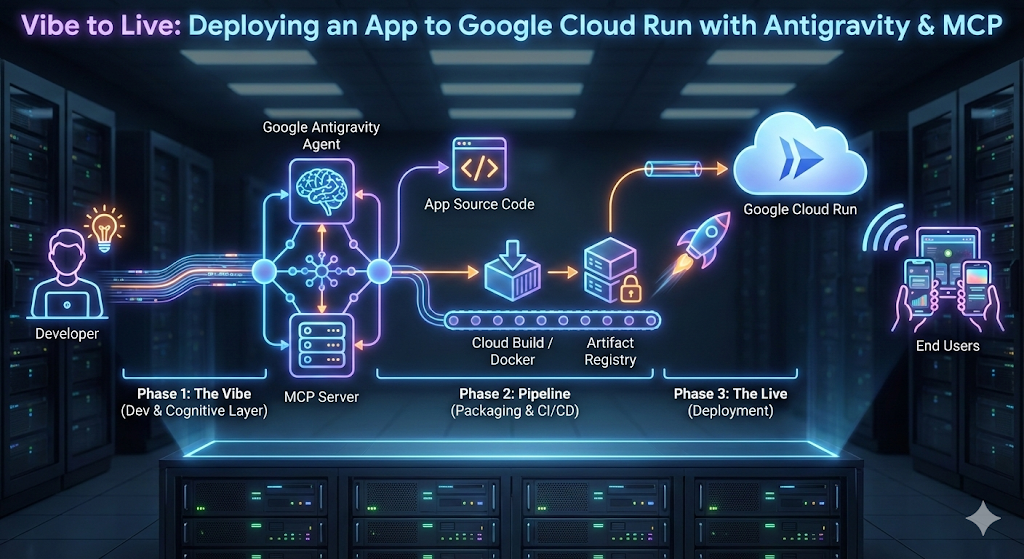
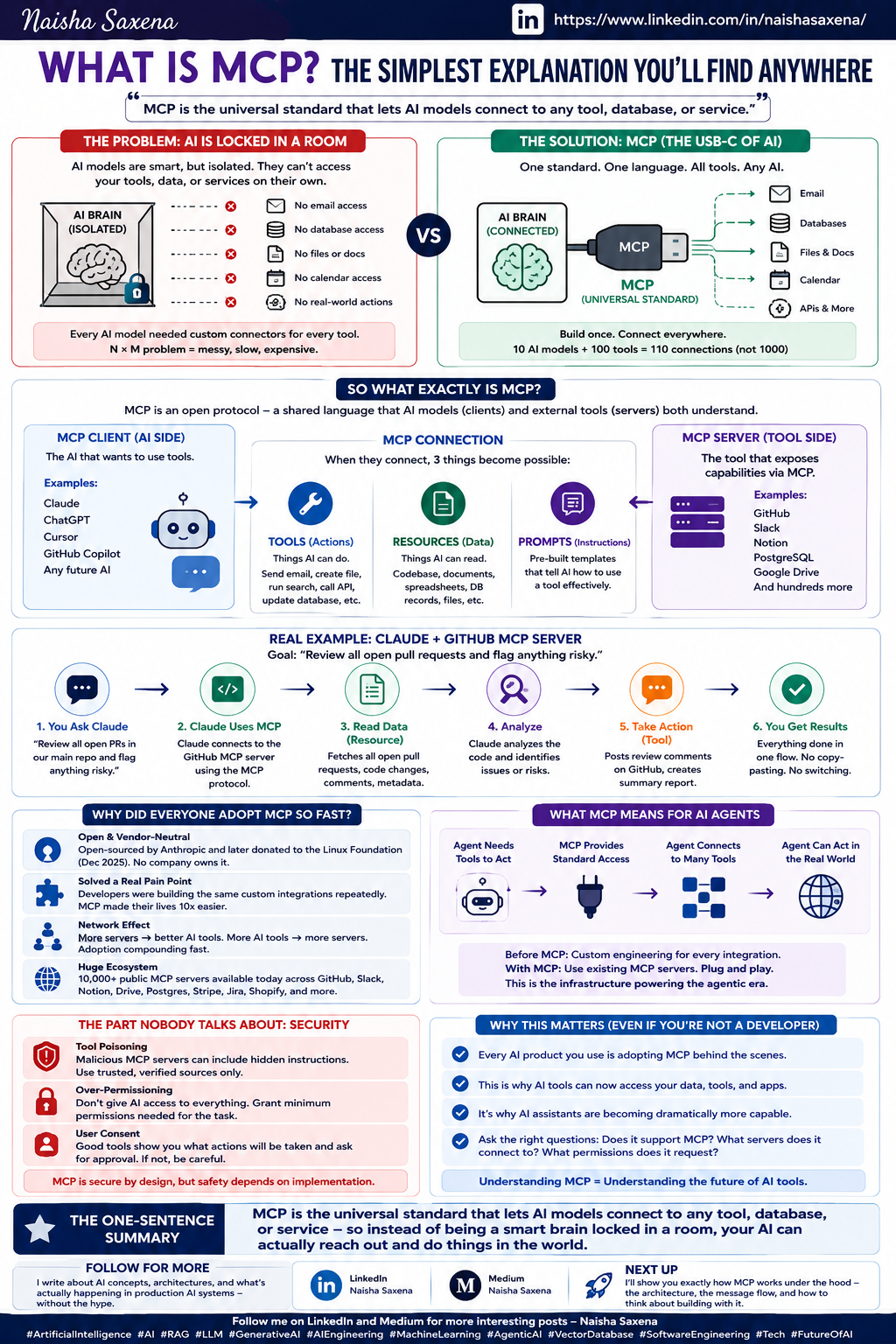
The technical leverage point is the Model Context Protocol. MCP defines a standardized way for a "client" (like an LLM or an agent runtime) to discover and call "tools" or access "resources" provided by a "server." The MCP Toolbox is such a server, exposing database operations as a set of discoverable tools.
A developer integrates it by configuring a simple connection file and adding the MCP server to their client. The client (e.g., a LangChain agent) then dynamically learns it can call tools like sql_query or mongodb_find, with the MCP Toolbox handling the translation, execution, and secure credential management.
# Example simplified configuration
servers:
  toolbox:
    command: "npx"
    args: ["-y", "@google-labs/mcp-toolbox"]
    env:
      DB_CONNECTIONS: "./connections.yaml"
How It Compares: Reducing the Integration Tax
Previously, giving an AI agent database access required choosing a path, each with significant overhead:
Custom API Endpoints High (build full CRUD APIs) High (maintain APIs & schemas) Medium ORM/SDK in Agent Code Medium (write integration logic) High (update for DB changes) Low GraphQL Layer Very High (define schema & resolvers) High (maintain GraphQL layer) High MCP Toolbox Low (<10 lines config) Low (centralized server) High (20+ DBs)The toolbox shifts the paradigm from programmatic integration to declarative connectivity. The developer declares what databases are available, and the agent framework dynamically acquires the capability to use them.
What to Watch: Security, Complexity, and Performance

While dramatically simplifying setup, using a tool like this introduces new considerations:
- Security & Permissions: Granting an LLM agent the ability to generate and execute arbitrary queries is a potent capability. The built-in auth and connection pooling help, but fine-grained, query-level permission models will be critical for enterprise use. The onus is on developers to configure database credentials with appropriately scoped privileges.
- Query Accuracy & Cost: The translation from "plain English" to SQL or other query languages is a non-trivial NLP task. Inefficient or incorrect generated queries could lead to performance bottlenecks or unexpected data costs, especially on cloud warehouses like BigQuery and Snowflake that charge by compute.
- Abstraction Limits: For highly complex, multi-join analytical queries or stored procedures, the natural language interface may hit limits, requiring developers to drop down to writing direct queries or extending the toolbox.
gentic.news Analysis
This move by Google is a tactical play in the infrastructure layer of the AI agent stack. It follows a clear pattern of major cloud providers releasing open-source tools that reduce friction in building on their ecosystems. By open-sourcing MCP Toolbox under the Apache 2.0 license and supporting competitors like Snowflake and AWS's databases, Google is betting that making agent development easier for everyone will drive more overall usage of LLMs and, by extension, cloud infrastructure—a rising tide that lifts all boats, but particularly Google Cloud Platform (GCP) with its native support for BigQuery and Spanner.
Technically, it's a significant endorsement of the Model Context Protocol. Since Anthropic introduced MCP, its adoption has been growing as a neutral standard for tool use. Google's implementation for databases could be the catalyst that pushes MCP from a promising spec to a de facto standard for agent tooling, much like REST became for APIs. This aligns with the trend we covered in our analysis of [The 2025 Agent Stack: From Monolithic LLMs to Specialized Tools], where we predicted the emergence of standardized "tool layers" as a key inflection point.
For practitioners, the immediate takeaway is the drastic reduction in the "integration tax" for data-aware agents. The long-term implication is that the competitive edge in agent development will shift even further away from basic connectivity and toward the sophistication of the agent's core reasoning, task orchestration, and security posture. The hard parts are becoming harder, and the previously hard parts—like talking to a database—are becoming commoditized.
Frequently Asked Questions
What is the Model Context Protocol (MCP)?
The Model Context Protocol is an open protocol developed by Anthropic that allows Large Language Model applications to connect to external data sources, tools, and services in a standardized, secure way. It uses a client-server model where servers (like the MCP Toolbox) expose capabilities, and clients (like an AI agent) can dynamically discover and use them.
Does MCP Toolbox work with OpenAI's GPTs or Microsoft's Copilot Studio?
Not directly. These are closed, proprietary agent platforms. MCP Toolbox works with MCP-compatible clients. This includes open-source frameworks like LangChain and LlamaIndex, where you build your own agent, and Google's GenKit. For proprietary platforms, you would need them to adopt the MCP standard on their client side, or you would need to build a custom middleware layer.
How does the "plain English to query" translation work? Is it accurate?
The translation is performed by the LLM powering your agent, not by the MCP Toolbox itself. The toolbox provides the agent with the necessary context (like database schemas) and a standardized tool interface. The agent's LLM (e.g., GPT-4, Claude 3) then generates the appropriate query syntax. Accuracy depends entirely on the capabilities of that core LLM and the quality of the schema context provided. For simple queries, it is highly reliable; for very complex ones, it may require iteration or human-in-the-loop validation.
Is my database connection information secure with MCP Toolbox?
The MCP Toolbox runs as a server that you control, typically in your own environment. Database credentials are configured in a connections file on that server. The protocol is designed to keep sensitive data off the client. However, as with any system, security depends on proper configuration: using minimal-privilege database accounts, securing the server environment, and managing credentials via a secret manager (not hard-coded files) in production.