The Innovation — What the source reports
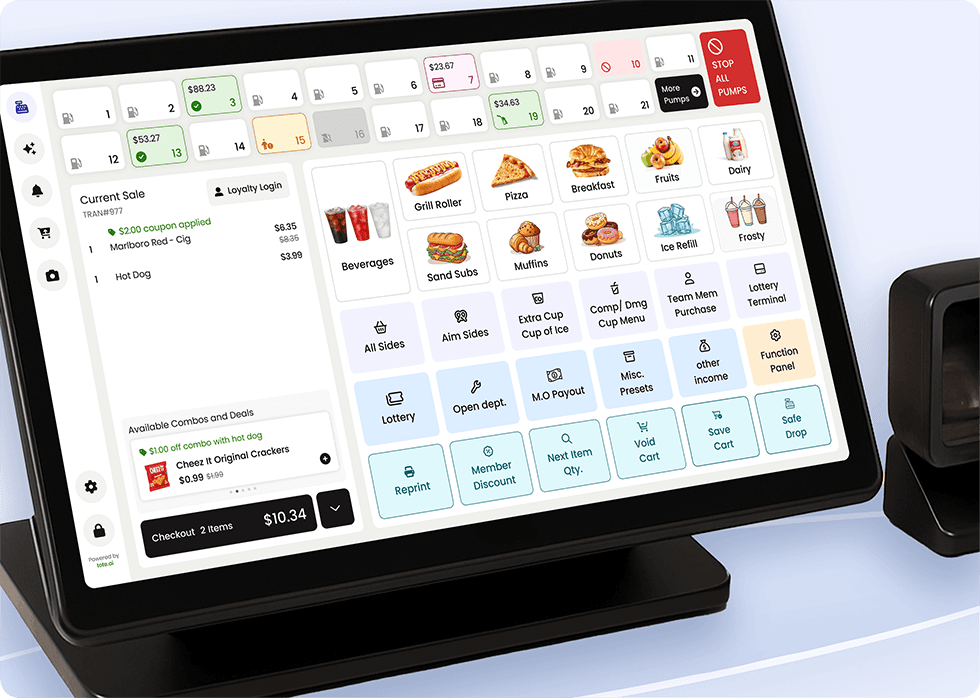
Loop Neighborhood Markets, a convenience store chain, has begun providing AI agents to its store associates. While the source article is brief, the announcement itself is significant. It signals a shift from internal, back-office AI pilots to deploying agentic AI directly into the hands of frontline retail staff. The specific capabilities of these agents—whether for inventory queries, customer service support, or task management—are not detailed, but the operational intent is clear: to augment human workers with autonomous AI assistance.
Why This Matters for Retail & Luxury
For luxury and premium retail, where high-touch service and deep product knowledge are paramount, the implications are nuanced. An AI agent for a store associate is not about replacing the personal stylist or concierge; it's about empowering them with instant, vast institutional knowledge.
Concrete scenarios include:
- Instant Product Intelligence: An associate helping a client with a rare leather handbag can query the agent for detailed material sourcing, craft techniques, or inventory availability across the global network without leaving the client's side.
- Cross-Selling & Clienteling: Based on a client's purchase history and profile (with proper governance), the agent could suggest complementary items or limited-edition releases, providing the associate with talking points to enhance the personalized experience.
- Operational Efficiency: Checking stockroom inventory, scheduling alterations, or processing complex returns can be handled through natural language conversation with the agent, freeing the associate to focus on the client.
Business Impact
The business impact hinges on measurable improvements in associate productivity, sales conversion, and client satisfaction scores. While Loop's specific metrics are not public, the potential is in reducing time spent on administrative lookup tasks and increasing the quality of client interactions. For luxury brands, the ROI may be less about cost savings and more about elevating the consistency and depth of service, ensuring every client interaction is informed and premium.
Implementation Approach
Deploying this requires a robust technical stack: a capable underlying LLM (potentially from providers like Google, Anthropic, or OpenAI, all of whom are active in the agent space), secure integration with internal systems (ERP, CRM, PIM), and a simple, reliable interface for associates, likely a mobile app or dedicated device. The complexity is high, involving data security, real-time system connectivity, and rigorous testing to ensure the agent's responses are accurate and brand-appropriate.
Governance & Risk Assessment
This is a high-stakes implementation. Risks are substantial:
- Privacy & Data Security: Client data must be rigorously protected. The agent must operate within strict data access controls.
- Brand Voice & Accuracy: Hallucinations or tone-deaf responses from the AI could damage brand equity. The system requires extensive grounding in brand-approved knowledge and guardrails.
- Maturity Level: As noted in our prior coverage, Google DeepMind recently mapped six 'AI Agent Traps' that can hijack autonomous systems. This underscores that the technology, while advancing rapidly, requires careful monitoring and human-in-the-loop safeguards, especially in a high-value retail environment. The industry consensus, reflected in our Knowledge Graph, is that 2026 is seen as a breakthrough year for AI agents, but production deployments are still pioneering.
gentic.news Analysis
This deployment by Loop Neighborhood Markets is a data point in the accelerating trend of AI Agents moving from research and development into real-world commerce. It follows the industry-wide prediction we've tracked that 2026 is a breakthrough year for AI agents across all domains. The move aligns with deployments by other commerce platforms like Shopify, which we've noted also utilizes AI agents, indicating a broader pattern of adoption.
The competitive landscape for the underlying technology is fierce. Our entity relationships show Google, Anthropic, and OpenAI are key players whose models power these agents. Google's significant infrastructure investments, like its $5B+ Texas data center for Anthropic, highlight the scale required to support widespread agent deployment. For retail leaders, the choice of AI infrastructure partner becomes a strategic decision, as it influences cost, capability, and roadmap.
This story is less about a singular technological breakthrough and more about a bold operationalization. It provides a concrete reference for luxury retail VPs asking, "Where are AI agents being used today?" The answer is now: on the shop floor. The challenge for luxury is to implement this powerful tool without compromising the human artistry and exclusivity that defines the sector. Success will depend on designing agents that act as invisible, omniscient assistants to the associate, not as replacements for them.