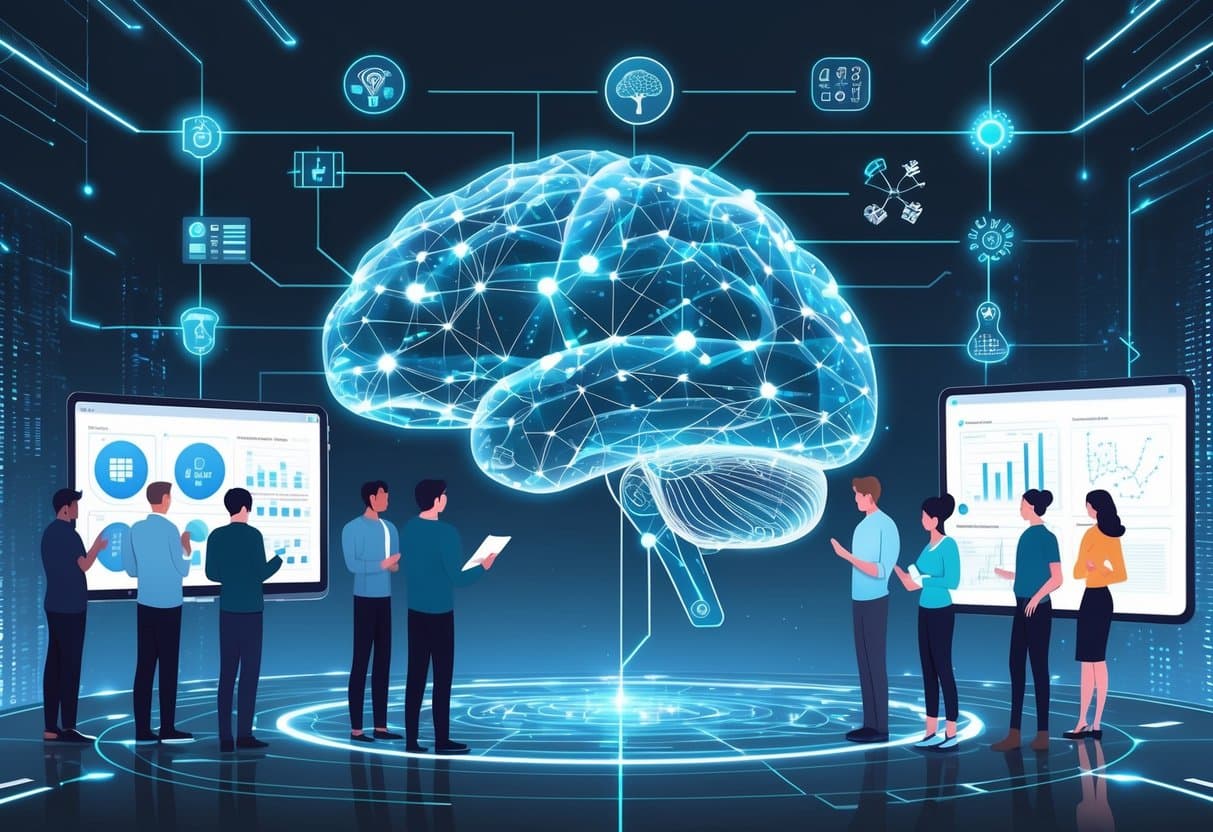
A stark warning is emerging from top academic institutions: the pervasive use of generative AI may be actively eroding the foundational cognitive skills of young adults. Recent findings, highlighted in a viral social media thread, point to a correlation between AI assistance and the lowest critical thinking scores ever recorded for individuals aged 17–25.
What the Studies Found

The core claim, attributed to researchers at MIT and Harvard, describes a phenomenon termed "cognitive atrophy." The data suggests a direct, negative relationship between AI tool usage and core intellectual capacities:
- Critical Thinking: Scores for 17–25 year olds have hit historic lows.
- Creativity: A Harvard study found that the most frequent AI users scored the lowest in creativity assessments.
- Self-Awareness: In a telling statistic, 67% of students surveyed admitted they believe AI is harming their ability to think. Many report knowing the negative impact is occurring but feel unable to change their behavior.
The analogy drawn is to GPS and spatial reasoning: neuroimaging studies have shown that habitual use of GPS navigation can lead to a reduction in the hippocampus, the brain region responsible for spatial memory and navigation. The concern is that over-reliance on AI for reasoning and problem-solving could similarly diminish the neural circuits dedicated to critical thought.
The Student Perspective: "You Don't Need to Use Your Brain"
The human element of this trend was captured in a student's quote featured on NPR: "you don't need to use your brain." This sentiment encapsulates the core risk—that AI, as a powerful cognitive outsourcing tool, can disincentivize the mental effort required to build and maintain robust reasoning skills. The thread concludes with a provocative generational claim: "we are the last generation that was forced to think without AI."
gentic.news Analysis
This social media thread aggregates concerns that have been simmering in educational and cognitive science circles since the launch of ChatGPT in late 2022. The term "cognitive atrophy" formalizes a fear that has driven numerous school districts and universities to initially ban, then grapple with, AI in the classroom. This aligns with our previous coverage on the "Jailbreak Benchmark" and LLM persuasion studies, which detailed how easily AI can shape reasoning and provide authoritative, yet incorrect, answers.
The reference to GPS and neuroplasticity is a critical, evidence-based analogy. It roots a speculative fear in a proven neurological precedent: tools that consistently offload a cognitive task can lead to measurable changes in brain structure and function. If generative AI becomes the default "first resort" for writing, coding, and analysis, the long-term impact on developing brains could be profound.
However, this narrative, while compelling, presents a correlation, not definitive causation. It raises essential questions for practitioners: Are we measuring the right skills in a world with AI? Is the goal to preserve pre-AI cognitive benchmarks, or to evolve our understanding of "intelligence" to include skillful collaboration with AI agents? The challenge for educators and developers is to create frameworks for "cognitive resilience"—using AI to augment rather than replace deep thinking. The next phase of EdTech and AI development must address this directly, or risk architecting a genuine crisis in human intellectual capital.
Frequently Asked Questions
What is "cognitive atrophy" in the context of AI?
"Cognitive atrophy" is a term used by researchers to describe the hypothesized weakening of critical thinking and reasoning skills due to over-reliance on artificial intelligence. It suggests that when AI consistently performs tasks like writing, analysis, and problem-solving, the corresponding neural pathways in the human brain may weaken from lack of use, similar to how muscle tissue atrophies without exercise.
Did MIT and Harvard publish a joint study on AI and critical thinking?
The viral thread attributes findings to MIT and Harvard. While specific, recent joint publications on this exact topic are not cited, both institutions have active research groups studying the impacts of AI. MIT's Initiative on the Digital Economy and Harvard's Berkman Klein Center have published related work on technology's societal effects. The core claim likely synthesizes observations from ongoing research at these and other institutions into a cohesive warning.
How does AI affect creativity according to these studies?
The referenced Harvard finding indicates that among students studied, those who used AI the most frequently scored the lowest on standardized assessments of creativity. This suggests that using AI as a primary idea-generation tool may short-circuit the personal struggle and associative thinking processes that are fundamental to creative innovation, potentially leading to a dependency that stifles original thought.
Is the damage from AI use permanent, like the GPS effect on the brain?
The neuroscience of neuroplasticity indicates that the brain remains adaptable throughout life. The changes observed in GPS users' hippocampi demonstrate that skills can diminish with disuse but also can be rebuilt with renewed practice. This suggests that while AI reliance may lead to a decline in certain reasoning skills, this "atrophy" is likely reversible through conscious effort, changed habits, and educational approaches that force active engagement rather than passive outsourcing.