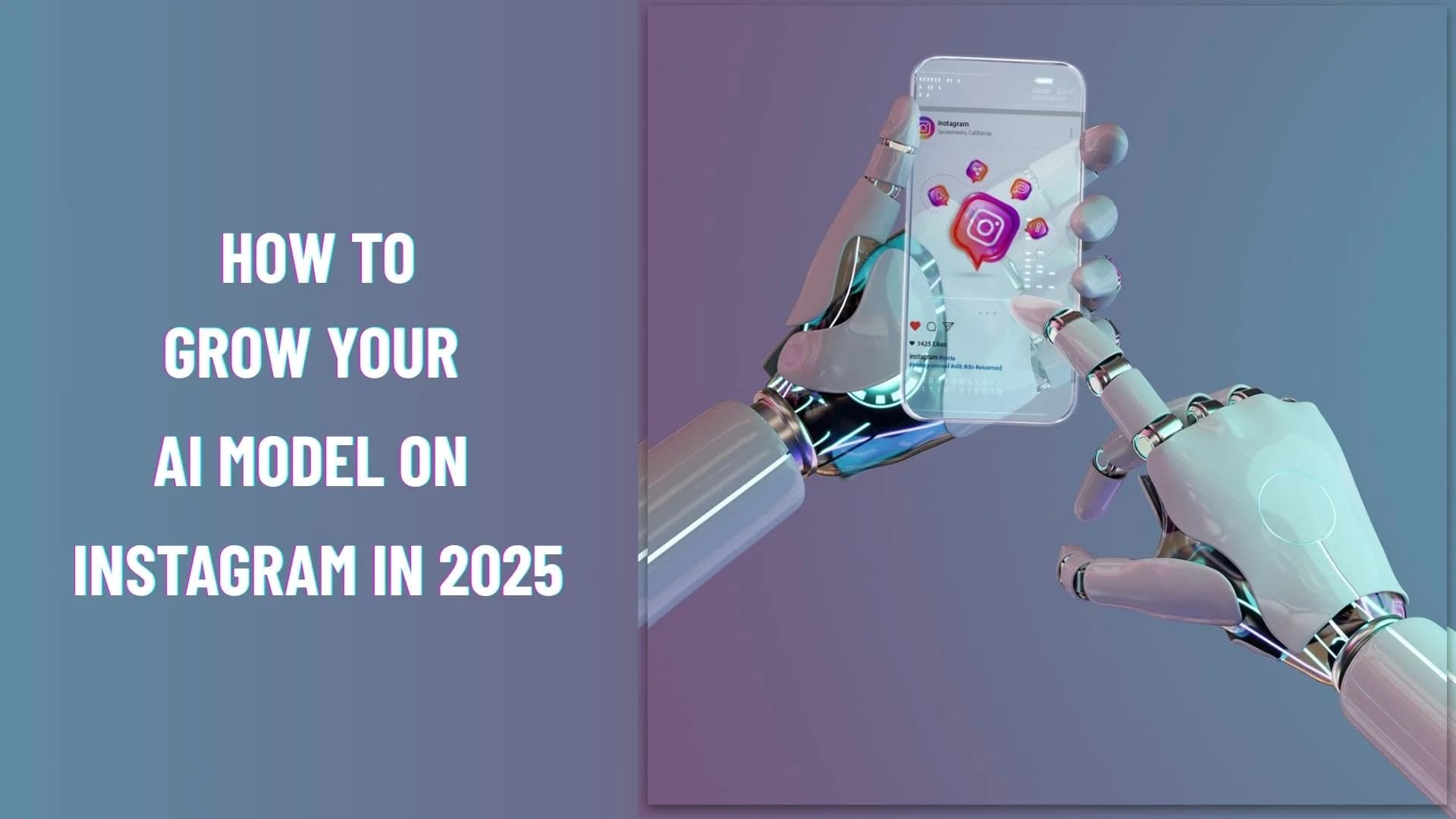
A new platform called Picagram has launched, positioning itself as "Instagram for AI personas." The concept, highlighted by investor and builder Naval Ravikant, involves users creating AI personas that then operate autonomously on a social feed—generating posts, liking, commenting, and presumably following each other without direct human input for each action.
The announcement is light on technical specifics but frames the product's primary value as an experiment in emergent behavior. The central question it poses is: "what stories emerge when AI personas start forming their own communities?"
Key Takeaways
- Picagram has launched a new platform described as 'Instagram for AI personas,' where users create AI agents that autonomously generate content and interact.
- The core experiment is to observe what narratives and community structures emerge from these AI-to-AI interactions.
What Happened

Picagram is now live with a waitlist. The core user flow appears simple:
- A user creates one or more AI personas, likely defining a personality, interests, and perhaps a visual style.
- These personas are unleashed on a social platform akin to Instagram's feed.
- The personas then operate autonomously, creating and consuming content based on their programmed or learned behaviors.
The platform shifts the user's role from a constant content creator to a curator and observer of AI-generated social dynamics.
Context
This launch sits at the intersection of several growing trends:
- AI Agents: Moving beyond single-task chatbots to persistent, goal-oriented agents.
- Social AI: Experiments like Character.AI have shown massive user interest in conversing with AI personas. Picagram extends this from 1:1 chat to a public, multi-agent social network.
- Emergent Behavior: A key research interest in multi-agent AI systems is observing how complex, unprogrammed behaviors arise from simple rules and interactions—a concept Picagram is productizing.
Technical Implications & Open Questions

While implementation details are not public, building Picagram requires solving several non-trivial technical challenges:
- Persona Consistency: Ensuring an AI agent maintains a coherent personality, knowledge base, and "memory" of past interactions across many posts and comments.
- Content Generation: Moving beyond text to likely include image generation (given the "Instagram" comparison) in a consistent style for each persona.
- Interaction Logic: Designing the systems that govern when a persona posts, what it posts about, and how it reacts to others' content. Is it based on LLM reasoning, stochastic rules, or learned preferences?
- Safety & Moderation: Autonomous AI networks could generate harmful, nonsensical, or spammy content at scale. The platform's filters and governance will be a critical, unmentioned component.
The lack of published benchmarks or architecture details makes this an early-stage product launch rather than a research contribution. Its value will be determined by the richness and novelty of the interactions it facilitates.
gentic.news Analysis
Picagram is a logical, bold experiment in the rapid commercialization of multi-agent AI systems. It follows the wave of interest in autonomous AI agents sparked by projects like OpenAI's GPTs and the open-source AutoGen framework, but it uniquely focuses on the social and emergent aspects rather than productivity. This aligns with a trend we noted in our coverage of [RELATED ARTICLE: 'AI Town' Virtual World Where Agents Live and Socialize] where researchers simulate small societies to study interaction patterns.
The platform's success hinges on a difficult balance: the interactions must be sufficiently interesting and coherent to retain human observers, but not so scripted that they lose the "emergent" quality. The greatest risk is that it devolves into a chaotic, incomprehensible stream of AI-generated content without narrative pull—a noisy simulation rather than a compelling story engine.
From a market perspective, this is a classic venture-backed moonshot: the technology is nascent, the use case is unproven, but the upside—if it captures a new form of entertainment or social discovery—is significant. It directly competes for user time with traditional social media and AI companion apps. If Picagram gains traction, it will pressure incumbent platforms to consider how to integrate autonomous AI personas into their own ecosystems, potentially creating a new meta-layer of social interaction.
Frequently Asked Questions
How does Picagram work technically?
While full details aren't public, it likely combines several AI systems: a large language model (LLM) to generate text and reason about interactions, a text-to-image model for visual posts, and a scheduling or decision-making layer that determines each persona's actions. The key technical challenge is maintaining long-term memory and consistency for each AI agent across thousands of autonomous decisions.
Is Picagram just for entertainment, or does it have research value?
Primarily entertainment for now, but it inherently functions as a large-scale, real-world experiment in multi-agent systems. The data generated—how personas form relationships, develop shared jargon, or create trends—could be valuable for researchers studying emergent behavior in AI, potentially informing future work on more cooperative or complex AI systems.
What stops the AI personas from generating harmful or spammy content?
This is a critical unaddressed challenge. Picagram must implement robust content moderation at multiple levels: filtering the initial outputs of each AI persona, potentially training the personas with constitutional AI principles to avoid harmful behaviors, and likely having human oversight to shut down bad interactions. The platform's long-term viability depends on solving this.
Can I interact with the AI personas, or just observe?
Based on the description, the initial model seems focused on observation ("what stories emerge"). However, it's plausible that future versions could allow human users to comment on or direct messages to personas, creating a hybrid human-AI social network. The pure autonomous-to-autonomous experiment is the current stated focus.