The Innovation — What Amazon Announced
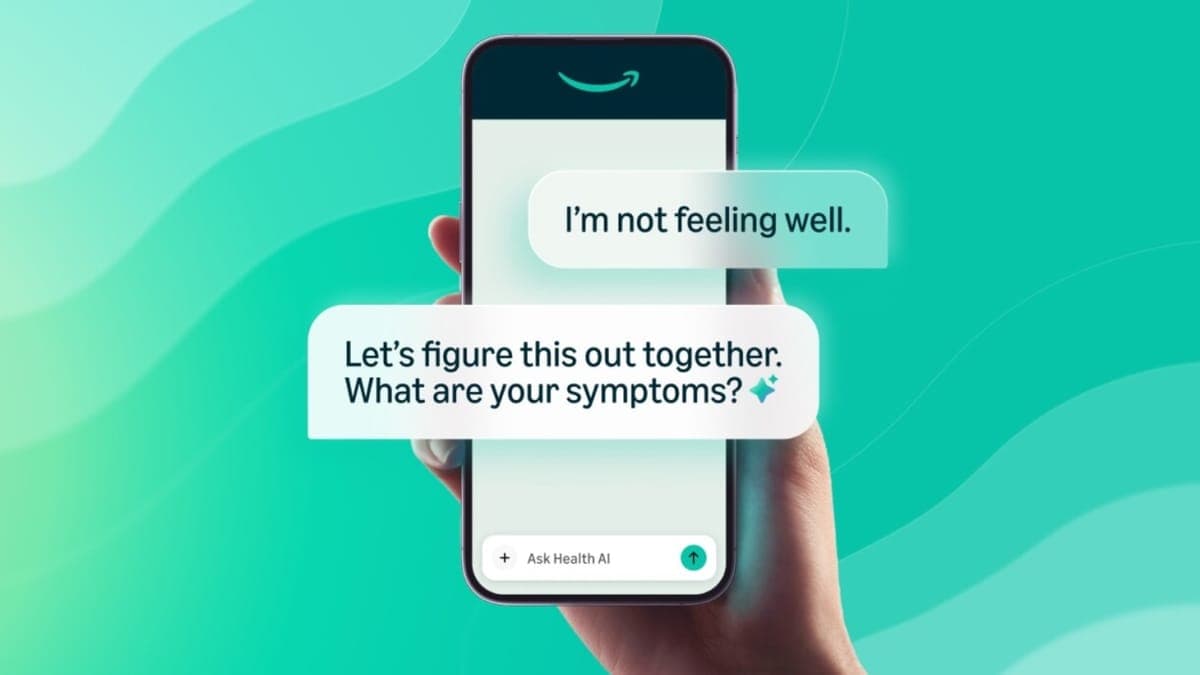
On March 10, 2026, Amazon launched a nationwide expansion of its AI-powered health assistant, making the service freely available to all U.S. customers through Amazon.com and its mobile application. Previously, this technology was restricted to paying subscribers of One Medical, the primary care network Amazon acquired in 2022.
The rollout follows a phased approach, with availability expanding over several weeks until complete national coverage is achieved. Crucially, neither an Amazon Prime subscription nor a One Medical membership is required for basic access—the core functionality is provided at no cost.
Technical Architecture & Capabilities
The health assistant operates as an agentic AI system—meaning it can perform multi-step tasks autonomously, make decisions within defined parameters, and execute actions on behalf of the user. It is built on Amazon Bedrock, the company's managed service for foundation models, which allows Amazon to leverage and potentially combine multiple large language models (LLMs) while maintaining security and scalability.
Core functionalities include:
- Medical Interpretation: Analyzing laboratory test results and medical documents to provide plain-language explanations.
- Symptom & Medication Inquiry: Addressing questions about symptoms and pharmaceuticals.
- Prescription Management: Assisting with prescription refills and renewals.
- Care Coordination: Facilitating appointment scheduling and establishing connections with healthcare providers.
The Prime Membership Tier
While basic access is free, Amazon is using the service to enhance the value proposition of its Prime membership. Qualifying Prime members receive up to five complimentary direct-message consultations for over 30 common health conditions (e.g., sinus infections, urinary tract infections, pink eye). Amazon values this benefit at approximately $145.
Non-Prime users can access the same consultation feature for $29 per non-emergency session. This creates a clear two-tiered system: free foundational Q&A and interpretation for everyone, with premium, diagnosis-oriented consultations reserved as a perk for Amazon's most valuable customers.
Why This Matters for Retail & Luxury
While this is a healthcare play, its execution and strategic implications are deeply rooted in Amazon's core retail DNA. For luxury and retail executives, this move is a masterclass in ecosystem strategy and customer data integration.
1. Redefining the Value of a Membership Program
Amazon is no longer just bundling shipping, video, and music. It is embedding essential services into Prime. For luxury retailers with membership or loyalty programs (like private client clubs), this raises the strategic question: What high-touch, high-value services can be uniquely bundled to create indispensable loyalty? Could it be AI-powered personal shopping concierges, exclusive previews, or even wellness and lifestyle management?
2. The "Agentic" Retail Interface
This health assistant is a practical example of an AI agent that doesn't just answer questions—it takes actions (schedules appointments, manages refills). In a retail context, this directly translates to the future of commerce: an AI shopping agent that doesn't just recommend a product but autonomously manages your wardrobe, replenishes staples, handles returns, and books in-store tailoring appointments based on your preferences and purchase history.
3. Data Convergence at Scale
Amazon is now positioned to correlate health and wellness data (with user consent) with retail purchasing behavior. Imagine understanding that customers buying certain skincare products also frequently inquire about dermatological issues. For luxury beauty houses, this level of holistic insight is the holy grail for hyper-personalized product development and marketing.
Business Impact & Strategic Implications
For Amazon: This move accelerates its vertical integration in healthcare, driving Prime subscriptions and increasing engagement on its core platform. It turns Amazon.com from a storefront into a life management portal.
For Competitors (Including Luxury): The bar for what constitutes a "valuable" digital relationship has been raised. Competing on product assortment and price is insufficient. The new battleground is providing contextually intelligent, agent-driven services that solve broader lifestyle problems.
Quantified Benefit: While Amazon hasn't released projected revenue figures, the model is clear: use a free, valuable service to attract users, then monetize through tiered access and, most importantly, reinforce the stickiness of its high-margin Prime ecosystem.
Implementation Approach & Technical Requirements
Deploying a similar agentic system in retail would require:
- Foundational Model Infrastructure: A managed service like Bedrock or a robust in-house LLM ops platform to handle multiple models for different tasks (e.g., vision for style, NLP for conversation).
- Action Execution APIs: Deep integration with backend systems—ERP, CRM, inventory, appointment scheduling—to allow the AI to perform real actions, not just talk.
- Orchestration Layer: Sophisticated agent frameworks to manage multi-step workflows, handle failures, and maintain context across long-running tasks (e.g., "Find me an outfit for this event, ensure it's in my size, and book a personal appointment to try it on").
- Guardrails & Compliance: Especially critical in luxury, where brand voice, discretion, and data privacy are paramount. The system must operate within strict brand and regulatory boundaries.
The complexity is significant, pointing toward partnership with cloud providers (AWS, Google Cloud, Microsoft Azure) that are rapidly developing these agentic tools.
Governance & Risk Assessment
Privacy & Data Security: This is the paramount concern. A health AI handles PHI (Protected Health Information); a luxury retail AI would handle equally sensitive data—purchase history, style preferences, body measurements, calendar events. Implementation requires zero-trust data architectures and clear, transparent user consent protocols.
Bias & Brand Safety: An AI fashion agent must avoid reinforcing harmful stereotypes. Training data and continuous monitoring are essential to ensure recommendations are inclusive and align with brand values.
Maturity Level: Agentic AI is emerging from research labs. Amazon's nationwide deployment, even in a controlled domain like common health conditions, signals growing enterprise confidence. However, luxury applications would likely start in controlled, high-value scenarios (e.g., private client concierge) before any broad rollout.
Dependency Risk: Building on a platform like Bedrock creates vendor lock-in. The alternative—building a fully custom agentic stack—is a massive undertaking likely only feasible for the largest conglomerates.
Amazon's move demonstrates that the future of digital leadership lies not in isolated apps or chatbots, but in integrated, agentic ecosystems that solve real problems. For luxury, the imperative is to start envisioning what a truly agentic, hyper-personalized brand relationship looks like—one where the AI doesn't just know your size, but understands your life.