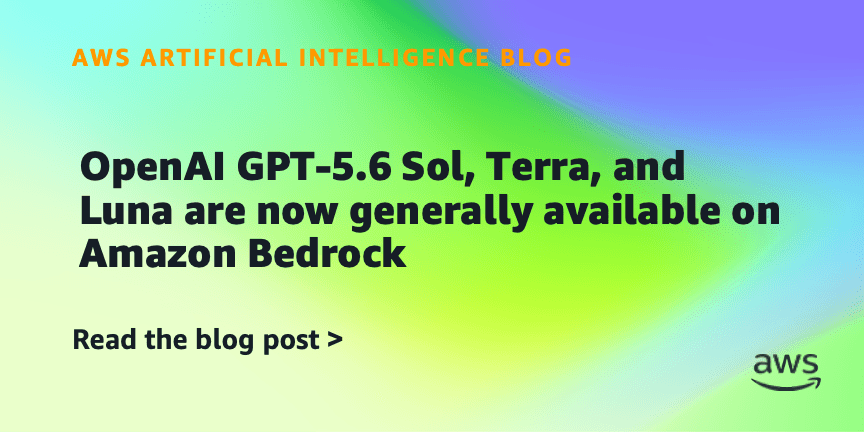
Amazon Web Services (AWS) has launched a new developer-focused portal called Generative AI on AWS. The hub, accessible at aws.amazon.com/generative-ai/, aims to be a one-stop destination for developers and enterprises looking to build with generative AI on the AWS cloud platform.
Key Takeaways
- AWS has launched 'Generative AI on AWS,' a new central portal for its AI services, SDKs, and tutorials.
- This move consolidates its offerings to better compete with Google's Vertex AI and Microsoft's Azure AI Studio.
What's New: A Consolidated AI Stack
The new portal consolidates AWS's sprawling generative AI offerings, which were previously scattered across multiple product pages and documentation sites. The hub is organized into clear sections:
- Services & Tools: Direct access to core services like Amazon Bedrock (for foundation model access), Amazon SageMaker (for model building/training), Amazon Q (the AI assistant for AWS), and the AWS AI Service for Amazon Titan models.
- Learning Resources: A dedicated section for tutorials, workshops, and documentation on building applications like chatbots, content generation tools, and code assistants.
- SDKs & Frameworks: Links to tools like the AWS SDKs and popular open-source frameworks optimized for AWS infrastructure.
- Customer Stories & Use Cases: Showcases of how companies are using AWS's AI stack in production.
This is not a launch of a new service, but a significant reorganization and presentation of AWS's existing generative AI capabilities. The goal is to reduce friction for developers evaluating or building on AWS.
Technical Details: The Core AWS AI Stack
The portal highlights AWS's three-layered approach to generative AI:
- Infrastructure Layer (Compute): This includes purpose-built AI chips like AWS Trainium and Inferentia, and GPU instances (e.g., P5, G5) for training and running large models.
- Managed Services Layer (Platform): This is the core of the offering, featuring:
- Amazon Bedrock: A fully managed service providing API access to a variety of third-party (Anthropic's Claude, Meta's Llama, Cohere) and first-party (Amazon Titan) foundation models.
- Amazon SageMaker: A machine learning platform to build, train, and deploy custom models, now with specific generative AI features like JumpStart.
- Amazon Q: An AI-powered assistant for coding, troubleshooting, and optimizing AWS resources.
- AI Applications Layer: Pre-built solutions like the Amazon AI Service for content moderation, personalization, and translation.
How It Compares: Catching Up to Competitors' UX
For over a year, AWS's generative AI strategy has been criticized as fragmented compared to the more cohesive developer experiences offered by rivals.
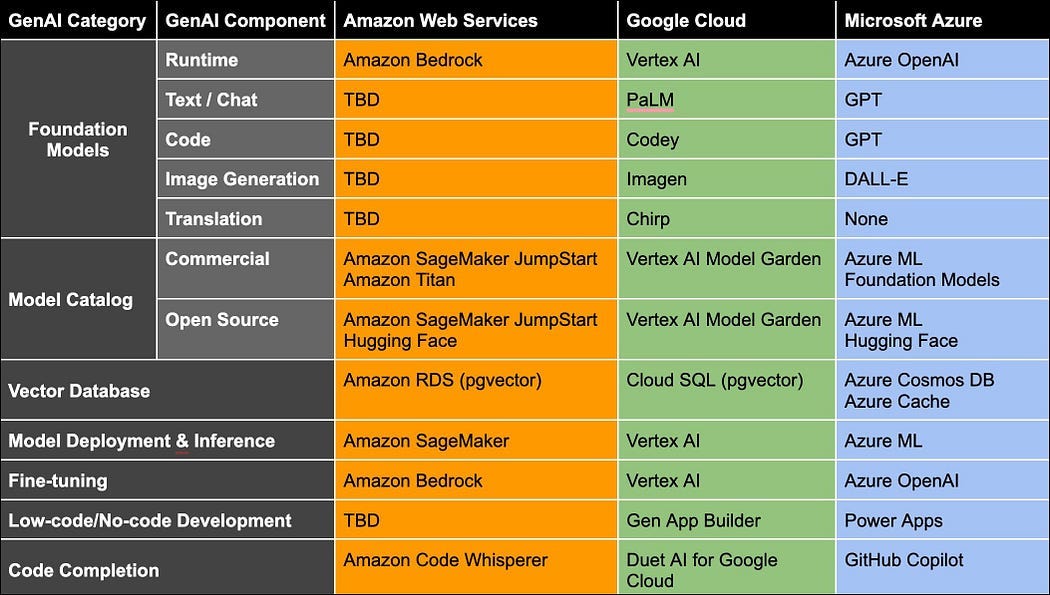
AWS Generative AI on AWS (New) Amazon Bedrock Anthropic Claude, Meta Llama, Cohere, Amazon Titan, AI21 Labs, Stability AI Google Cloud Vertex AI Vertex AI (Model Garden & Agent Builder) Gemini, Imagen, Claude (via Anthropic partnership), open models Microsoft Azure Azure AI Studio Azure OpenAI Service & Azure AI Foundry OpenAI models (GPT-4, etc.), Meta Llama, Cohere, Mistral AIMicrosoft's Azure AI Studio and Google's Vertex AI have provided unified consoles for model selection, experimentation, evaluation, and deployment for some time. AWS's new portal is a direct response to this, aiming to provide a comparable, streamlined entry point. Its key differentiator remains the deep integration with the broader AWS ecosystem (e.g., S3, Lambda, IAM) and its custom silicon (Trainium/Inferentia).
What to Watch: Execution and Model Pace
The launch of the hub is a necessary step, but the competitive battle will be won on execution. Key areas to watch:
- Model Velocity: Can Bedrock integrate new, best-in-class models (like OpenAI's o1 or Google's Gemini 2.0) as quickly as Azure or Google Cloud? The partnership with Anthropic is a major asset here.
- Developer Tooling: Will the new hub meaningfully improve the actual developer experience beyond a better homepage? Integration with IDE tools like Amazon Q Developer is critical.
- Cost-Performance: AWS will continue to compete aggressively on the price-performance of its Inferentia/Trainium instances versus competitors' GPUs.
gentic.news Analysis
This move is a clear signal that AWS is shifting from a phase of capability building to one of developer adoption in the generative AI race. As we covered in our analysis of the 2024 AWS re:Invent announcements, AWS unleashed a barrage of AI services. However, the feedback from the developer community was consistent: the offering was powerful but complex to navigate. This new hub is a direct attempt to solve that onboarding problem.
It also strategically aligns with AWS's broader partnership with Anthropic, which we reported on last year regarding its $4 billion investment. By featuring Claude prominently on the new portal, AWS is leveraging its most high-profile model partnership to attract developers, creating a compelling alternative to the Azure-OpenAI axis.
Looking at the competitive landscape, this brings AWS's top-of-funnel experience closer to parity with Google and Microsoft. The real test will be in the middle of the funnel: can AWS convert curious developers into productive builders faster than its rivals? This hinges on the next layer of tooling—simplified evaluation, fine-tuning, and deployment workflows within the hub itself. If successful, this consolidation will help AWS leverage its massive existing customer base and cloud integration, which remains its most durable advantage.
Frequently Asked Questions
What is the 'Generative AI on AWS' portal?
It is a new central website launched by Amazon Web Services that brings together all of its generative AI services, tools, tutorials, and resources into a single, organized destination. It is designed to help developers and businesses start building generative AI applications on AWS more easily.
Is this a new AWS service?
No, it is not a new billable service. It is a new portal and developer experience that consolidates access to existing services like Amazon Bedrock, Amazon SageMaker, and Amazon Q. Think of it as a redesigned front door and guide to AWS's existing generative AI capabilities.
How does this compare to Microsoft Azure AI Studio?
Azure AI Studio has served as Microsoft's unified console for generative AI development for over a year. AWS's new portal is a direct competitive response to that model. While the core services (Bedrock vs. Azure OpenAI) differ, both hubs aim to provide a one-stop shop for model access, experimentation, and application building. AWS's hub is newer but emphasizes its unique partnerships (like with Anthropic) and custom AI chips.
Do I need this portal to use Amazon Bedrock?
No. You can still access Amazon Bedrock and all other AWS AI services directly through the AWS Management Console, CLI, or SDKs. The 'Generative AI on AWS' portal is intended as a starting point for learning and discovery, especially for those new to AWS's AI stack.