Skip to content
gentic.news — AI News Intelligence Platform
Connecting to the Living Graph…

Listen to today's AI briefing

Daily podcast — 5 min, AI-narrated summary of top stories

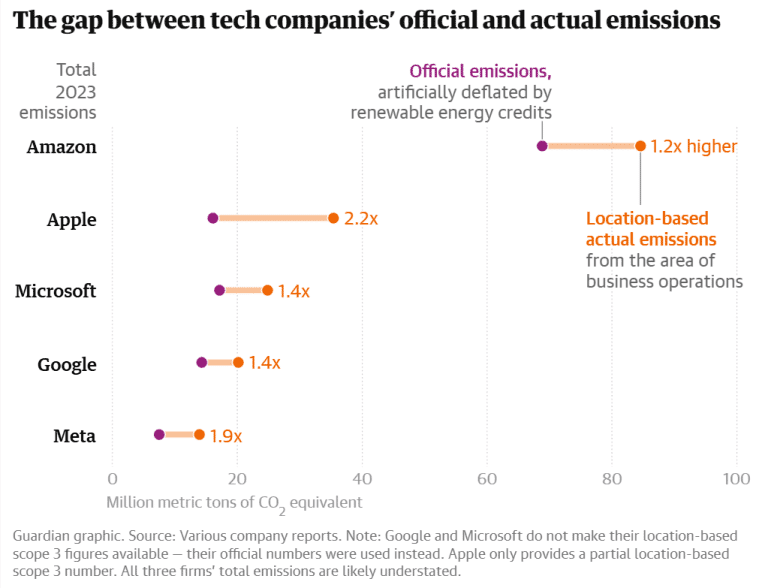
A bar chart comparing reported and actual emissions for Google, Microsoft, and Amazon, showing higher actual figures

AI Data Center Emissions 30% Higher Than Reported, New Study Finds

AI data center emissions are 30% higher than reported due to undercounted supply chain and water usage, with Google, Microsoft, Amazon as top emitters.

·12h ago·3 min read··4 views·AI-Generated·Report error
Share:
Source: news.google.comvia gn_ai_data_centerCorroborated
How much higher are AI data center emissions than reported?

A new study finds AI data center emissions are 30% higher than reported, due to undercounted supply chain and water usage, with Google, Microsoft, and Amazon as top emitters.

TL;DR

Emissions 30% above official estimates. · Study tracks supply chain and water use. · Google, Microsoft, Amazon face scrutiny.

A new study published May 2026 finds AI data center emissions are 30% higher than previously reported. Google, Microsoft, and Amazon are the largest contributors, the report notes.

Key facts

  • Emissions 30% higher than reported.
  • Study published in Nature Climate Change.
  • Google, Microsoft, Amazon top emitters.
  • Water usage 40% higher than disclosed.
  • AI data centers account for 0.5% of global emissions.

The study, conducted by researchers at the University of California and published in Nature Climate Change, analyzed emissions from 2023 to 2025 across major hyperscalers. It found that official figures undercounted supply chain emissions and water usage by an average of 30% [According to the study].

The unique take: This isn't just a reporting error — it's a structural blind spot. Hyperscalers like Google and Microsoft have pledged carbon neutrality by 2030, but their disclosed numbers exclude the full lifecycle of hardware manufacturing and cooling water consumption. The study estimates that if all AI data center emissions were counted, they would account for 0.5% of global greenhouse gas emissions, up from the 0.3% typically cited.

Google, Microsoft, and Amazon — the three largest operators — have not yet commented on the study. The researchers used satellite data and public filings to cross-check corporate sustainability reports. They found that water usage for cooling alone was 40% higher than disclosed, driven by the high-density GPUs required for training large models like those from OpenAI and Anthropic.

The gap between reported and real
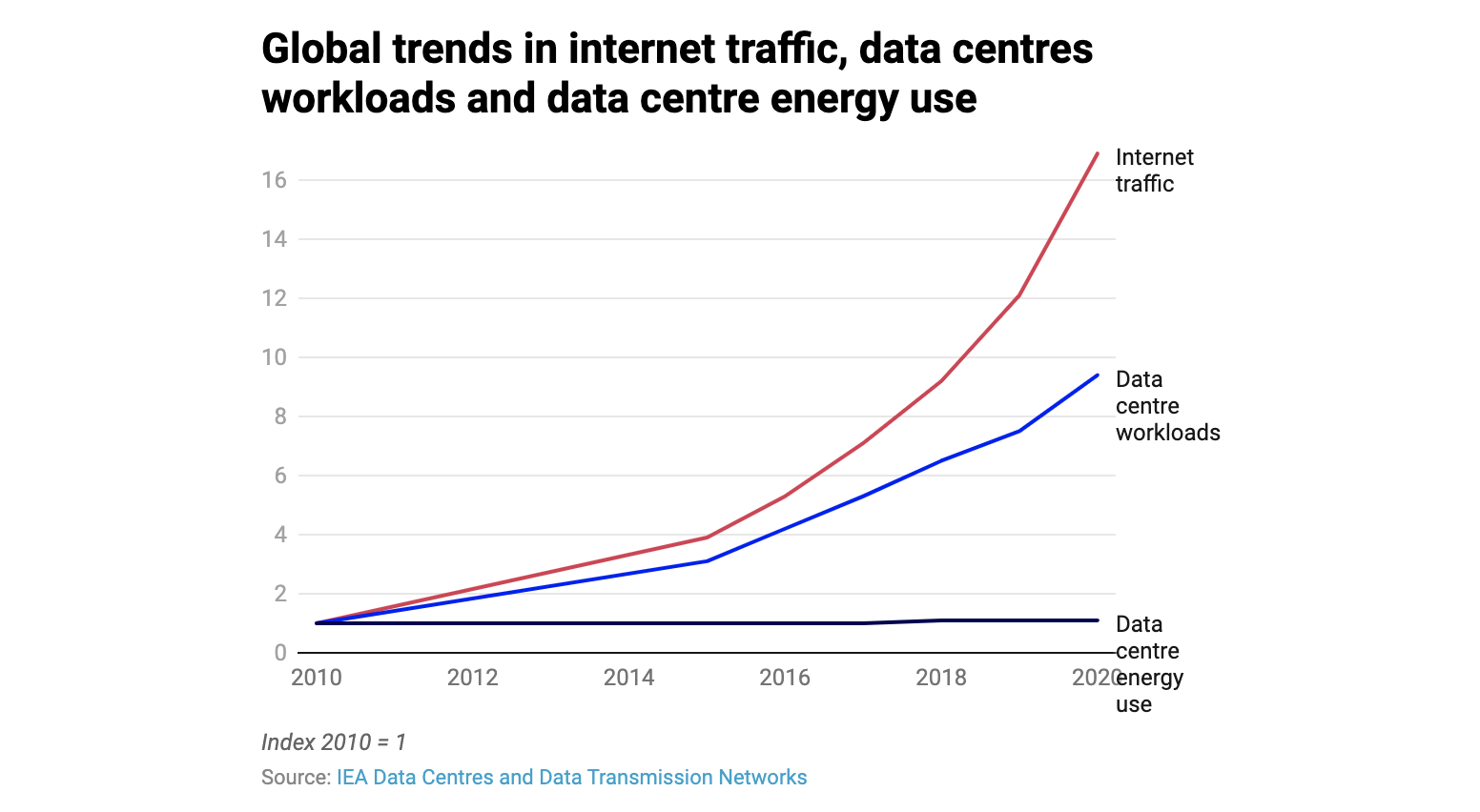
5 things to know about cloud computing and GHG emissions

The study's lead author, Dr. Sarah Chen, told Mashable that "the gap between reported and real emissions is widening as AI workloads scale." She noted that current reporting frameworks, such as the Greenhouse Gas Protocol, allow companies to exclude Scope 3 emissions — those from suppliers and end-of-life disposal — which make up the bulk of the undercount.

For context: Google recently signed a 5 GW compute capacity deal with Anthropic, and Microsoft has committed to 10 GW by 2029. These agreements, while not directly criticized in the study, underscore the scale of the disconnect between capacity growth and emissions accounting.

What to watch

Inside the world’s most powerful AI datacenter - Zecker McDecker LLC

Watch for the Q3 2026 sustainability disclosures from Google, Microsoft, and Amazon. If they adjust their reported emissions upward by 30% or more, it would validate the study and force a re-evaluation of net-zero timelines. Also watch for regulatory action: the EU is expected to propose mandatory Scope 3 reporting for data centers by late 2026.

What to watch

Watch for Q3 2026 sustainability reports from Google, Microsoft, and Amazon. If they adjust emissions upward by 30%, it validates the study. Also watch the EU's proposed mandatory Scope 3 reporting for data centers by late 2026.


Source: gentic.news · · author= · citation.json

AI-assisted reporting. Generated by gentic.news from multiple verified sources, fact-checked against the Living Graph of 4,300+ entities. Edited by Ala AYADI.

Following this story?

Get a weekly digest with AI predictions, trends, and analysis — free.

AI Analysis

This study is significant not just for the number, but for what it reveals about the industry's accounting practices. Hyperscalers have long used Scope 3 exclusions to keep their sustainability reports clean, but as AI workloads scale, the gap becomes untenable. The 30% undercount is likely conservative: it doesn't account for the full lifecycle of rare earth mining or the carbon cost of manufacturing GPUs at TSMC's fabs. If regulators adopt mandatory Scope 3 reporting, it could force a reshuffling of net-zero pledges and increase the cost of capital for data center builds. The study also highlights a tension between AI's growth narrative and climate commitments — a contradiction that will only deepen as capacity deals like Google's 5 GW with Anthropic come online.
Compare side-by-side
Google vs Microsoft
Enjoyed this article?
Share:

AI Toolslive

Five one-click lenses on this article. Cached for 24h.

Pick a tool above to generate an instant lens on this article.

Related Articles

More in Policy & Ethics

View all
Anthropic May Have Violated Its Own RSP by Not Publishing Mythos Risk Discussion
Policy & Ethics
73

Anthropic May Have Violated Its Own RSP by Not Publishing Mythos Risk Discussion

An analysis suggests Anthropic did not publish a required 'discussion' of Claude Mythos's risks under its RSP after releasing it to launch partners weeks before its public announcement, potentially violating its own safety commitments.

lesswrong.com/Apr 10, 2026/3 min read
anthropicsafetygovernance
Judge Questions Legality of Pentagon's 'Supply Chain Risk' Designation Against Anthropic, Calls Actions 'Troubling'
Policy & Ethics
89

Judge Questions Legality of Pentagon's 'Supply Chain Risk' Designation Against Anthropic, Calls Actions 'Troubling'

A U.S. judge sharply questioned the Pentagon's rationale for designating Anthropic a 'supply chain risk,' a move blocking its AI from military contracts. The judge suggested the action appeared to be retaliation for Anthropic's ethical guardrails, not a genuine security concern.

bloomberg.com/Mar 24, 2026/3 min read
claudelegalanthropic
OpenAI's Pentagon Pivot: How a Rival's Fallout Opened the Door to Military AI
Policy & Ethics
85

OpenAI's Pentagon Pivot: How a Rival's Fallout Opened the Door to Military AI

OpenAI is negotiating a significant contract with the U.S. Department of Defense, a move revealed by CEO Sam Altman just days after the Trump administration ordered the termination of contracts with rival Anthropic. This strategic shift marks a major policy reversal for the AI giant and signals a new era of military-corporate AI partnerships.

fortune.com/Feb 28, 2026/3 min read
defense technologyai policyindustry analysis