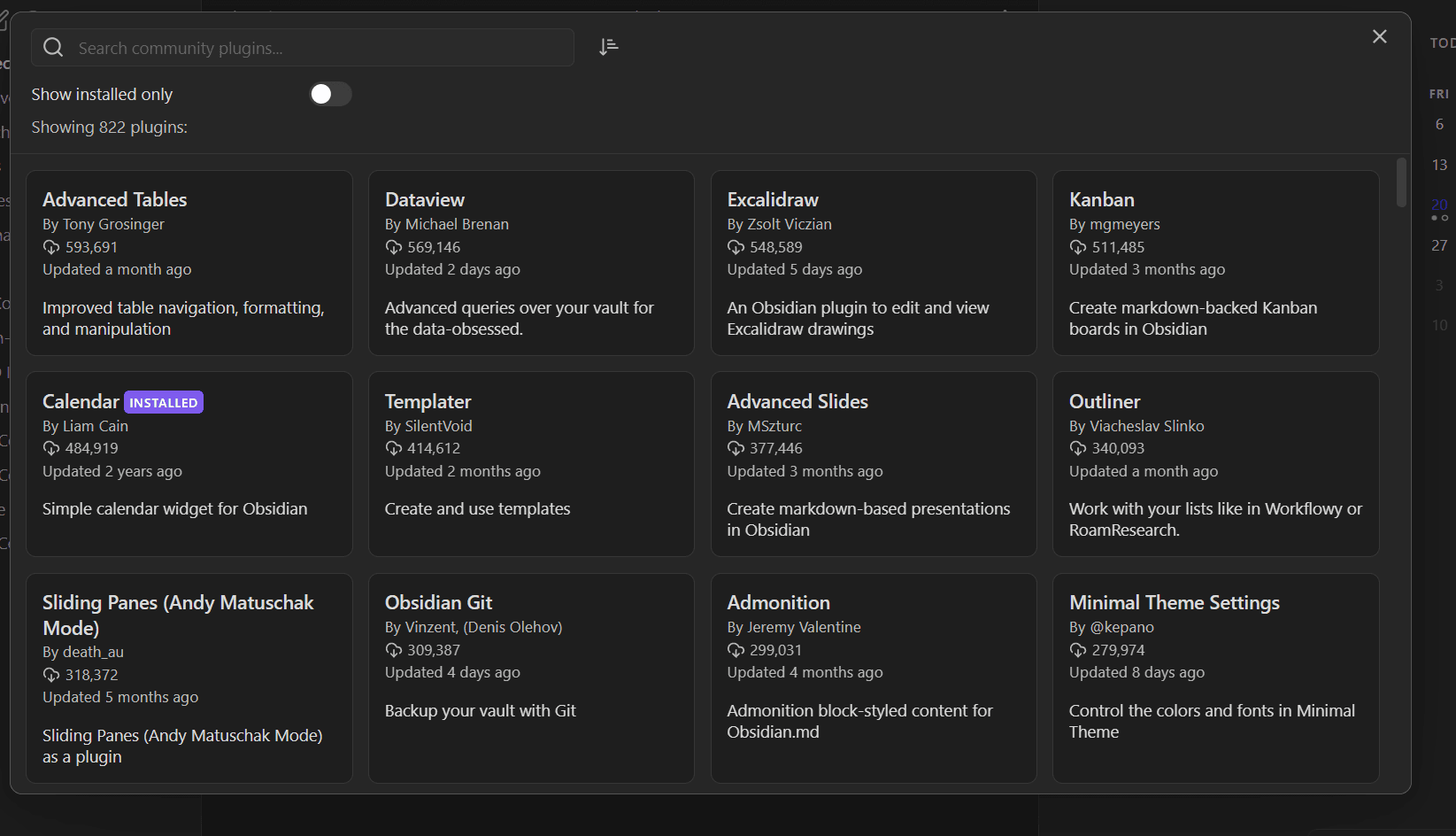
A developer's public declaration of deleting Notion AI has spotlighted a new, open-source alternative for AI-powered note-taking. The tool, claude-obsidian, is a plugin for the popular Obsidian markdown editor that aims to transform the application from a passive repository into an active, self-maintaining knowledge engine.
What Happened
In a post on X (formerly Twitter), developer @hasantoxr stated they were deleting Notion AI after trying claude-obsidian. The core claim is that this plugin fundamentally changes the relationship between the user and their notes. Unlike other AI plugins for Obsidian—such as Smart Connections, which primarily adds a chat interface on top of existing notes—claude-obsidian is described as an architecture that "creates, organizes, and evolves the notes themselves."
The plugin is available on GitHub and is stated to be 100% open-source.
What the Plugin Does
According to the source, claude-obsidian is designed to function as a "running notetaker" that works autonomously in the background. Its stated features include:
- Auto-organization: Ingests information and automatically categorizes it into entities, concepts, and sources.
- Contradiction Detection: Flags inconsistencies across a user's entire note vault ("Obsidian vault") and provides callouts linking to the conflicting sources.
- Autonomous Web Research: Can execute a "3-round" web research process and automatically file the summarized output into the vault.
- Batch Ingestion: Processes multiple sources in parallel.
- Precise Citation: When querying, it cites specific wiki pages instead of returning "fuzzy similarity matches."
- Integration: Includes a native dashboard for "Obsidian Bases" and a visual canvas companion. It also supports a cross-project setup where one vault can feed information into all of a user's Claude Code projects.
The key differentiator pitched is architectural: moving from an AI-as-assistant model (chat) to an AI-as-agent model (creation and maintenance).
Technical Context & Open-Source Implications

While the source does not provide technical implementation details, benchmarks, or model specifics, the announcement taps into a significant trend: the democratization of advanced AI workflows through open-source tooling. Obsidian's local-first, markdown-based architecture makes it a favored platform for developers and knowledge workers who prioritize privacy and control. An open-source plugin that integrates a powerful LLM like Anthropic's Claude to manage that data locally or via API presents a compelling alternative to closed, cloud-based SaaS solutions like Notion AI.
This development is part of a larger movement where individual developers and small teams are building sophisticated agentic systems on top of foundation model APIs, directly competing with features from large tech companies.
gentic.news Analysis
This announcement is a microcosm of a major battleground in applied AI: the fight for the personal knowledge base. Notion, with its closed ecosystem and integrated AI, represents one approach. Obsidian, with its open file format and extensible plugin architecture, represents another. claude-obsidian is an attempt to weaponize the latter's openness with state-of-the-art agentic AI, directly targeting a perceived weakness in Notion's walled garden.
The trend of open-source AI workflow tools is accelerating. This follows a pattern we've seen with projects like open-interpreter and Cursor IDE, which repurpose commercial LLMs into autonomous coding agents. The value is shifting from the model itself to the architecture and workflow built around it. If claude-obsidian delivers on its promise of reliable, autonomous knowledge management, it could trigger a wave of similar "self-maintaining" tools for other platforms, further pressuring all-in-one SaaS solutions to open up or risk being bypassed.
For practitioners, the key insight is the focus on agentic architecture over chat interfaces. The plugin's purported ability to detect contradictions and run multi-step research autonomously points to a future where AI tools are judged not by their conversational fluency, but by their capacity to execute complex, multi-step knowledge work without constant human supervision. The success of this plugin will hinge on its reliability—how often its autonomous actions are correct and helpful versus creating chaos in a carefully organized vault.
Frequently Asked Questions
What is Claude-Obsidian?
Claude-Obsidian is an open-source plugin for the Obsidian note-taking app. It uses Anthropic's Claude AI to automatically organize notes, conduct web research, detect contradictions in your information, and maintain your knowledge base with minimal manual intervention.
How is Claude-Obsidian different from Notion AI?
The key difference is architecture and control. Notion AI is a closed, cloud-based feature within the Notion ecosystem. Claude-Obsidian is an open-source tool for Obsidian, which stores notes as local markdown files. It is described as an autonomous "knowledge engine" that creates and evolves notes, whereas Notion AI primarily functions as an in-app chat and content generation assistant.
Do I need an API key to use Claude-Obsidian?
Yes, based on its name and functionality, the plugin almost certainly requires a user to provide their own API key for Anthropic's Claude to function, as it is not bundling the model itself. Users will incur costs based on their usage of the Claude API.
Is Claude-Obsidian available now?
According to the source, the project is 100% open-source and a link to its GitHub repository was provided. This means it is available for anyone to download, install, and configure, though it may require technical know-how to set up.