New data from Similarweb reveals a dramatic reshuffling of the consumer AI chatbot market in February, with Anthropic's Claude making explosive gains while OpenAI's ChatGPT continues to cede ground to Google's aggressive push with Gemini.
Key Takeaways
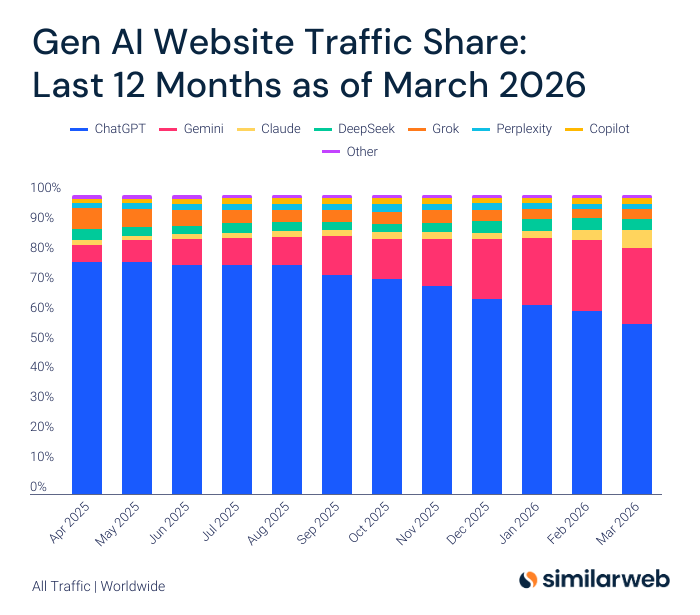
- Claude's web traffic share surged from 2.2% to 6.02% in February, leapfrogging DeepSeek and Grok.
- ChatGPT still leads at 56.72% but has fallen from 77.43% a year ago, with Google Gemini now capturing a quarter of all AI traffic.
The February Traffic Shift
According to Similarweb's analysis of web traffic to major AI chatbot platforms:
- Claude nearly tripled its market share, jumping from 2.2% to 6.02% in a single month
- ChatGPT still leads at 56.72% but has fallen sharply from 77.43% a year ago
- Google Gemini captured 25.46% of traffic, up from just 6% previously
- DeepSeek landed at 3.74%, just ahead of Grok at 3.44%
- Microsoft Copilot reached 1.99% (now including Microsoft 365 Chat traffic)
- Perplexity held 1.64%
The data shows Claude leapfrogging both DeepSeek and Grok to become the third-largest player by web traffic, though it remains far behind the market leaders.
Google's Aggressive Push
Google's dramatic growth to 25.46% market share appears driven by several strategic moves:

- Android integration: Google has been routing search queries from Android notifications directly into Gemini Search chats
- Brand awareness campaigns: Aggressive marketing across Google's ecosystem
- Product bundling: Deep integration with existing Google services
This represents the most significant challenge to ChatGPT's dominance since its launch, with Google leveraging its massive existing user base across Android, Search, and Workspace.
The Competitive Landscape
ChatGPT 56.72% - Market pioneer, brand recognition Google Gemini 25.46% +19.46% Android integration, Google ecosystem Claude 6.02% +3.82% Strong model performance, enterprise focus DeepSeek 3.74% - Open-source alternative, cost advantage Grok 3.44% - X/Twitter integration, controversial branding Copilot 1.99% - Microsoft 365 integration Perplexity 1.64% - Search-focused interfaceDespite Claude's impressive monthly growth, OpenAI CEO Sam Altman recently claimed that "ChatGPT has as many users in Texas alone as Claude has across the entire US," highlighting the scale difference between the market leader and emerging competitors.
What This Means for AI Developers
The shifting market shares reveal several important trends:
- Integration beats standalone: Platforms deeply integrated into existing ecosystems (Google Android, Microsoft 365) are gaining ground
- Performance matters: Claude's growth follows strong reviews of Claude 3.5 Sonnet's capabilities
- Open-source pressure: DeepSeek's 3.74% share shows significant interest in open alternatives
- Market fragmentation: No single platform dominates as completely as ChatGPT did a year ago
For developers building on these platforms, the fragmentation means considering multi-platform strategies rather than betting on a single provider.
gentic.news Analysis
This traffic shift represents the most significant market realignment since ChatGPT's initial dominance in late 2022. Claude's explosive growth follows Anthropic's consistent model improvements, particularly with the Claude 3.5 series that we covered in June 2024 for its strong coding and reasoning capabilities. The 174% monthly growth suggests users are actively seeking alternatives to ChatGPT, possibly driven by Claude's reputation for stronger reasoning and lower hallucination rates.
Google's surge to 25.46% market share validates the company's aggressive bundling strategy, which we've tracked since Gemini's rebrand from Bard in February 2024. This follows Google's pattern of leveraging its Android ecosystem—similar to how Chrome gained browser dominance. However, the quality perception gap between Gemini and Claude/ChatGPT remains a challenge Google must address to sustain this growth.
The data contradicts the narrative of ChatGPT's unassailable dominance. A year ago, ChatGPT held 77.43% of the market; today it's at 56.72%—still dominant but clearly vulnerable. This fragmentation creates opportunities for specialized players: Perplexity continues to carve out a search-focused niche, while DeepSeek's open-source approach attracts cost-conscious developers.
Looking ahead, the key question is whether Claude can maintain its momentum beyond early adopters. Anthropic's enterprise-focused strategy may limit consumer growth compared to Google's mass-market approach. Meanwhile, OpenAI's response will be telling—whether they double down on ChatGPT's consumer features or focus more on enterprise and developer tools where they face less direct competition from Google's ecosystem.
Frequently Asked Questions
How accurate are Similarweb's traffic estimates?
Similarweb uses a combination of direct measurement, panel data, and machine learning to estimate web traffic. While not perfect, their methodology is industry-standard for competitive intelligence and shows consistent trends over time. The inclusion of Microsoft 365 Chat traffic in Copilot's numbers demonstrates they're adjusting methodology to capture ecosystem usage.
Does web traffic share correlate with revenue or active users?
Not directly. Web traffic measures visits to chatbot websites, but doesn't capture API usage (where much of the revenue comes from), mobile app usage, or enterprise deployments. Claude's strong enterprise focus means its revenue may be higher than its 6% traffic share suggests, while Google Gemini's traffic includes many casual users trying the service through Android prompts.
Why is Claude growing so quickly?
Several factors: strong model performance (Claude 3.5 Sonnet received excellent reviews), effective marketing to technical audiences, and growing dissatisfaction with ChatGPT's limitations. Anthropic has also been aggressive with free tier offerings and has built a reputation for AI safety that appeals to certain enterprise customers.
Will ChatGPT continue losing market share?
Likely yes, but from a much higher base. The consumer AI market is naturally fragmenting as alternatives mature. ChatGPT's decline from 77% to 57% in a year shows this trend clearly. However, OpenAI's massive user base, brand recognition, and first-mover advantage mean they'll likely remain the market leader for the foreseeable future, just with a smaller percentage of a growing total market.