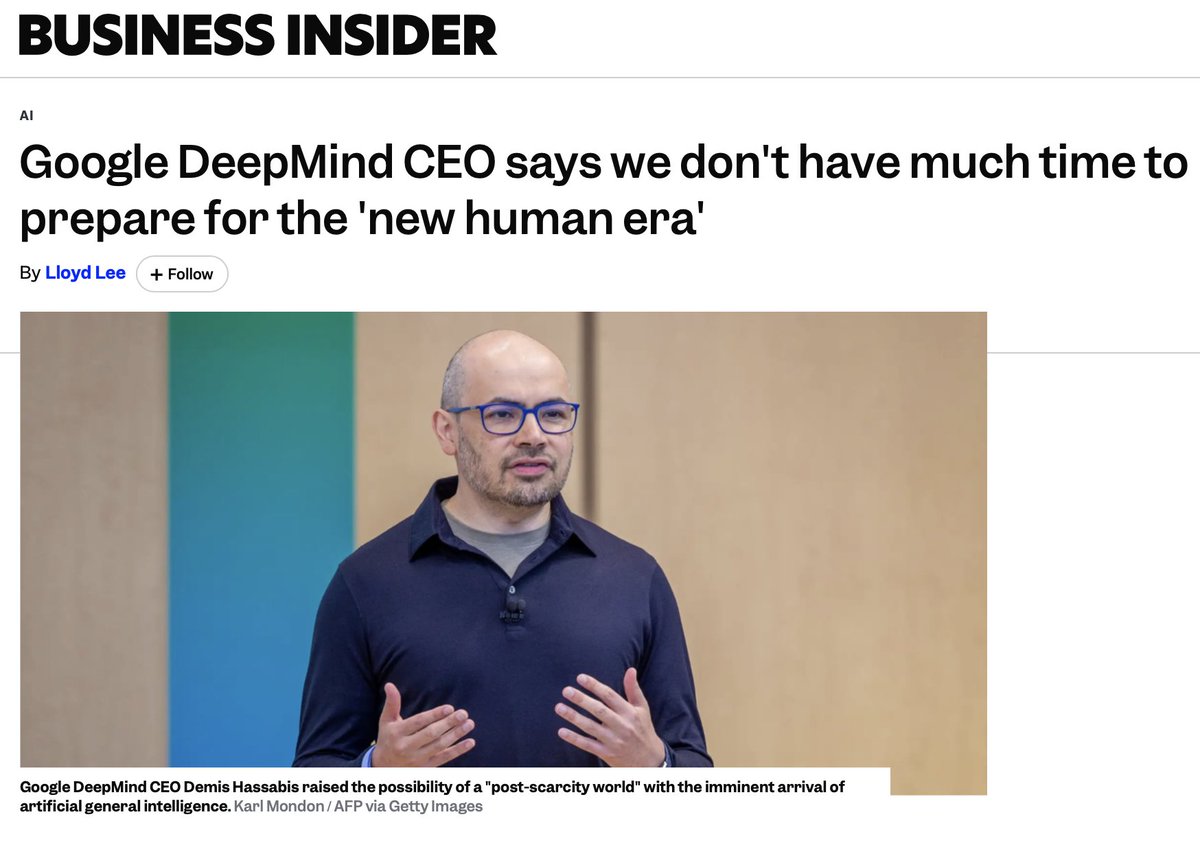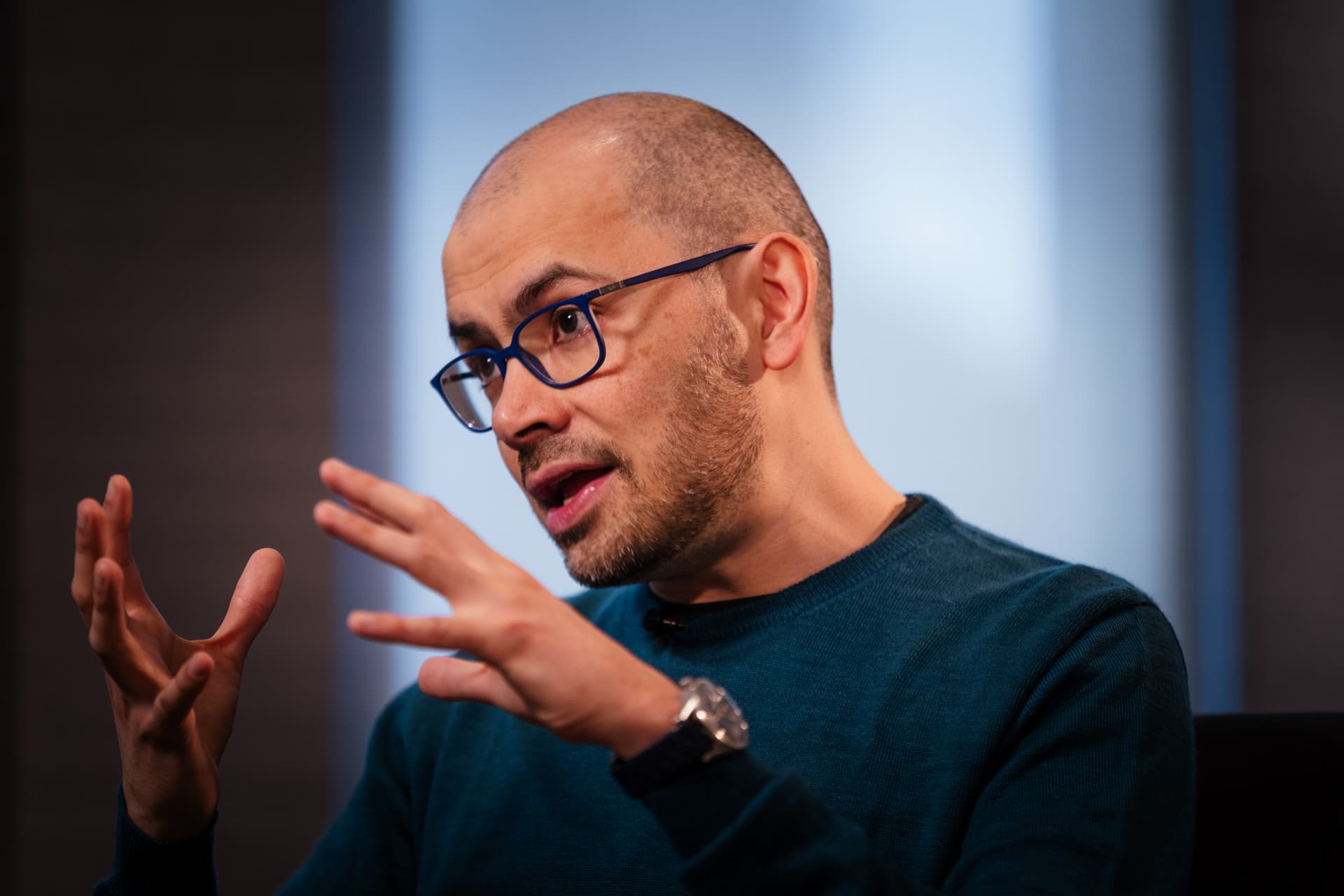
Demis Hassabis, CEO of Google DeepMind, has highlighted the unprecedented entrepreneurial potential of current AI tools. In a recent statement, he suggested that "kids these days could start a multi-bn dollar business using these AI tools in some new way that no one had thought about."
What Happened

Hassabis made the comment in a broader context about the division of labor in the AI ecosystem. He noted that major AI research labs like DeepMind are primarily focused on "shipping better models." Their core mission is advancing the frontier of AI capabilities—creating more powerful, efficient, and general-purpose foundation models.
Crucially, he pointed out that these labs are not focused on "exhausting their applications." This creates a vast, open landscape for entrepreneurs and builders. The implication is that the raw potential of models like Gemini, GPT, and Claude far outstrips the current catalog of products built on top of them. The most valuable applications may still be undiscovered.
Context
This perspective frames AI models as a new kind of foundational platform, akin to the early internet, mobile operating systems, or cloud computing. The history of technological platforms shows that the greatest fortunes are often made not by the platform creators themselves, but by the entrepreneurs who identify a transformative, high-value use case that the creators did not anticipate.
Hassabis's comment also subtly addresses a common critique: that AI progress is concentrated in a few large tech companies. His argument reframes this concentration as a catalyst for decentralized innovation. By providing increasingly capable and accessible tools, these labs are effectively lowering the barrier to creating world-changing software businesses, potentially for a new generation of founders.
gentic.news Analysis

Hassabis's statement is a strategic narrative that serves multiple purposes. First, it's a compelling counterpoint to the dominant discourse around AI job displacement and existential risk. By emphasizing massive entrepreneurial opportunity, particularly for the young, it casts AI development in a proactively positive light.
Second, it accurately reflects the current state of the AI market. The last 18 months have seen an explosion of model capability from labs like DeepMind (Gemini), OpenAI (GPT-4o, o1), Anthropic (Claude 3.5 Sonnet), and xAI (Grok). However, the killer applications beyond coding assistants, image generators, and chatbots remain elusive. The most recent wave of AI startups has largely been tooling and infrastructure (e.g., vector databases, evaluation platforms, fine-tuning services). Hassabis is pointing to the next phase: the application layer, where the real societal and economic impact—and valuation—will be captured.
This aligns with a trend we've noted: venture capital is increasingly shifting focus from "model layer" investments, which require colossal capital, to the application layer. The success of companies like Midjourney (a product built on foundational diffusion models) and Cognition AI (Devon, built atop LLMs) are early proofs of this concept. Hassabis is suggesting we've only seen the beginning.
His comment also serves as a tacit acknowledgment of a competitive reality. While DeepMind and Google lead in research, OpenAI, with its partnership with Microsoft and direct-to-consumer ChatGPT product, has been perceived as more aggressive in cultivating an ecosystem. By explicitly championing external entrepreneurs, Hassabis is encouraging developer mindshare and activity around Google's AI stack, including Gemini API and Vertex AI.
Frequently Asked Questions
What did Demis Hassabis actually say?
Demis Hassabis, the CEO of Google DeepMind, stated that "kids these days could start a multi-bn dollar business using these AI tools in some new way that no one had thought about." He added that AI labs are focused on shipping better models, not on finding all their applications, leaving significant room for new products.
What AI tools is he referring to?
He is referring to the current generation of powerful foundation models and their associated APIs and toolkits. This primarily includes large language models (LLMs) like Google's Gemini series, OpenAI's GPT-4/4o, Anthropic's Claude 3, and open-source models, as well as image and video generation models from Stability AI, Midjourney, and Runway. Access to these models via cloud APIs has democratized cutting-edge AI capabilities.
Is this a realistic claim or just hype?
It is a realistic projection based on the history of technological platforms. The internet, smartphones, and cloud computing each enabled new billion-dollar companies (Google, Uber, Airbnb, Slack, etc.) that the platform creators did not build. AI models represent a new, equally foundational platform. The capital efficiency of building with AI APIs is historically high, meaning small, young teams can build and scale products that were previously impossible.
What does this mean for AI researchers and engineers?
For practitioners, it underscores the value of applied AI skills and product sense. The highest leverage activity may shift from training ever-larger models to deeply understanding a domain (e.g., healthcare, education, manufacturing) and creatively applying existing AI tools to solve painful, expensive problems at scale. The technical challenge becomes integration, reliability, and designing novel human-AI interactions, not just raw model performance.