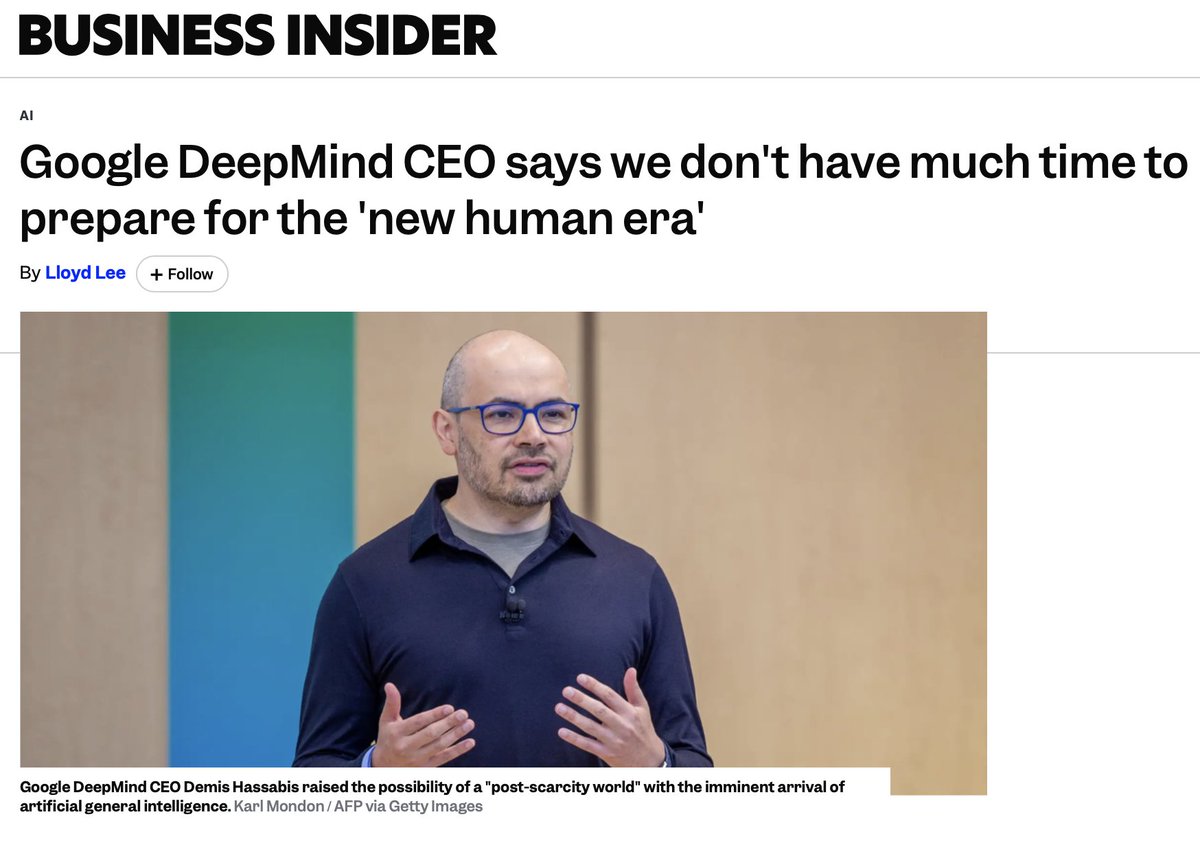
In a recent comment, Demis Hassabis, co-founder and CEO of DeepMind, provided a succinct rationale for the AI lab's decision to establish and maintain its headquarters in London, rather than relocate to Silicon Valley. According to Hassabis, the United Kingdom possessed "world-class talent," but crucially, there was "less competition for it than Silicon Valley."
What Happened
The statement, shared via a social media post, captures a pivotal strategic decision from DeepMind's early days. Founded in London in 2010, DeepMind grew into one of the world's leading AI research organizations before its acquisition by Google (now Alphabet) in 2014 for a reported $500 million. Despite the acquisition, DeepMind's core research operations have remained largely based in its London headquarters.
Hassabis's comment underscores a calculated bet: that the concentration of top-tier academic institutions in the UK—such as the University of Cambridge, University of Oxford, Imperial College London, and University College London—created a deep reservoir of AI and neuroscience talent. However, unlike the Bay Area, the local commercial AI ecosystem in the early 2010s was less developed, meaning fewer well-funded startups and tech giants were vying for the same researchers and engineers.
Context
This talent strategy was a significant competitive advantage. In Silicon Valley during the same period, a fierce and expensive bidding war for AI specialists was already underway among companies like Google, Facebook, Apple, and a burgeoning startup scene. By building its flagship AI lab in London, DeepMind could attract and retain leading minds—many with PhDs from nearby institutions—potentially with different compensation and cultural expectations than the Valley's norm.
The decision proved prescient. DeepMind's London base became a global AI hub, attracting international talent and producing landmark research, including AlphaGo, AlphaFold, and numerous advances in reinforcement learning. The UK government has since sought to build on this success with initiatives to strengthen its AI sector, though competition for talent has undoubtedly increased globally.
gentic.news Analysis
Hassabis's reflection is more than historical trivia; it's a case study in geo-strategic positioning during a technological gold rush. His comment directly contrasts with the dominant narrative that all serious tech innovation must converge on Silicon Valley. DeepMind demonstrated that a world-leading AI research institution could be built outside the traditional epicenter, provided there is access to elite academic talent and a temporary reprieve from the most intense hiring frenzies.
This aligns with a broader, ongoing trend we've covered at gentic.news: the decentralization of AI talent hubs. Our analysis of "The Global AI Talent Map 2025" noted the rise of significant research clusters in cities like Paris (home to Meta's FAIR lab and Mistral AI), Toronto (a pioneer in deep learning), and Beijing. These hubs often leverage strong local universities, just as DeepMind did. However, Hassabis's point about "less competition" may be a diminishing advantage. Today, every major tech firm has a London AI office, and well-funded startups like Google's own Gemini teams, Anthropic's expanding presence, and local champions like Wayve compete directly for the same pool.
Furthermore, this historical context is crucial for understanding current UK AI policy. The government's push to become an "AI superpower" and its reported efforts to keep promising startups like Wayve from relocating to the US are direct attempts to preserve the competitive environment Hassabis described. The success of DeepMind created a proof-of-concept that the UK hopes to replicate, but it must now do so in a far more crowded and capital-intensive global market.
Frequently Asked Questions
Why was DeepMind founded in London?
DeepMind was founded in London in 2010 by Demis Hassabis, Shane Legg, and Mustafa Suleyman. The founders, who had backgrounds at UK institutions, identified London as a location with a high density of world-class academic talent in AI, neuroscience, and engineering from universities like UCL and Cambridge, but with less immediate commercial competition for that talent than in Silicon Valley.
Did DeepMind move to Silicon Valley after Google bought it?
No. Following its acquisition by Google (now Alphabet) in 2014, DeepMind remained headquartered in London. While it expanded its operations with offices in other countries, including the US, Canada, and France, its primary research hub and leadership have stayed in its original London location, validating the initial strategic choice.
Is London still a good place for AI talent with less competition?
The landscape has changed dramatically since DeepMind's founding. While London and the UK remain a top-tier global hub for AI talent, thanks to its universities and established ecosystem, the "less competition" advantage has largely evaporated. Nearly every major US tech firm now has a significant AI research presence in London, and well-funded European and UK-based AI startups are plentiful, creating a highly competitive hiring environment.
What is Demis Hassabis's role now?
Following the restructuring of Google's AI units in 2023, Demis Hassabis was named CEO of Google DeepMind, a new entity combining the Brain team from Google Research with DeepMind. He leads this unified AI research and development organization, which remains deeply integrated with its London roots while operating on a global scale.