A technical observation from developer Simon Willison has highlighted a significant but often overlooked detail about OpenAI's product stack: the AI model powering its real-time voice conversation mode is not the company's latest and most capable model, GPT-4o. Instead, it runs on a "much older, much weaker model."
This creates a cognitive dissonance for users. The primary, synchronous interface where users interact with an AI through spoken conversation—a modality that feels incredibly advanced—is powered by a less intelligent system than the one used for text-based queries in ChatGPT.
What Happened
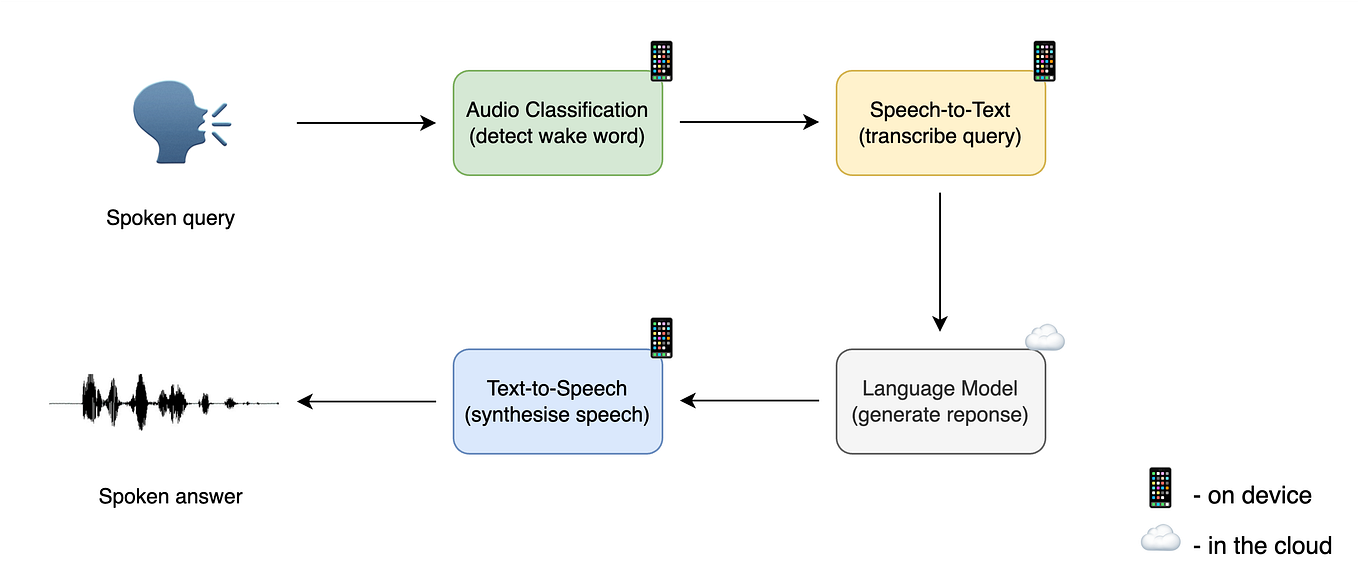
Simon Willison, a prominent software developer and AI commentator, noted on X that "it's non-obvious to many people that the OpenAI voice mode runs on a much older, much weaker model." He pointed out the intuitive expectation that the AI you talk to should be the smartest available, but in OpenAI's architecture, this is not the case.
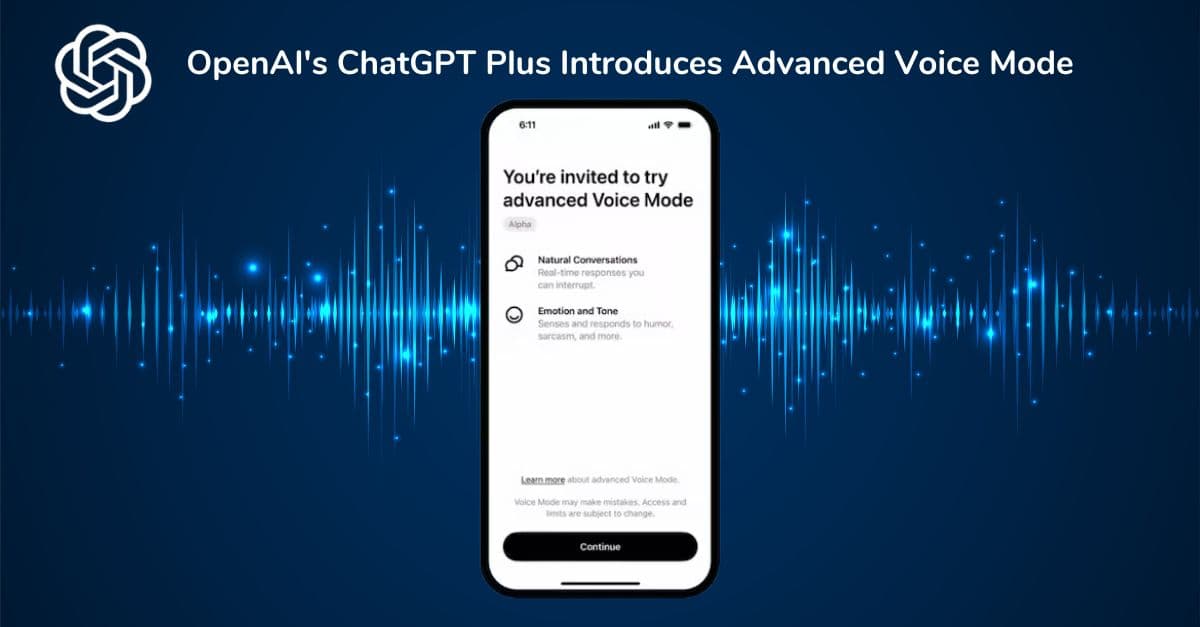
The voice mode, a feature allowing real-time, latency-optimized spoken conversation with an AI assistant, was a flagship demo during the GPT-4o launch event in May 2024. It showcased fluid, emotive, and interruptible dialogue. However, the underlying model serving this feature is distinct from the GPT-4o model used for standard text and vision tasks in the ChatGPT interface.
The Technical & Product Disconnect
This revelation points to a common engineering trade-off in deploying large language models (LLMs) for different modalities:
- Latency vs. Intelligence: Real-time voice conversation requires extremely low latency (sub-500ms response times). Older, smaller models can be heavily optimized for this specific task, whereas running a massive, multimodal model like GPT-4o with full context in a streaming audio pipeline presents immense computational and latency challenges.
- Cost vs. Scale: Voice interaction is computationally expensive per second of audio. Using a cheaper, older model for a high-volume, real-time feature is a straightforward cost-saving measure.
- Perception Gap: The product marketing and demos center on the capabilities of GPT-4o, leading users to believe all interactions within the ChatGPT ecosystem are powered by it. The technical reality is a tiered system where different models serve different endpoints.
This is not an isolated case. Other AI companies have faced similar revelations. For instance, when Google launched its Gemini Live voice feature, it was initially powered by a fine-tuned version of Gemini Pro, not the more capable Gemini Ultra.
What This Means for Practitioners

For developers and technical leaders building with AI, this serves as a critical case study in product architecture:
- Model Routing is Standard: Enterprise AI applications routinely route queries to different models based on modality (text, voice, image), required latency, and cost. The "best" model is not always used for every task.
- Benchmarks Can Be Misleading: Public benchmarks for a company's flagship model (e.g., GPT-4o's scores on MMLU or GPQA) do not necessarily reflect the performance of all its user-facing features, especially real-time ones.
- The "Voice Tax": There appears to be a consistent "intelligence tax" for voice interfaces. The engineering constraints of real-time audio processing often force a compromise on model capability.
gentic.news Analysis
This observation fits into a broader, ongoing trend in the AI industry: the strategic decoupling of marketing narratives from technical deployment realities. OpenAI's launch of GPT-4o was masterful in presenting a unified, omni-capable AI. The demos intentionally blurred the lines between the core GPT-4o model and the specialized systems (like the voice mode model and the earlier "ChatGPT Voice" feature) that handle specific interaction types. This is a classic platform strategy: showcase the pinnacle of capability to define the brand, while using a portfolio of models for cost-effective service delivery.
This pattern is not new for OpenAI. The initial ChatGPT voice feature, launched in late 2023, was powered by a separate model with distinct, less capable characteristics compared to the then-text-based GPT-4. The current setup is an evolution of that tiered approach. It also aligns with competitive moves we've seen from Google DeepMind and Anthropic, where advanced reasoning models like Gemini Ultra and Claude 3 Opus are positioned as premium offerings, while faster, cheaper models handle high-volume or latency-sensitive tasks.
For the AI engineering community, the lesson is to always inspect the API endpoints and model specifications. The gpt-4o model name in the API refers to a specific text/vision model, while the real-time audio capabilities are a different system. As voice interaction becomes a more critical battleground—especially with the rise of AI hardware agents—watch for whether companies can close this "intelligence gap" by either radically optimizing their flagship models for low-latency voice or by being more transparent about the model stack powering their conversational interfaces.
Frequently Asked Questions
What model does power OpenAI's voice mode?
OpenAI has not publicly specified the exact model architecture or version powering its real-time voice conversation feature. It is confirmed to be a separate, older, and less capable system than the GPT-4o model used for text and vision in ChatGPT. It is likely a heavily optimized descendant of an earlier model like GPT-3.5 Turbo, fine-tuned specifically for low-latency dialogue.
Does this mean the voice AI is "dumb"?
Not necessarily "dumb," but it is less capable than GPT-4o. It is optimized for a different primary metric: conversational fluency and speed. It can handle everyday chat and Q&A well but will likely perform worse on complex reasoning, coding, or nuanced instruction-following tasks compared to the flagship text model. Its training was almost certainly focused on dialogue tuning rather than broad knowledge or reasoning.
Why doesn't OpenAI just use GPT-4o for voice?
The primary constraints are latency and cost. GPT-4o is a large, multimodal model. Processing audio input, converting it to text, running it through the full GPT-4o model with its large context window, generating a text response, and converting that to high-quality, emotive speech in real-time is computationally intensive and expensive. Using a smaller, specialized model makes the feature economically viable and responsive.
How can I tell which model I'm interacting with?
In the ChatGPT interface, you are typically using the GPT-4o model for text and vision queries. When you click the headphone icon to start a voice conversation, you are switched to the separate voice-mode model. There is no user-facing indicator specifying the model change, which is the root of the perception gap Willison identified.