The Innovation — What the Source Reports
A new research paper, "EventChat: Implementation and user-centric evaluation of a large language model-driven conversational recommender system for exploring leisure events in an SME context," provides a rare, grounded look at deploying an LLM-powered conversational agent in a real business setting. The study moves beyond theoretical frameworks to focus on end-user experience and the strategic implications for small-to-medium enterprises (SMEs).
The researchers built a Retrieval-Augmented Generation (RAG)-based conversational recommender system (CRS) designed to help users discover leisure events. The system uses an advanced LLM as a ranker within the RAG pipeline to select and present relevant options from a database. Crucially, the team then evaluated this system in the field using both objective metrics and subjective user feedback, proposing a revised, short-form ResQue model to standardize evaluation in this fast-moving field.
The key findings are a mix of promise and sobering reality:
- High User-Perceived Accuracy: The system achieved an 85.5% recommendation accuracy from a user experience perspective, indicating strong potential for understanding intent and delivering relevant results.
- Significant Cost & Latency Hurdles: The median cost per user interaction was $0.04, and the median latency was 5.7 seconds. The paper identifies the use of a powerful LLM as a ranker as a major driver of these costs.
- Production-Quality Challenges: The study concludes that relying solely on prompt-based learning with a general-purpose LLM like ChatGPT is insufficient to achieve satisfying quality in a production environment, emphasizing the need for more sophisticated tuning and integration strategies.
The paper ultimately outlines strategic trade-offs SMEs must consider when deploying LLM-driven CRS, highlighting that technical feasibility does not automatically equate to business viability.
Why This Matters for Retail & Luxury
For retail and luxury brands—many of which operate through networks of boutique stores that function like SMEs or have dedicated, high-touch clienteling channels—this research is directly relevant. Conversational AI for personalized discovery and recommendation is a holy grail, whether for in-store assistants, VIP concierge services, or sophisticated e-commerce chatbots.
Concrete Scenarios:
- High-End Clienteling: A sales associate uses a tablet-based CRS during a client appointment. The agent converses naturally to understand a client's desire for "a statement piece for an upcoming gala, understated but bold," pulling from the entire catalog, lookbooks, and archival pieces.
- Luxury E-Commerce Concierge: A chatbot on a brand's website acts as a personal shopper, guiding a customer through a complex product category (e.g., fine watches or leather goods) by asking clarifying questions and presenting curated options.
- In-Store Discovery Kiosk: A touchscreen in a flagship store allows walk-in customers to explore the brand's universe—from ready-to-wear to home decor—through a conversational interface, blending product discovery with brand storytelling.
Business Impact
The study provides rare, quantified benchmarks for operationalizing such systems. An 85.5% accuracy rate suggests users would find the recommendations helpful, which is foundational for driving engagement and sales. However, the cost and latency figures establish a crucial reality check for ROI calculations.
- Cost Per Interaction ($0.04): For a luxury brand with high average order values, this cost may be justifiable for high-intent, conversion-focused interactions (e.g., VIP concierge). For scaling to millions of general website visitors, this cost structure would be prohibitive without significant optimization. This directly relates to the trade-offs discussed in our recent coverage of the AI Agent Production Gap, where cost and complexity are primary reasons pilots fail to scale.
- Latency (5.7s): In a high-touch luxury context, a near-6-second wait for a conversational response breaks the flow of an intimate, service-oriented interaction. It falls short of the instant, intuitive feedback expected from a human associate or a premium digital experience.
The paper's warning about the limitations of simple prompt-and-pray approaches with foundational models underscores that achieving brand-aligned, high-quality dialogue requires more than just API calls. This aligns with a broader industry trend we've noted, where leading players are moving towards more controlled, brand-safe implementations.
Implementation Approach
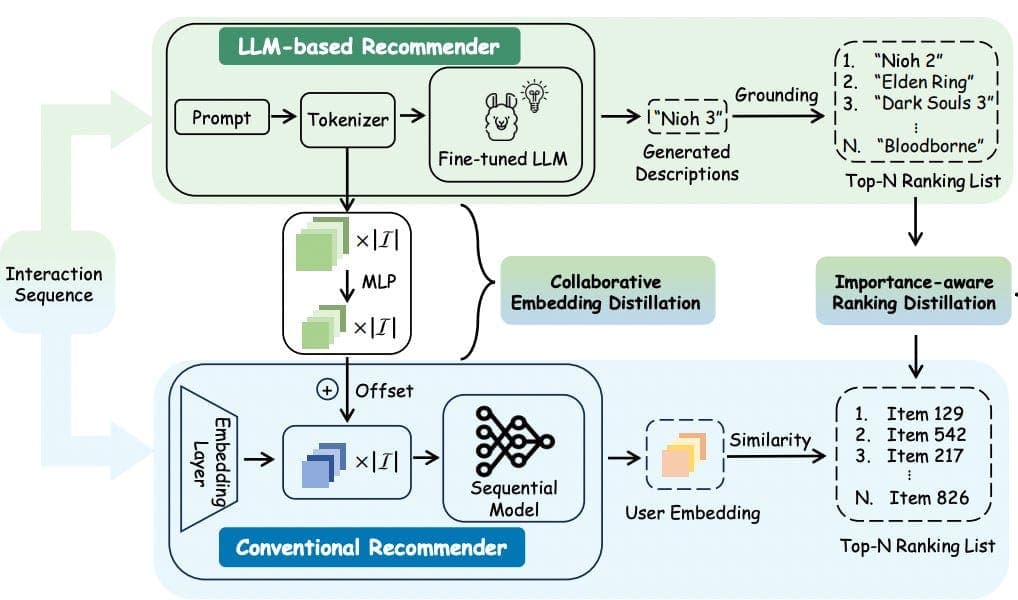
Technically, the EventChat system is built on a Retrieval-Augmented Generation (RAG) architecture, a pattern we've covered extensively given its prominence in enterprise AI. The specific insight here is their use of an advanced LLM as the ranker within the RAG pipeline. After retrieving candidate events from a vector database, the LLM is tasked with scoring, ordering, and reasoning about the best matches for the user's query.
This is a more sophisticated—and expensive—approach than using a simpler cross-encoder or heuristic ranking model. The complexity involves:
- Data Pipeline: Structuring product catalogs, lookbooks, and brand materials into a retrievable knowledge base.
- Query Understanding & Rewriting: Using an LLM to interpret nuanced customer language and reformulate it for effective retrieval.
- Ranking & Reasoning Layer: The core LLM ranker that evaluates retrieved items against the query context.
- Response Generation: A final LLM call to produce a natural, brand-appropriate conversational response incorporating the ranked items.
The study implies that moving to production quality would necessitate steps like fine-tuning the ranker on domain-specific preference data or implementing more efficient, specialized ranking models to curb cost and latency.
Governance & Risk Assessment
- Privacy: A conversational CRS in luxury retail would handle sensitive client data, preferences, and purchase history. Implementing strict data governance, anonymization for training/analytics, and secure, compliant cloud infrastructure is non-negotiable.
- Bias & Brand Safety: An off-the-shelf LLM can generate recommendations or language that misaligns with brand values, aesthetic principles, or inclusivity goals. Mitigation requires curated training data, robust output guardrails, and continuous monitoring.
- Maturity Level: This research, posted on arXiv, highlights the experimental and rapidly evolving state of production-grade LLM-driven CRS. The documented challenges with cost, speed, and quality indicate this is late-stage pilot or early-production technology, not a plug-and-play solution. Brands should approach with a test-and-learn mindset, starting with controlled, high-value use cases rather than broad deployment.
gentic.news Analysis
This EventChat study is a critical piece of empirical evidence in the ongoing narrative of operationalizing generative AI. It validates the potential of LLM-driven conversational recommendation while squarely addressing the economic and experiential bottlenecks that stall production deployment. The cited cost and latency metrics provide a concrete benchmark against which retail AI teams can evaluate their own prototypes.
The focus on SME context is particularly insightful for the luxury sector, where individual boutiques or regional subsidiaries often operate with autonomy and limited technical resources. The findings suggest that for these entities, a fully-fledged, LLM-heavy CRS might currently be overkill; a simpler, rules-based conversational interface or a heavily optimized hybrid model may offer better ROI.
This research connects directly to several trends we monitor. First, it echoes the RAG deployment bottlenecks recently highlighted in a technical guide on Medium (2026-03-28), where ranking complexity and LLM inference costs are identified as major scaling challenges. Second, it provides a real-world case study for the LLM customization decision framework—"When to Prompt, RAG, or Fine-Tune"—covered in another recent Medium guide (2026-03-29). EventChat's experience demonstrates that for a quality-sensitive task like ranking, prompt-based learning with a foundational model (their initial approach) was insufficient, pointing toward the need for fine-tuning or more advanced RAG patterns.
Finally, the paper's contribution of a revised evaluation model is significant. As the field grapples with moving from demos to durable systems, standardized, user-centric evaluation frameworks are essential. For luxury brands where customer experience is paramount, adopting such rigorous evaluation methodologies will be key to ensuring AI interactions enhance, rather than degrade, the brand promise.