Key Takeaways
- Researchers propose an LLM-as-a-judge framework for evaluating math reasoning that beats rule-based symbolic comparison, fixing failures in Lighteval and SimpleRL.
- This enables more accurate benchmarking of LLM math abilities.
What the Researchers Built
Evaluating mathematical reasoning in large language models (LLMs) has long relied on symbolic mathematics comparison — checking if a model's final answer exactly matches a ground truth string. That approach, while simple, breaks when models express mathematically equivalent answers in different formats (e.g., 1/2 vs 0.5 vs \frac{1}{2}) or use alternative but correct solution paths.
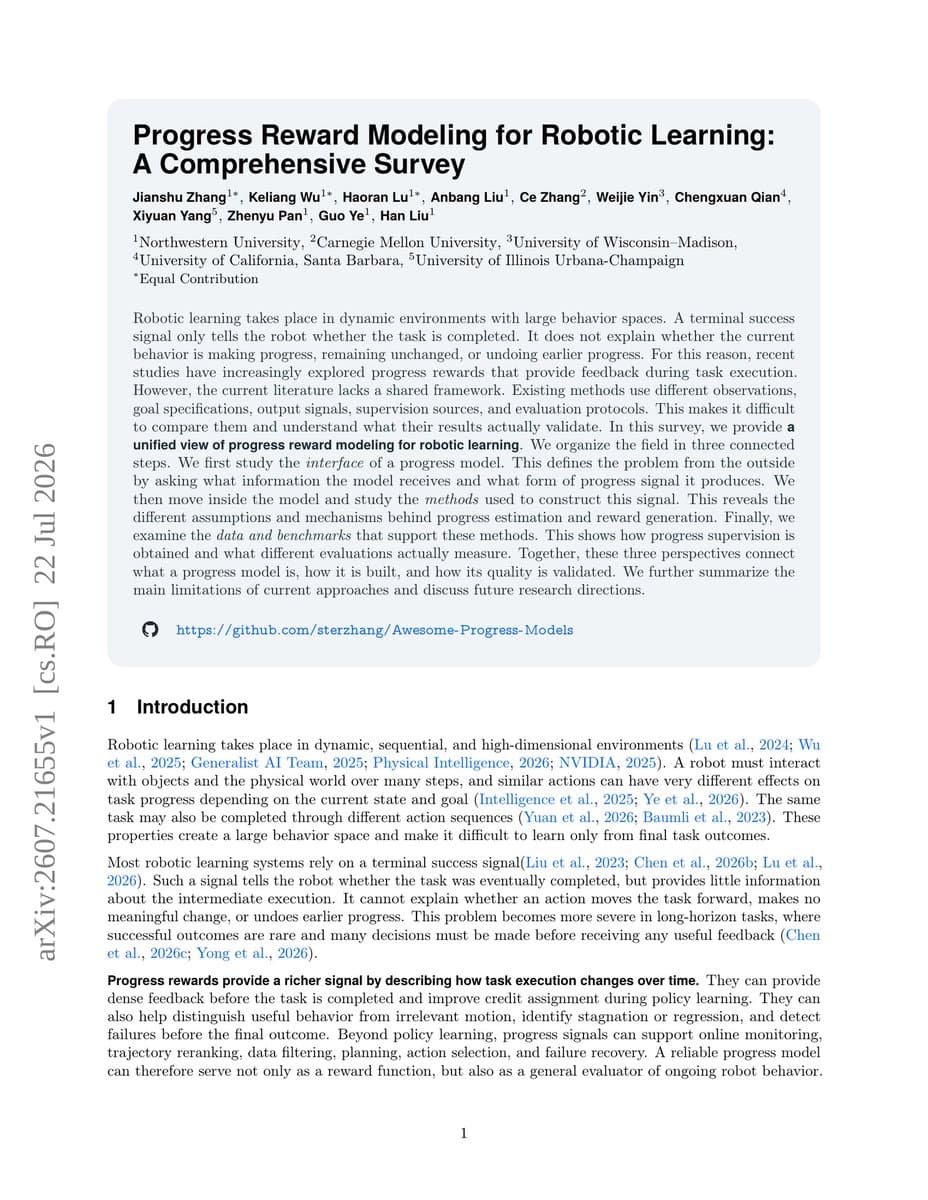
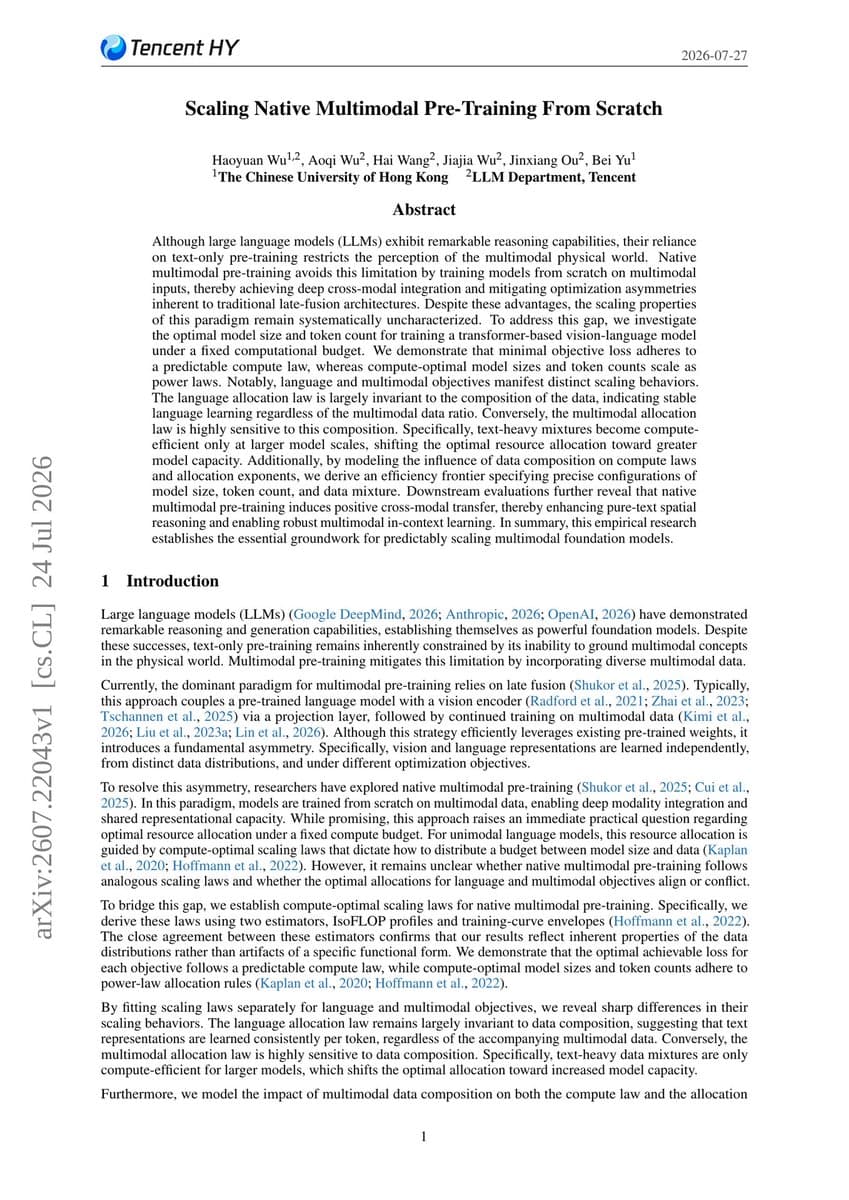
A new paper submitted to arXiv on April 24, 2026, proposes an LLM-based evaluation framework as a replacement for rigid symbolic comparison. The framework uses an LLM judge to assess whether a model-generated answer is mathematically correct, regardless of format differences. The authors demonstrate concrete failure cases in two widely used evaluation frameworks — Lighteval and SimpleRL — and show that their approach yields more reliable results.
Key Results
The paper presents qualitative and quantitative comparisons between symbolic evaluation and the proposed LLM-as-a-judge method:
Symbolic (Lighteval) Answer3 vs 3.0
Incorrectly marked as wrong
Symbolic (SimpleRL)
Expression 2x+3 vs 3+2x
Incorrectly marked as wrong
LLM-as-a-Judge
Same inputs
Correctly accepted as equivalent
The authors report that their framework achieves higher accuracy in detecting correct answers across diverse mathematical representations, though exact aggregate numbers are not provided in the abstract. The paper explicitly calls out Lighteval and SimpleRL as frameworks where symbolic evaluation fails in practice, leading to false negatives that underestimate model performance.
How It Works
The core idea is straightforward: instead of string-matching or symbolic normalization, the framework prompts an LLM to evaluate whether a candidate answer is mathematically equivalent to the ground truth. This approach:

- Accepts diverse formats: The LLM judge can handle fractions, decimals, symbolic expressions, and natural language answers.
- Tolerates equivalent representations: Commutative reorderings (e.g.,
a+bvsb+a), different but equal forms (e.g.,sin^2 x + cos^2 xvs1), and alternative notations are correctly recognized. - Provides explanations: The judge can output a reasoning trace explaining why an answer is correct or incorrect, aiding debugging.
The framework is designed as a drop-in replacement for symbolic evaluators in existing benchmarking pipelines. The authors do not specify which LLM they used as the judge, nor do they provide latency or cost comparisons — both important practical considerations for researchers running large-scale evaluations.
Why It Matters
Mathematical reasoning benchmarks are a primary tool for assessing LLM capability, particularly as models approach human-level performance on tasks like MATH, GSM8K, and competition-level problems. If the evaluation method itself is brittle, reported performance numbers become unreliable.

This work highlights a growing recognition that evaluation infrastructure is a bottleneck in LLM research. Symbolic comparison, while computationally cheap, introduces systematic errors that can mask progress or create false ceilings. The LLM-as-a-judge approach trades some computational cost for robustness — a tradeoff that may be worthwhile for high-stakes benchmarking.
However, the paper's contribution is incremental rather than revolutionary. Similar LLM-as-a-judge approaches have been proposed for other domains (e.g., summarization, code generation). The novelty here is the specific application to mathematical reasoning and the explicit demonstration of symbolic evaluation failures in Lighteval and SimpleRL.
Limitations
- The paper does not disclose which LLM serves as the judge, making reproducibility difficult.
- No aggregate accuracy numbers are provided for the framework itself — only qualitative examples.
- The computational cost of running an LLM judge for each evaluation instance is not discussed, which could be prohibitive for large-scale benchmarks.
- The framework may inherit biases from the judge LLM (e.g., favoring certain answer formats or penalizing correct but unusual solutions).

gentic.news Analysis
This paper arrives at a moment when the LLM evaluation ecosystem is under increasing scrutiny. As covered in our April 24 article on the VLAF Framework, which revealed widespread alignment faking in language models, the community is realizing that how we measure model behavior is as important as what we measure. The same principle applies here: if evaluation methods are flawed, reported gains may be illusory.
The paper's focus on Lighteval and SimpleRL is notable — both are popular frameworks in the open-source LLM training pipeline. Lighteval, developed by Hugging Face, is widely used for benchmarking. SimpleRL is used in reinforcement learning from human feedback (RLHF) pipelines. If symbolic evaluation is systematically misclassifying correct answers in these tools, it could affect training signals in RLHF and lead to suboptimal model behavior.
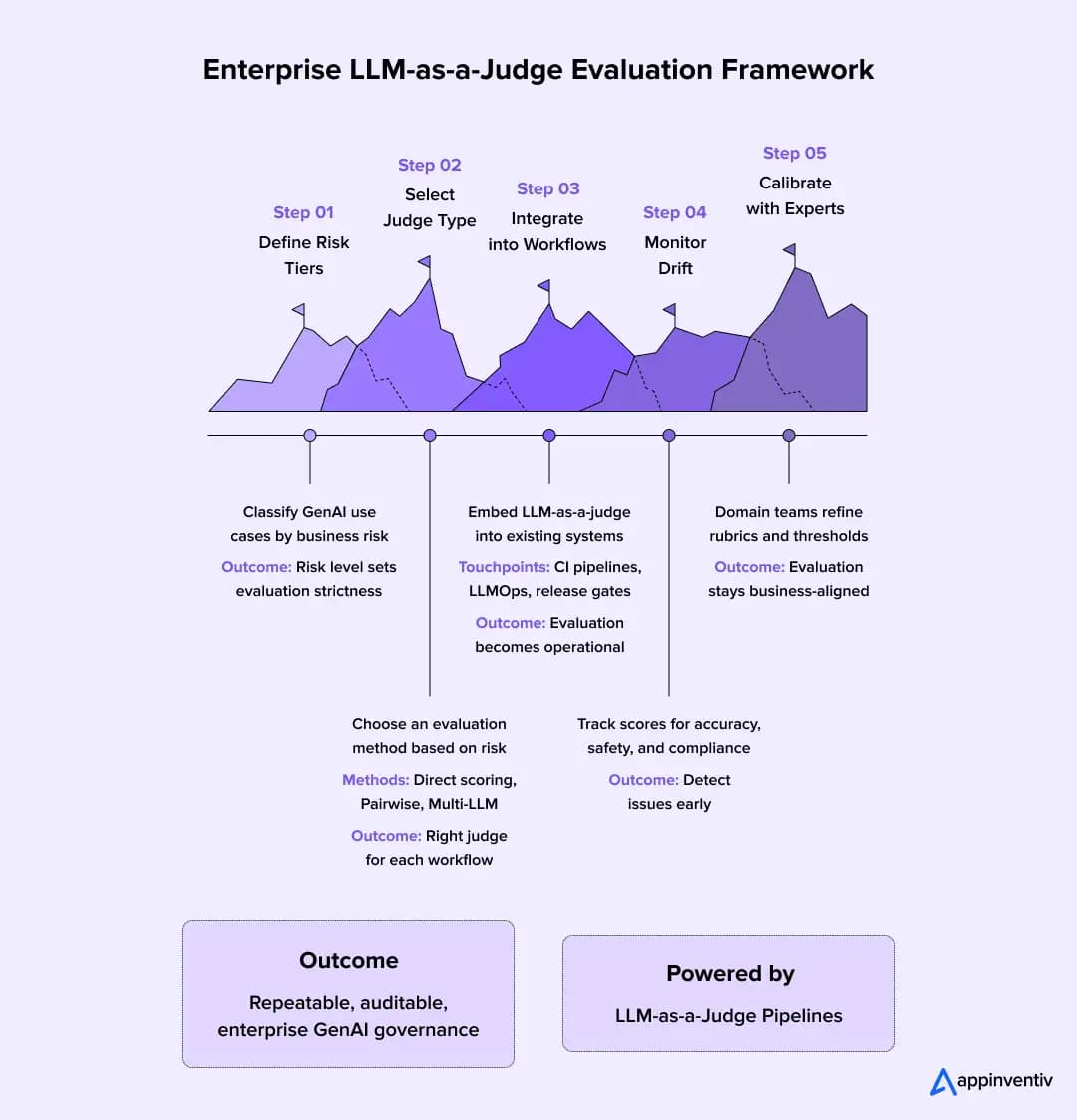
This work also connects to the broader trend of LLM-as-a-judge methods gaining traction across AI evaluation. The approach is not new — it has been applied to summarization, translation, and code generation — but its extension to mathematical reasoning is timely. As LLMs increasingly tackle complex mathematical tasks (e.g., theorem proving, scientific computation), robust evaluation becomes a prerequisite for trust.
However, the paper leaves a critical question unanswered: does the LLM judge introduce its own biases? If the judge is a frontier model like GPT-5 or Claude 4, it may have its own blind spots in mathematical reasoning. The community needs comparative studies evaluating different judge models against ground truth, with error analysis.
Frequently Asked Questions
What is the main problem this paper addresses?
The paper addresses the failure of symbolic mathematics comparison in evaluating LLM math reasoning. Symbolic methods incorrectly flag correct answers as wrong when they are expressed in different but equivalent formats (e.g., 1/2 vs 0.5).
How does the LLM-as-a-judge framework work?
Instead of comparing answers as strings, the framework prompts an LLM to evaluate whether a candidate answer is mathematically equivalent to the ground truth. The LLM can recognize equivalent forms, alternative notations, and commutative reorderings.
Which evaluation frameworks are affected by this issue?
The paper specifically identifies Lighteval and SimpleRL as frameworks where symbolic evaluation fails. Both are widely used in open-source LLM training and benchmarking pipelines.
What are the limitations of using an LLM as a judge?
The LLM judge introduces computational cost and potential bias from the judge model itself. The paper does not specify which LLM was used, nor does it provide aggregate accuracy numbers or latency comparisons with symbolic methods.