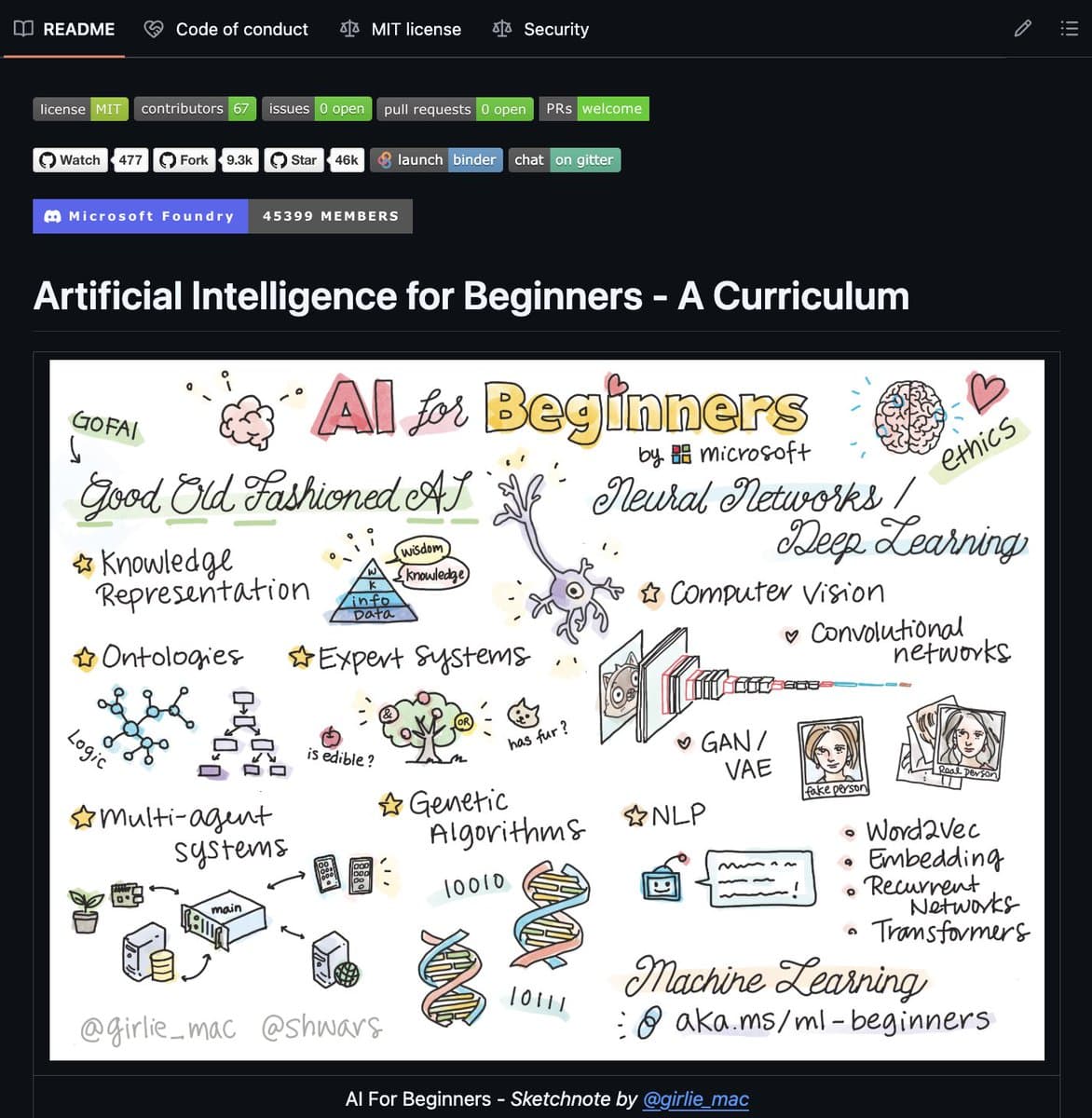
In a significant move for AI education, Microsoft has released a complete, open-source AI degree curriculum on GitHub, providing structured learning materials that rival expensive bootcamps and university courses. This comprehensive resource, available at no cost, represents a major step toward democratizing access to professional machine learning education.
The Curriculum Breakdown
The Microsoft AI degree covers the full spectrum of modern artificial intelligence concepts and practical implementations. The curriculum is thoughtfully structured to guide learners from foundational principles to advanced applications, mirroring what students would typically pay thousands of dollars for in commercial bootcamps or university programs.
Key components include:
Neural Networks Built from Scratch: Students learn the fundamental mathematics and implementation details of neural networks, starting with basic perceptrons and progressing to complex architectures. This hands-on approach ensures deep understanding rather than just API familiarity.
Computer Vision & Natural Language Processing: The curriculum covers both major domains of applied AI, with practical projects in image recognition, object detection, sentiment analysis, and language modeling.
Advanced Architectures: Modules on Generative Adversarial Networks (GANs) and Transformers provide exposure to cutting-edge AI research and applications that power today's most impressive AI systems.
Industry-Standard Frameworks: Comprehensive labs using PyTorch, TensorFlow, and Keras ensure graduates are proficient in the tools actually used in industry and research.
Responsible AI Frameworks: Perhaps most importantly, the curriculum includes ethical considerations and frameworks for developing AI responsibly—a crucial component often missing from technical-focused programs.
Why This Matters for AI Education
The release of this curriculum comes at a critical moment in AI development. As demand for AI talent continues to outstrip supply, traditional educational pathways have struggled to keep pace with the rapidly evolving field. University computer science programs often take years to update their curricula, while bootcamps charge premium prices that exclude many potential learners.
Microsoft's open-source approach addresses several key barriers:
Accessibility: By making the curriculum freely available on GitHub, Microsoft removes financial barriers that prevent many from accessing quality AI education.
Flexibility: Self-paced learning allows working professionals, students, and career-changers to study on their own schedules.
Practical Focus: The emphasis on hands-on labs and real-world frameworks ensures graduates have immediately applicable skills.
Quality Control: As "battle-tested" material, the curriculum has presumably been refined through internal use at Microsoft, ensuring it meets industry standards.
The Broader Implications
This move represents more than just another educational resource—it signals a strategic shift in how major tech companies approach talent development and ecosystem growth. By investing in open education, Microsoft:
- Grows the AI Talent Pool: More skilled practitioners mean more potential users of Microsoft's AI tools and Azure cloud services.
- Establishes Standards: By defining what constitutes comprehensive AI education, Microsoft influences how the field develops.
- Builds Community: Open-source educational materials foster community development and peer learning.
- Addresses Ethical Concerns: Including responsible AI frameworks from the beginning helps shape how future developers approach ethical considerations.
Comparison with Traditional Education
While the Microsoft AI degree doesn't offer formal accreditation or instructor support like traditional programs, it provides several advantages:
- Cost: Free versus $10,000+ for bootcamps or $50,000+ for university degrees
- Timeliness: Curriculum reflects current industry practices rather than academic timelines
- Practicality: Focus on implementation versus theoretical foundations
- Access: Available globally without admission requirements
However, learners will need strong self-discipline and may miss the networking opportunities and structured feedback of formal programs.
The Future of AI Education
Microsoft's initiative may inspire similar moves from other tech giants, potentially leading to a new era of open, industry-driven education. As AI continues to transform industries, accessible education becomes increasingly crucial for ensuring equitable participation in the digital economy.
This development also raises questions about the future role of traditional educational institutions and whether they'll need to adapt their models to remain relevant in technical fields that evolve faster than academic calendars.
Getting Started
The curriculum is available on GitHub, organized in a logical progression from beginner to advanced topics. Prospective learners should have basic programming knowledge (preferably Python) and mathematical fundamentals before beginning. The structured nature makes it suitable for self-study, study groups, or even as supplemental material for existing courses.
As AI continues to reshape our world, initiatives like Microsoft's open AI degree play a vital role in ensuring that the benefits of this technology are developed and deployed by a diverse, well-educated community of practitioners.
Source: @hasantoxr on X/Twitter