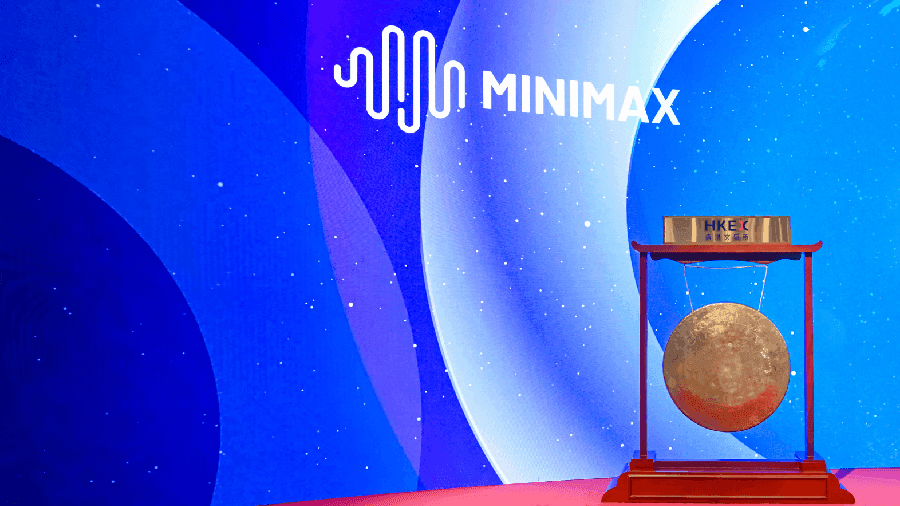
Chinese artificial intelligence company MiniMax Group has delivered a powerful first earnings report since its blockbuster Hong Kong listing, reporting 2025 revenue of $79 million—a staggering 159% year-over-year increase that surpassed analyst expectations. More significantly, the company revealed its annual recurring revenue (ARR) has now exceeded $150 million as of February 2026, signaling strong momentum in its transition from a pure-play large language model developer to a comprehensive AI platform company.
From Models to Marketplace: The Platform Transformation
MiniMax's strategic pivot represents a broader trend in the AI industry where foundational model developers are expanding their offerings to capture more value across the AI stack. Rather than simply licensing its proprietary models, MiniMax is building an ecosystem where developers and enterprises can access not just models but tools, APIs, and infrastructure to build and deploy AI applications.
This platform approach addresses several critical challenges in today's AI market. First, it creates recurring revenue streams that are more predictable than one-time model licensing deals. Second, it builds network effects as more developers join the platform, creating complementary tools and applications. Third, it positions MiniMax as an essential infrastructure provider rather than just another model vendor in an increasingly crowded field.
Financial Performance and Market Position
The company's financial results exceeded Bloomberg analyst estimates of $71.39 million, demonstrating stronger-than-anticipated adoption of its offerings. CEO Yan Junjie indicated in the post-earnings call that he expects revenue to double again this year, suggesting the company is still in the early stages of its growth trajectory despite already impressive numbers.
MiniMax's success comes amid intensifying competition in China's AI sector, where companies like Baidu, Alibaba, and Tencent have invested billions in developing their own large models. The company's ability to carve out a distinct position—focusing on platform services rather than direct competition on model size alone—appears to be paying dividends.
The Broader AI Industry Context
MiniMax's transition mirrors a global shift in how AI companies are structuring their businesses. The initial wave of AI development focused primarily on creating ever-larger models with impressive capabilities. However, as the technology matures, the focus is shifting toward practical implementation, integration, and creating sustainable business models.
This evolution reflects the natural progression of transformative technologies: from breakthrough innovations to platform development to widespread adoption. Companies that successfully navigate this transition—from pure technology providers to platform builders—often capture disproportionate value in their respective ecosystems.
Implications for the Global AI Landscape
MiniMax's success has several important implications for the global AI industry:
Platform Dominance Over Pure Technology: The company's performance suggests that in the long run, platform companies may outperform pure model developers, similar to how cloud platforms eventually dominated over standalone software vendors.
China's AI Ecosystem Maturation: MiniMax's growth demonstrates that China's AI sector is developing sophisticated business models beyond government-supported initiatives, with market-driven companies achieving significant commercial success.
Recurring Revenue Validation: The $150+ million ARR milestone validates that enterprise customers are willing to commit to ongoing AI platform subscriptions rather than one-off purchases, creating more stable business models for AI companies.
IPO Market Confidence: As one of the few AI companies to go public recently, MiniMax's strong performance could boost investor confidence in other AI startups considering public offerings.
Challenges and Future Outlook
Despite its impressive results, MiniMax faces significant challenges. The AI platform space is becoming increasingly competitive, with major cloud providers expanding their AI offerings and other specialized AI companies pursuing similar platform strategies. Additionally, geopolitical tensions could complicate international expansion plans.
However, the company appears well-positioned to capitalize on several key trends: the growing enterprise adoption of AI, the need for more sophisticated AI deployment tools, and the shift from experimentation to production implementation across industries.
CEO Yan Junjie's prediction of doubling revenue this year suggests the company has substantial growth levers yet to pull, potentially including expanded product offerings, geographic expansion, or deeper enterprise partnerships.
Conclusion: A Blueprint for AI Commercialization
MiniMax's post-IPO performance provides a compelling case study in how AI companies can successfully transition from research-focused organizations to sustainable commercial enterprises. By focusing on platform development rather than just model advancement, the company has created a more defensible business model with recurring revenue streams and ecosystem advantages.
As the AI industry continues to mature, MiniMax's journey from large model developer to AI platform company may serve as a template for other AI startups seeking to build lasting businesses in this rapidly evolving space. Their success demonstrates that while breakthrough technology is essential, sustainable business models are what ultimately determine long-term success in the commercial AI landscape.
Source: Pandaily, SCMP Tech