What Happened

Chinese GPU startup Moore Threads reported year-over-year revenue growth for Q1 2026 and disclosed progress on a 100,000-GPU AI training cluster, according to a report by Let's Data Science. The company, one of China's leading alternatives to NVIDIA, is positioning its hardware for large-scale AI workloads as US export restrictions limit access to NVIDIA's high-end GPUs like the H100 and B200 in China.
Key Numbers
- Q1 2026 revenue growth — year-over-year increase (specific percentage not disclosed in the source)
- 100,000-GPU cluster — under construction for AI training workloads
- Market context — Moore Threads is among a handful of Chinese GPU makers seeking to fill the gap left by US export controls on advanced semiconductors
Technical Details
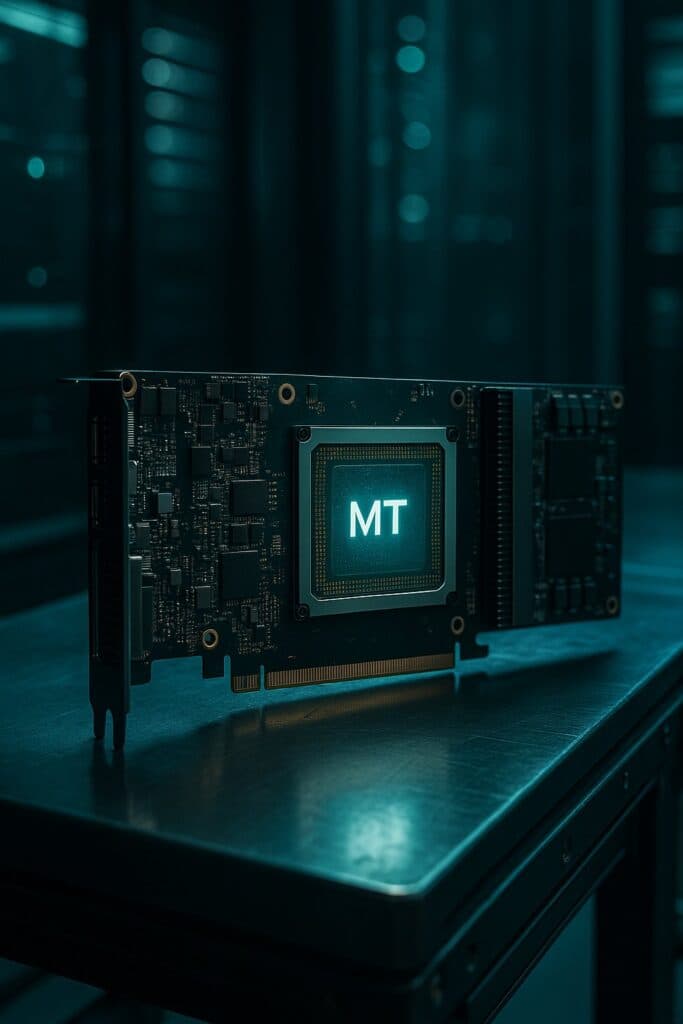
Moore Threads develops GPUs based on its own MUSA architecture (Moore Threads Unified System Architecture), designed for both graphics and general-purpose computing. The company's current flagship, the MTT S4000, targets AI training and inference workloads. The 100,000-GPU cluster would represent a significant scale-up for domestic Chinese AI infrastructure, rivaling the size of some of the largest clusters operated by US hyperscalers.
Competitive Landscape
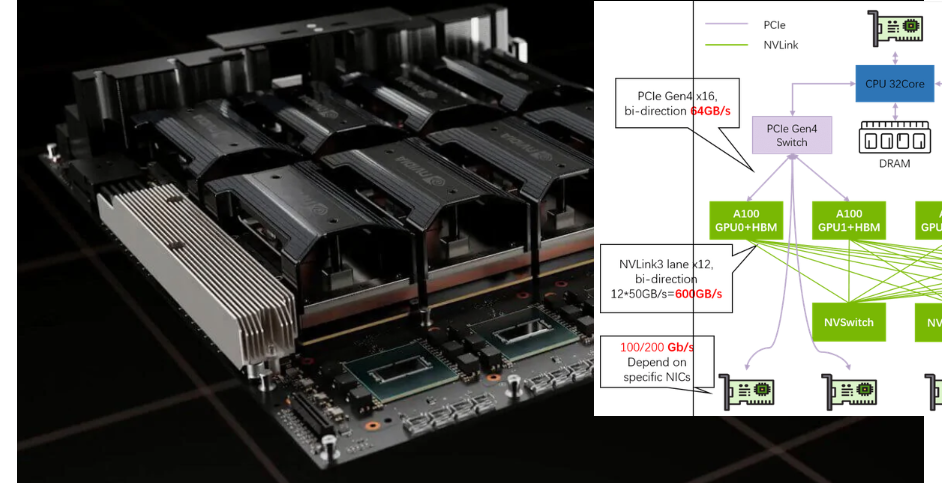
Moore Threads competes directly with NVIDIA (whose H100 and B200 are restricted in China), Huawei (with its Ascend 910B and 910C), Cambricon, and Biren Technology. The Chinese GPU market is fragmented, but Moore Threads has emerged as one of the more credible alternatives, with partnerships across cloud providers and AI startups.
What This Means in Practice
If Moore Threads successfully deploys a 100,000-GPU cluster, it would demonstrate that Chinese AI companies can scale training workloads using domestic hardware — a key test of China's ability to circumvent US chip export controls. It would also put pressure on NVIDIA's dominance in the Chinese market, though Moore Threads' software ecosystem (CUDA compatibility via translation layers) remains a weaker point compared to NVIDIA's mature stack.
gentic.news Analysis
Moore Threads' Q1 revenue growth and cluster progress come amid a broader push by China to build sovereign AI infrastructure. The company's trajectory mirrors that of Huawei's Ascend line, which has also seen increased adoption for AI training in China since the US tightened export controls in late 2023 and 2024.
This development aligns with a pattern we've covered extensively: the decoupling of AI hardware supply chains. While Google and other US hyperscalers are investing billions in data centers (including Google's $5B+ Texas facility for Anthropic, as we reported last year), Chinese firms are racing to build domestic alternatives. The 100,000-GPU cluster would be one of the largest publicly disclosed AI clusters in China, though it still lags behind the 100,000+ GPU clusters operated by Meta, Google, and Microsoft in the US.
A key question is whether Moore Threads can deliver the software maturity needed for production AI workloads. NVIDIA's CUDA ecosystem remains the gold standard, and while Moore Threads offers CUDA compatibility via translation layers, performance overhead and compatibility issues persist. If the 100,000-GPU cluster proves viable for training large models (GPT-scale or equivalent), it would be a significant validation of domestic Chinese GPU alternatives.
Frequently Asked Questions
What is Moore Threads?
Moore Threads is a Chinese GPU company founded in 2020, headquartered in Beijing. It develops GPUs for AI training, inference, and graphics, using its proprietary MUSA architecture. The company is seen as a leading domestic alternative to NVIDIA in China.
How does Moore Threads compare to NVIDIA?
Moore Threads' GPUs offer competitive raw compute performance for AI workloads but lag behind NVIDIA in software ecosystem maturity, driver stability, and CUDA compatibility. The company provides a CUDA translation layer called MUSA, but performance overhead can be significant for some workloads.
Why is a 100,000-GPU cluster significant?
A 100,000-GPU cluster would be among the largest AI training clusters in China, comparable in scale to clusters built by US hyperscalers. It would demonstrate that Chinese domestic hardware can support large-scale AI training, a key strategic goal for China given US export restrictions on advanced NVIDIA GPUs.
What US export controls affect Moore Threads?
The US Department of Commerce's export controls, first imposed in October 2022 and updated in 2023 and 2024, restrict the sale of advanced AI chips to China, including NVIDIA's A100, H100, and B200. These controls have created a market opportunity for domestic Chinese GPU makers like Moore Threads, Huawei, and Cambricon.