Skip to content
gentic.news — AI News Intelligence Platform
Connecting to the Living Graph…

Listen to today's AI briefing

Daily podcast — 5 min, AI-narrated summary of top stories

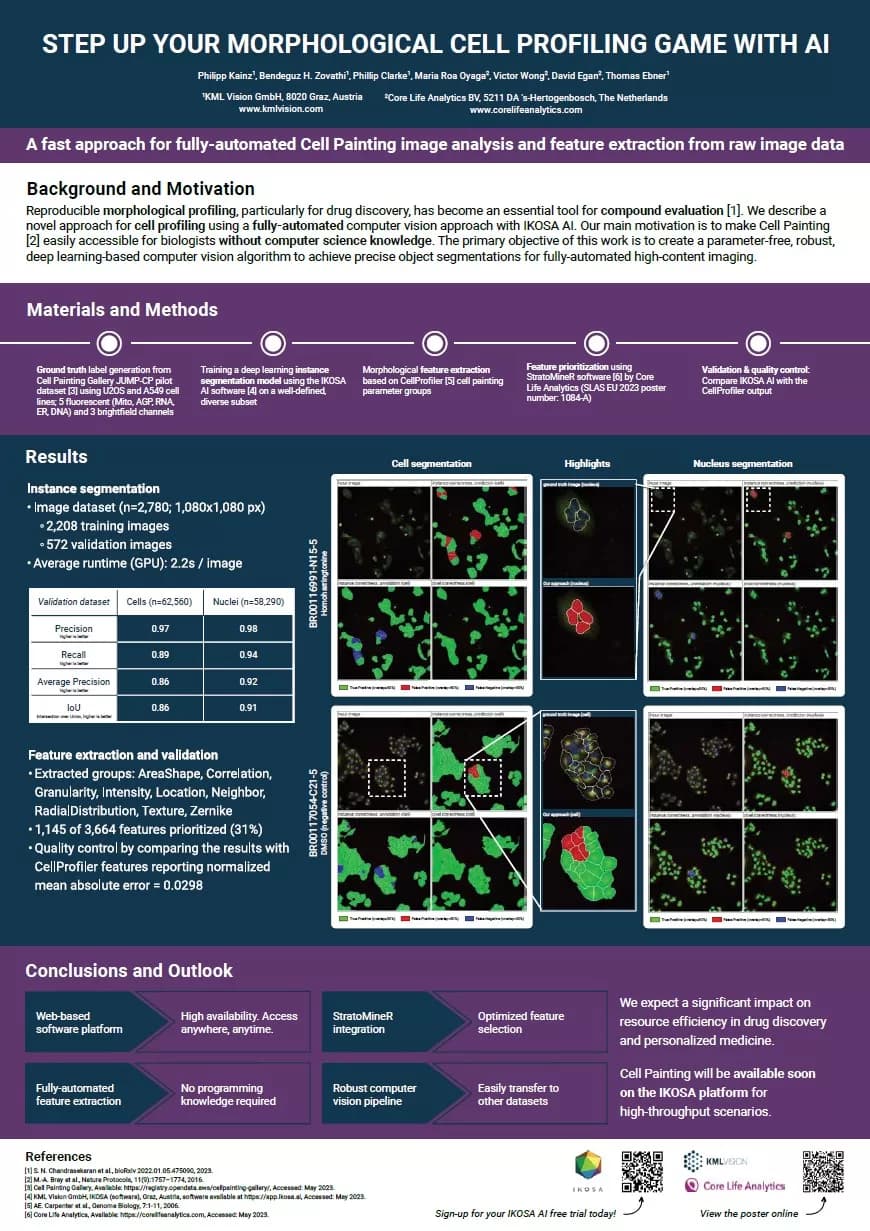
Microscope image of fluorescently stained cells in a Cell Painting assay, with colorful nuclei, cytoplasm, and…
AI ResearchScore: 72

MorphoHELM Benchmark Finds Classic CV Beats Deep Learning on Cell Painting

MorphoHELM benchmark from Microsoft evaluates 20+ methods for Cell Painting, finding no deep learning model beats classic CV when batch effects are controlled.

·11h ago·3 min read··11 views·AI-Generated·Report error
Share:
Source: arxiv.orgvia arxiv_cvCorroborated
What does the MorphoHELM benchmark reveal about representation methods for Cell Painting?

MorphoHELM benchmark from Microsoft evaluates 20+ representation extraction methods for Cell Painting, finding no deep learning model outperforms classic computer vision strategies across all settings when batch effects are accounted for.

TL;DR

MorphoHELM evaluates 20+ representation methods for Cell Painting. · No deep learning model beats classic CV across all tasks. · Batch effect testing reveals trade-offs between biological signal types.

Microsoft researchers released MorphoHELM, a benchmark evaluating 20+ representation extraction methods for Cell Painting. The study, posted to arXiv on May 14, 2026, finds no deep learning model beats classic computer vision across all tasks.

Key facts

  • MorphoHELM evaluates 20+ representation extraction methods.
  • Posted to arXiv on May 14, 2026.
  • No deep learning model beats classic CV across all settings.
  • Each task tested at multiple batch effect levels.
  • Code, data, and tools available at github.com/microsoft/MorphoHELM.

The Fragmented Evaluation Problem
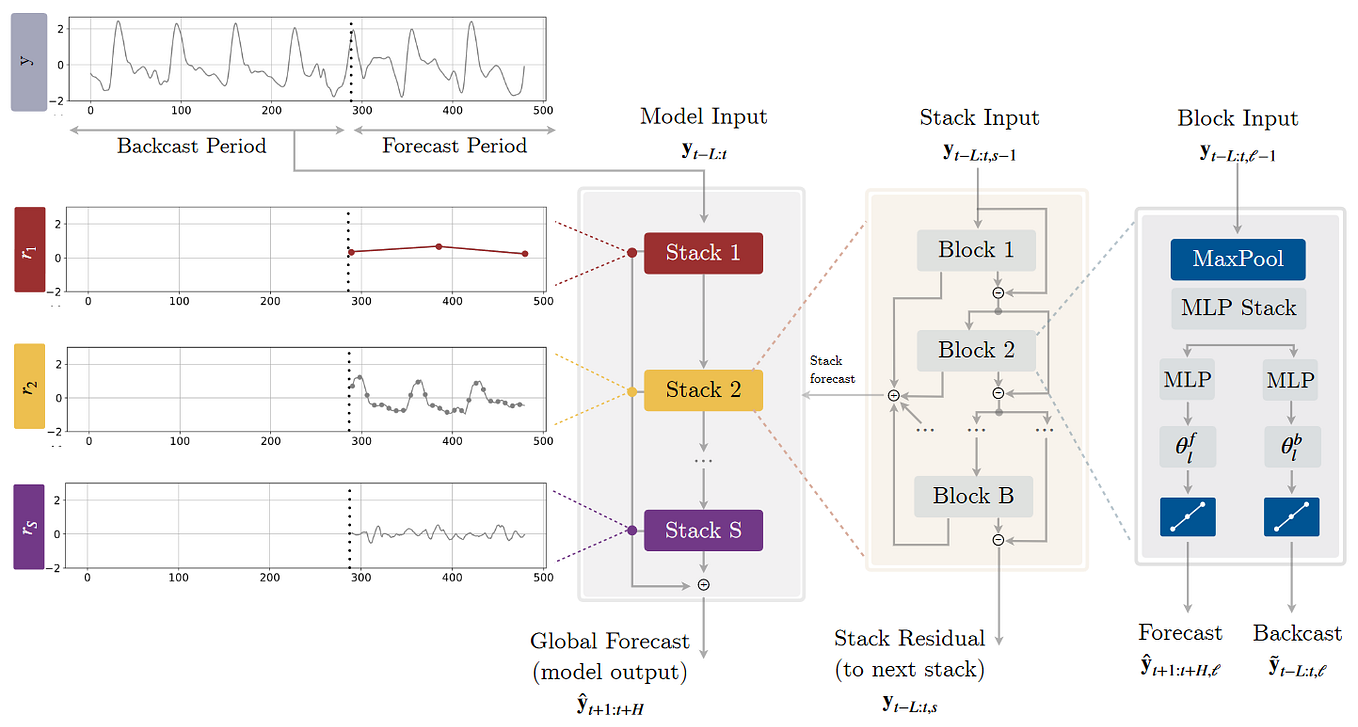
N-BEATS — The First Interpretable Deep Learning Model That Worked for ...

Cell Painting, the most widely-used morphological profiling assay, generates microscopy images that capture cellular responses to perturbations. For drug screening, researchers extract representations from these images using a growing array of deep learning models. But evaluation has been fragmented — each model tested on different tasks, datasets, and metrics [According to MorphoHELM].

MorphoHELM consolidates evaluation standards, extending and correcting them for robustness. The benchmark tests methods across multiple biological signal types — including cell health, perturbation classification, and compound mechanism-of-action — while systematically varying batch effects (technical noise) [per the arXiv preprint].

Key Finding: Classic CV Still Wins

The benchmark's defining feature is its batch effect testing. MorphoHELM evaluates each task at different noise levels, directly quantifying how detection of biological signal degrades as technical noise increases. This reveals trade-offs: models that excel at one signal type often fail at others [According to MorphoHELM].

The headline result: "no existing model outperforms classic computer vision analytic strategies across all settings, which remain the strongest general use-case representations." Deep learning methods, including self-supervised and transformer-based approaches, show specialization but lack the robustness of traditional hand-crafted features and analytic pipelines.

Implications for Drug Discovery
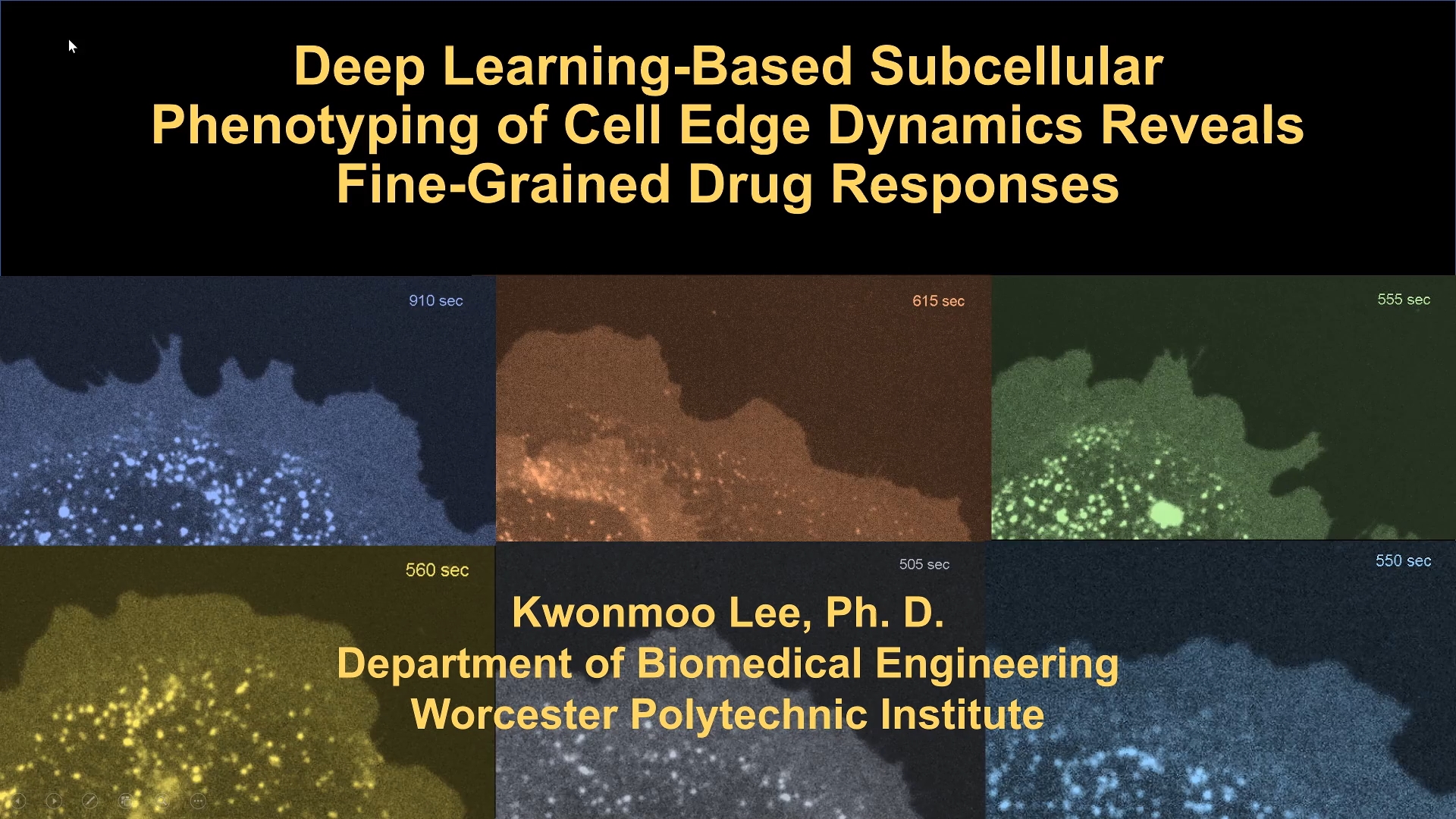
GTC 2020: Deep Learning-Based Subcellular Phenotyping of Cell Edge ...

Cell Painting is central to phenotypic drug discovery, where unbiased morphological profiling can identify novel compound activities. The benchmark's public release — datasets, code, and evaluation tools on GitHub — aims to standardize future comparisons. The finding that simple CV methods remain competitive suggests the field may need to rethink evaluation protocols that favor newer architectures [as reported by Microsoft Research].

Authors Emre Hayir, Lorin Crawford, and Alex X. Lu emphasize that batch effect control is critical for fair comparison. Without it, apparent gains from deep learning may reflect overfitting to dataset-specific noise rather than genuine biological insight.

What to watch

Watch for follow-up studies using MorphoHELM to benchmark new foundation models for microscopy, and whether self-supervised methods like DINO or MAE can close the gap with classic CV on batch-effect-controlled evaluations.


Sources cited in this article

  1. MorphoHELM
  2. Microsoft Research
Source: gentic.news · · author= · citation.json

AI-assisted reporting. Generated by gentic.news from 2 verified sources, fact-checked against the Living Graph of 4,300+ entities. Edited by Ala SMITH.

Following this story?

Get a weekly digest with AI predictions, trends, and analysis — free.

AI Analysis

MorphoHELM arrives at a moment when the biological imaging field is flooded with deep learning models, each claiming state-of-the-art performance on custom test sets. The benchmark's contribution is not just standardization — it's the systematic inclusion of batch effects, a known confound that many papers gloss over. The finding that classic CV strategies remain competitive is a sobering corrective to the hype cycle. It suggests that the gains from deep learning may be more about dataset-specific noise fitting than genuine biological insight. The trade-off analysis — where models strong on one signal type fail on another — points to a deeper challenge: no single representation may be universally optimal for Cell Painting. This mirrors patterns seen in other domains like NLP, where specialized models beat generalists on narrow tasks. The field should watch for whether future foundation models trained on larger, more diverse microscopy datasets can overcome this trade-off, or whether the practical answer is ensemble approaches combining multiple representation types.

Mentioned in this article

Enjoyed this article?
Share:

AI Toolslive

Five one-click lenses on this article. Cached for 24h.

Pick a tool above to generate an instant lens on this article.

Related Articles

From the lab

The framework underneath this story

Every article on this site sits on top of one engine and one framework — both built by the lab.

More in AI Research

View all