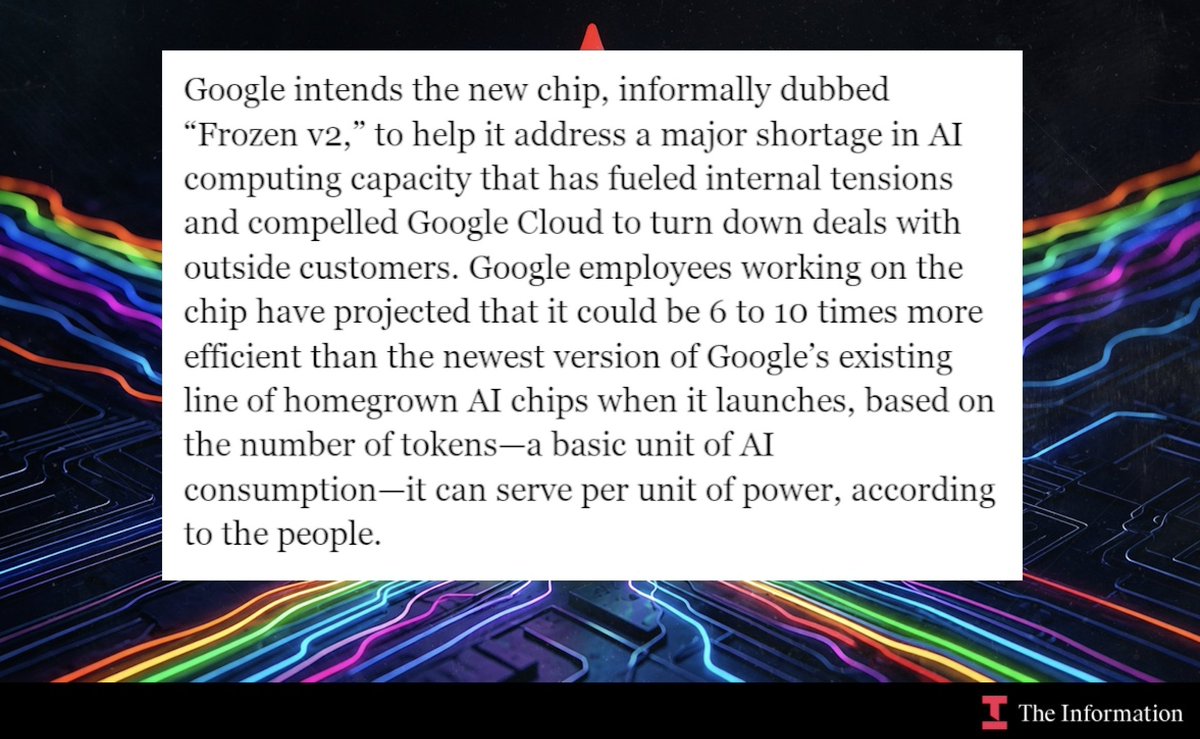
In a development that could fundamentally reshape the economics of artificial intelligence, NVIDIA has unveiled its Blackwell Ultra GB300 NVL72 systems, boasting what the company claims are unprecedented efficiency gains: up to 50 times higher performance per megawatt and 35 times lower cost per token compared to its previous-generation Hopper platform. This announcement, highlighted by industry observer @kimmonismus, represents more than just another incremental improvement—it addresses what many experts consider the single greatest constraint on AI's future growth: energy consumption.
The Efficiency Breakthrough: What Blackwell Ultra Delivers
The Blackwell Ultra GB300 NVL72 systems represent NVIDIA's next architectural leap following the Hopper platform that has dominated AI infrastructure for the past two years. While specific technical specifications remain partially undisclosed, the key metrics tell a compelling story:
- 50x performance per megawatt improvement: This metric measures computational output relative to energy input, becoming increasingly crucial as AI models grow exponentially in size and complexity
- 35x lower cost per token: This translates directly to reduced operational expenses for running inference and training on large language models and other AI workloads
- NVL72 configuration: The naming suggests a 72-GPU node configuration optimized for massive-scale AI workloads, likely building on NVIDIA's existing NVLink and InfiniBand interconnect technologies
These improvements don't exist in isolation—they represent a compound effect of architectural enhancements across silicon design, memory systems, interconnects, and software optimization.
Why Energy Efficiency Is AI's New Battleground
As @kimmonismus noted in their commentary, "Energy will be the biggest bottleneck" for AI advancement. This observation reflects a growing consensus within the industry. Consider the context:
- Current large language models already consume energy comparable to small cities during training
- Projections suggest AI could account for up to 3.5% of global electricity consumption by 2030
- Many data centers are hitting power density limits, with cooling becoming increasingly challenging
- Environmental concerns and ESG (Environmental, Social, and Governance) pressures are mounting on tech companies
The Blackwell Ultra's efficiency gains directly address these constraints, potentially enabling:
- Larger, more capable models without proportional increases in energy consumption
- Wider AI deployment in regions with limited power infrastructure
- Reduced operational costs that could make AI accessible to smaller organizations
- Improved sustainability metrics for companies implementing AI at scale
Technical Implications: Beyond the Marketing Numbers
While the 50x and 35x figures are attention-grabbing, understanding what they likely represent technically provides deeper insight:
Architectural Improvements: Blackwell probably incorporates several generations of architectural refinement, including:
- Enhanced tensor cores optimized for mixed-precision computing
- Improved memory hierarchy reducing data movement energy
- Advanced power gating and dynamic voltage/frequency scaling
System-Level Optimization: The NVL72 designation suggests a tightly integrated system rather than just a chip improvement, with:
- Optimized interconnects reducing communication overhead
- Co-designed cooling solutions for high-density deployments
- Software stack improvements maximizing hardware utilization
Cost Per Token Economics: The 35x reduction in cost per token represents perhaps the most immediately impactful metric for businesses. This translates to:
- Cheaper inference, enabling more widespread AI deployment
- Reduced barriers to experimentation with larger models
- Potential for new business models around AI services
Market and Competitive Landscape Impact
NVIDIA's announcement comes at a critical juncture in the AI hardware race. Competitors like AMD, Intel, and various startups have been aggressively targeting the AI accelerator market, often emphasizing efficiency as a differentiator against NVIDIA's raw performance leadership.
The Blackwell Ultra's efficiency claims potentially neutralize one of the key arguments competitors have used while reinforcing NVIDIA's performance leadership. This could:
- Extend NVIDIA's dominance in training infrastructure
- Make competitive offerings less compelling unless they match similar efficiency gains
- Accelerate industry consolidation around NVIDIA's platform
- Potentially lower barriers to entry for AI startups through reduced operational costs
Practical Implications for AI Development and Deployment
For organizations developing or deploying AI, the Blackwell Ultra promises several tangible benefits:
Research Institutions: Could train larger models with existing power budgets, potentially accelerating scientific discovery.
Cloud Providers: Might reduce their energy costs significantly, possibly passing savings to customers or improving margins.
Enterprise Deployments: On-premise AI implementations become more feasible for companies with limited data center power capacity.
Environmental Impact: The efficiency gains could help mitigate criticism of AI's carbon footprint, though absolute consumption may still increase as adoption grows.
Challenges and Considerations
While the announced improvements are impressive, several questions remain:
- Real-world performance: Laboratory metrics often differ from production workloads
- Adoption timeline: Previous architecture transitions have faced software compatibility challenges
- Cost of transition: New systems typically command premium pricing initially
- Ecosystem readiness: Software and tools need optimization to realize full potential
Additionally, the focus on efficiency shouldn't overshadow other important considerations like:
- Memory capacity and bandwidth improvements
- Software ecosystem maturity
- Security features for increasingly valuable AI models
- Reliability and serviceability for mission-critical deployments
The Road Ahead: Efficiency as the New Performance Metric
NVIDIA's Blackwell Ultra announcement signals a strategic shift in how AI progress is measured. Where previously the focus was primarily on raw FLOPS (floating point operations per second) or model size, efficiency metrics are now taking center stage.
This reflects a maturation of the AI infrastructure market, where:
- Operational costs are becoming as important as capital expenditure
- Sustainability is transitioning from optional to essential
- Practical deployment considerations are outweighing theoretical capabilities
As AI continues its rapid advancement, efficiency improvements like those promised by Blackwell Ultra may determine not just how fast AI progresses, but how widely it can be deployed and who can afford to participate in its development.
Source: @kimmonismus on X/Twitter, highlighting NVIDIA's Blackwell Ultra announcement and emphasizing the critical importance of energy efficiency in AI scaling.