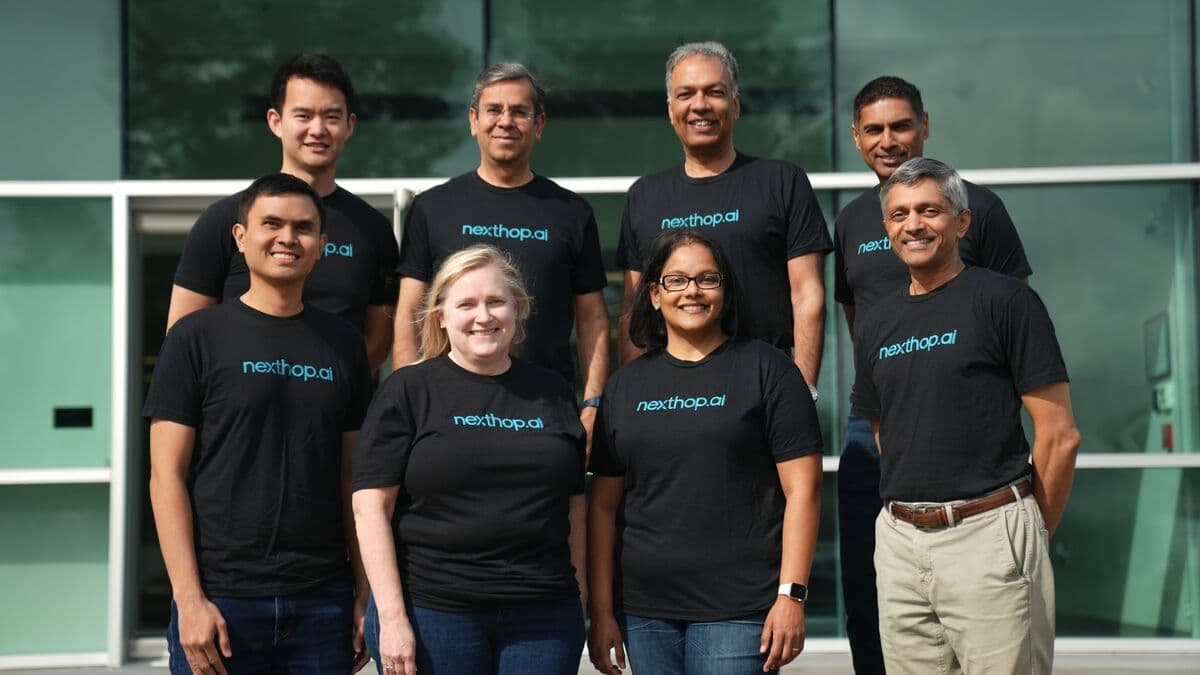
In a move that underscores the staggering scale of capital now flowing into artificial intelligence's supporting hardware, startup Nexthop AI has raised $500 million in a funding round led by Lightspeed Venture Partners, with participation from Andreessen Horowitz. The deal values the company at a formidable $4.2 billion, signaling that the venture world's focus is shifting decisively from pure software to the physical infrastructure that makes advanced AI possible.
This investment is not an isolated event but a headline-grabbing data point in a much broader trend. According to recent projections, data center capital expenditures dedicated to AI are on track to hit $800 billion this year and could reach $1 trillion annually by 2027. Nexthop AI, which specializes in designing and supplying specialized components and systems for AI data centers, is positioning itself at the epicenter of this spending explosion.
Why the Rush to Build AI's Backbone?
The frenzy around AI infrastructure stems from a fundamental mismatch: the explosive demand for computational power is outpacing the world's ability to supply it. Modern generative AI models and the pursuit of more advanced systems, including Artificial General Intelligence (AGI), require unprecedented amounts of processing power, specialized chips (like GPUs), and energy. Traditional data centers are ill-equipped for this new paradigm, creating a multi-billion-dollar market gap for companies that can build the next generation of compute facilities.
This infrastructure arms race has critical implications. First, it represents a massive capital reallocation within the tech sector, moving investment from software-as-a-service (SaaS) models toward heavy industrial and hardware plays. The knowledge graph context notes that AI "competes with SaaS," and this funding round is a tangible manifestation of that competition for venture dollars and market dominance.
The Broader Context: AI Reshapes the Economy
This infrastructure push is happening alongside AI's deepening integration into the global economy. Recent events highlight this dual trajectory:
- Productivity Measured: As of early March 2026, AI's impact is finally appearing in official productivity statistics, helping to resolve the long-standing "productivity paradox" where tech advances didn't translate to measured economic output.
- Workforce Transformation: Simultaneously, research reveals AI is creating a workplace divide, boosting the productivity of experienced workers while potentially blocking the hiring pathways for young talent. This underscores that the AI revolution has both a physical layer (data centers, chips) and a profound human layer (labor market disruption).
Nexthop AI's valuation suggests investors are betting that the companies providing the picks and shovels in this gold rush—the physical plants, cooling systems, and power infrastructure—will be foundational winners, regardless of which specific AI applications or models ultimately dominate.
Strategic Implications and Future Trajectory
The involvement of top-tier firms like Lightspeed and Andreessen Horowitz indicates a strategic consensus: scaling AI capability is now the paramount challenge. It's a bottleneck that must be solved for progress to continue. This investment is a vote of confidence that specialized infrastructure providers will capture significant value in the AI value chain.
However, this trajectory raises important questions. The projected $1 trillion annual spend on AI data centers represents an enormous concentration of capital and energy consumption. It will influence global energy grids, semiconductor supply chains, and geopolitical competition for technological supremacy. The success of companies like Nexthop AI will directly affect how quickly, efficiently, and sustainably the AI ecosystem can scale.
Ultimately, the $4.2 billion valuation of Nexthop AI is a milestone marking the maturation of the AI boom. The focus is expanding from algorithms and models to the formidable, real-world challenge of building the industrial base to run them. The race to construct AI's physical brain is now fully underway, backed by some of the most powerful checkbooks in Silicon Valley.
Source: Bloomberg, March 10, 2026