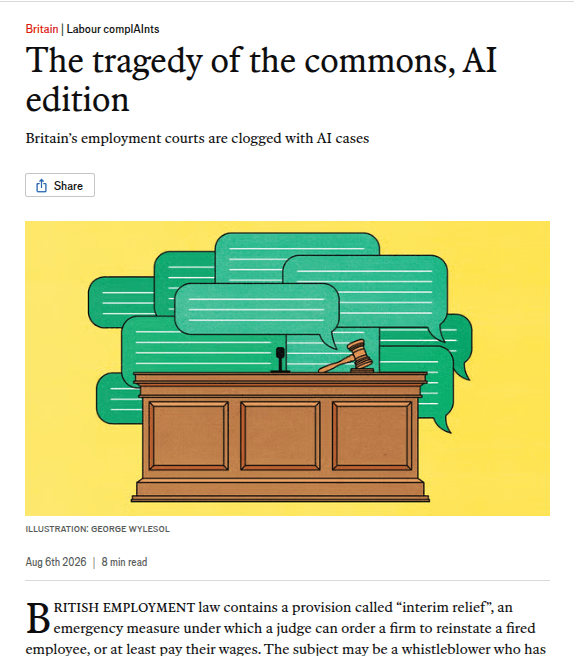
In a dramatic escalation of the regulatory battle over artificial intelligence, lawmakers in New York are pioneering a controversial new strategy: weaponizing civil lawsuits against AI companies whose technologies threaten to replace licensed professionals. This development, reported by AI commentator Rohan Paul, represents a fundamental shift in how governments are approaching AI regulation—moving beyond traditional oversight frameworks to create new private rights of action that could reshape liability in the technology sector.
The New York Precedent: A Blueprint for Legal Warfare
While specific legislative details remain emerging, the New York initiative appears to create statutory grounds for civil lawsuits against AI developers when their systems perform functions traditionally reserved for licensed professionals—from legal analysis and medical diagnosis to engineering design and financial advising. Unlike traditional regulatory approaches that rely on government enforcement, this strategy empowers individuals and professional organizations to bring direct legal action against AI companies.
This approach cleverly bypasses the slow-moving federal regulatory process while creating immediate financial disincentives for AI development in sensitive professional domains. By establishing private rights of action, lawmakers are effectively deputizing the legal profession itself to police AI encroachment into licensed fields—a particularly ironic twist given that legal services represent one of the most immediately threatened professional domains.
The Professional Licensing Battleground
At the heart of this conflict lies the century-old system of professional licensing that governs everything from medicine and law to architecture and engineering. These licensing regimes were established to protect public safety and ensure minimum competency standards, but they also create economic moats around professional services. AI systems capable of performing diagnostic analysis, legal research, or structural calculations at superhuman levels threaten to undermine both the safety rationale and economic foundations of these licensing systems.
Professional organizations have watched with growing alarm as AI systems demonstrate capabilities approaching or exceeding human professionals in specific domains. The response has been multifaceted: some organizations are embracing AI as a tool to enhance professional practice, while others are digging in for defensive warfare. The New York legislative approach provides the latter group with powerful new legal ammunition.
The Legal Theory Behind the Lawsuits
The emerging legal theory appears to rest on several potential foundations:
Unauthorized Practice Claims: Arguing that AI systems performing professional functions constitute the unauthorized practice of law, medicine, or other licensed professions
Consumer Protection Theories: Framing AI professional services as deceptive trade practices when not delivered by licensed humans
Negligence and Duty of Care: Establishing that AI companies owe professional-level duties to users of their systems
Economic Harm Claims: Allowing displaced professionals to sue for economic damages caused by AI competition
Each of these approaches presents novel legal questions that courts will need to resolve. Can a non-human entity "practice" a profession? What standard of care applies to AI systems? How should courts balance innovation against professional protectionism?
The Innovation vs. Protectionism Debate
Proponents of the lawsuit strategy argue they're protecting public safety and maintaining quality standards in essential services. They point to documented cases of AI hallucinations in legal research, biased outcomes in diagnostic systems, and unpredictable failures in complex analysis. Without human professionals overseeing these systems, they argue, the public faces unacceptable risks.
Critics counter that this represents pure protectionism dressed up as public safety concern. They note that many professional errors come from human practitioners, and that AI systems often demonstrate superior performance in controlled studies. More fundamentally, they argue that slowing AI adoption in professional services denies the public access to cheaper, more accessible services—particularly in underserved communities where professional services are currently unaffordable.
The Ripple Effects Across Industries
The implications extend far beyond New York's borders. Other states traditionally follow New York's lead in legal innovation, particularly in financial services and professional regulation. If successful, this approach could spread rapidly across state lines, creating a patchwork of liability regimes that would be particularly challenging for national AI companies to navigate.
The strategy also creates interesting precedents for other industries facing automation threats. Could similar approaches emerge for transportation workers against autonomous vehicle companies? For creative professionals against generative AI? The legal theory being developed in New York could provide a template for resistance across the economy.
The AI Industry's Dilemma
AI companies now face a strategic dilemma. They can:
Fight the lawsuits aggressively, risking unfavorable precedents that could cripple entire application categories
Seek legislative compromises that provide safe harbors for certain AI applications
Develop partnership models with professional organizations that share revenue and maintain human oversight
Retreat from professional domains entirely, focusing on less regulated applications
Each approach carries significant costs and risks. The aggressive litigation path could consume years and millions in legal fees. The partnership approach might preserve market access but sacrifice the efficiency advantages that make AI disruptive. The retreat option abandons some of AI's most promising applications for social benefit.
The Constitutional Questions
Several constitutional challenges may emerge as this legal strategy develops. First Amendment protections for algorithmic speech could conflict with professional practice restrictions. The Dormant Commerce Clause might limit states' ability to regulate national AI services. Due process concerns could arise if liability standards are vague or retroactive.
Perhaps most interestingly, there may be Takings Clause implications if AI companies have made substantial investments in professional-grade systems that suddenly become legally untenable. While regulatory changes often diminish investment value, the direct creation of private lawsuits represents a particularly aggressive form of value destruction that could trigger constitutional scrutiny.
The Global Context
This American development occurs against a backdrop of increasingly aggressive AI regulation worldwide. The European Union's AI Act takes a risk-based approach that would likely classify many professional AI systems as high-risk, subjecting them to rigorous testing and documentation requirements. China has taken a different path, focusing on controlling data flows and algorithmic transparency while actively promoting AI adoption in professional domains.
The U.S. had previously been seen as taking a more innovation-friendly approach, but the New York strategy suggests that resistance may be organizing through alternative legal channels. This creates the possibility of a fragmented global landscape where AI companies face dramatically different liability regimes in different jurisdictions.
The Path Forward: Regulation or Litigation?
The fundamental question raised by this development is whether civil litigation represents an appropriate mechanism for governing transformative technology. Traditional technology regulation has followed a pattern: innovation races ahead, unexpected harms emerge, regulators respond with targeted rules, and eventually a stable equilibrium emerges.
The lawsuit strategy shortcuts this process by creating immediate financial consequences for perceived harms, but it does so through a mechanism—civil litigation—that was designed for resolving individual disputes, not setting technology policy. Judges rather than technology experts would be making fundamental decisions about AI safety and appropriateness.
Conclusion: A New Phase in the AI Governance Battle
The New York initiative marks a transition from the theoretical debate about AI regulation to concrete legal warfare. By empowering civil lawsuits, lawmakers have given professional organizations a powerful weapon to defend their turf against algorithmic disruption. The coming years will determine whether this approach protects public safety or merely protects professional incumbents—and whether it ultimately slows beneficial innovation or merely channels it into different forms.
What's clear is that the rules of engagement for AI companies are changing dramatically. The era of moving fast and breaking things is colliding with century-old professional licensing regimes, and the legal system is about to become the primary battleground. The outcomes of these early cases will shape not just which AI applications survive, but fundamentally what roles humans and machines will play in delivering essential professional services to society.
Source: Rohan Paul via X/Twitter (@rohanpaul_ai)