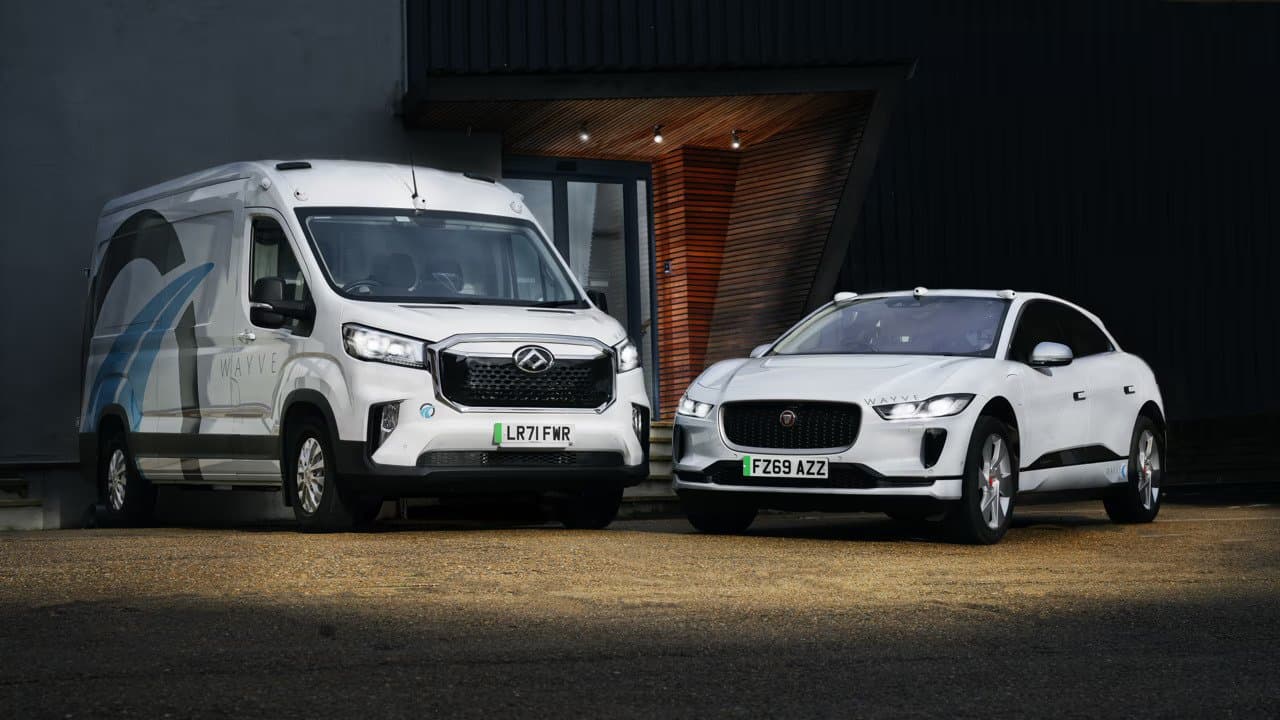
In a landmark moment for European artificial intelligence, UK-based autonomous driving startup Wayve has secured $1.5 billion in funding at an $8.6 billion valuation, positioning itself as a serious contender in the intensifying global robotaxi competition. The funding round, announced on February 25, 2026, represents the largest single investment in European AI history and signals a strategic shift in how autonomous vehicle technology is being developed and deployed worldwide.
The Funding Landscape and Strategic Positioning
Wayve's massive funding infusion comes at a critical juncture in the autonomous vehicle industry, where Chinese companies like Baidu's Apollo and US giants including Waymo, Cruise, and Tesla have dominated both investment and technological development. The UK startup's valuation now places it among the top tier of autonomous driving companies globally, despite its relatively recent emergence compared to decade-old American competitors.
What distinguishes Wayve's approach is its focus on "embodied AI"—systems that learn to drive through experience rather than relying solely on pre-programmed rules and high-definition maps. This methodology represents a fundamental departure from traditional autonomous driving approaches and aligns with broader trends in artificial intelligence toward more adaptive, learning-based systems.
Technological Differentiation in a Crowded Field
Wayve's core innovation lies in its end-to-end deep learning approach, which enables vehicles to interpret and respond to complex driving environments using camera-first sensor systems. Unlike competitors that rely heavily on lidar and detailed pre-mapped environments, Wayve's technology emphasizes generalization—the ability to handle unfamiliar situations through learned patterns rather than explicit programming.
This technological philosophy has gained significant traction following recent AI advancements that have demonstrated the power of large-scale learning systems. The company's approach mirrors broader industry shifts toward AI systems that can adapt to diverse conditions without extensive manual engineering for every possible scenario.
The Global Robotaxi Competition Heats Up
The funding announcement comes amid what industry analysts are calling "the robotaxi wars"—a global race to deploy commercial autonomous ride-hailing services at scale. Chinese companies have made aggressive strides in this domain, with several cities already hosting limited commercial robotaxi services. US companies, while facing regulatory hurdles, continue to expand testing and deployment in select markets.
Wayve's entry into this competitive landscape represents Europe's most serious bid to date for a seat at the autonomous vehicle table. The company has been testing its technology on UK roads since 2018 and has partnerships with major automakers including Jaguar Land Rover and Microsoft, which participated in earlier funding rounds.
Implications for the AI Industry and Software Development
This development occurs against a backdrop of rapid AI advancement that is fundamentally reshaping traditional software models. As noted in recent industry analysis, artificial intelligence increasingly competes with conventional Software-as-a-Service (SaaS) offerings by providing more adaptive, intelligent solutions to complex problems.
Wayve's success highlights how AI is moving beyond digital applications into the physical world—a transition that represents both enormous opportunity and significant technical challenge. The company's focus on embodied AI systems that interact with real-world environments suggests a future where AI capabilities extend far beyond current digital applications.
Economic and Strategic Implications
The massive funding round has several important implications:
European AI Ecosystem Development: Wayve's success demonstrates that Europe can compete in capital-intensive, cutting-edge AI applications, potentially reversing the brain drain that has seen many European AI researchers and entrepreneurs migrate to US and Chinese tech hubs.
Autonomous Vehicle Strategy Divergence: The industry appears to be splitting between map-dependent, sensor-heavy approaches (favored by many US and Chinese companies) and camera-first, learning-based approaches (exemplified by Wayve and increasingly by Tesla).
Regulatory Environment Considerations: Wayve's UK and European testing grounds offer different regulatory frameworks than the US or China, potentially allowing for faster iteration and deployment under certain conditions.
Talent and Research Impact: The funding will enable Wayve to significantly expand its research team, potentially attracting top AI talent to Europe and contributing to the region's growing reputation in machine learning research.
Challenges and Future Outlook
Despite the impressive funding achievement, Wayve faces significant challenges. The robotaxi market remains largely experimental, with no company yet demonstrating profitability at scale. Safety concerns, regulatory approval processes, and public acceptance represent substantial hurdles that funding alone cannot overcome.
Furthermore, the competitive landscape continues to intensify. Chinese companies benefit from supportive government policies and vast testing environments, while US companies have deeper pockets and longer operational histories. Wayve must navigate this complex global competition while continuing to advance its distinctive technological approach.
The company has indicated plans to expand testing beyond the UK and accelerate development of its second-generation autonomous driving system. Success in these endeavors could validate Europe's approach to AI development and establish a new model for autonomous vehicle technology that prioritizes adaptability over exhaustive pre-programming.
Source: Bloomberg, February 25, 2026