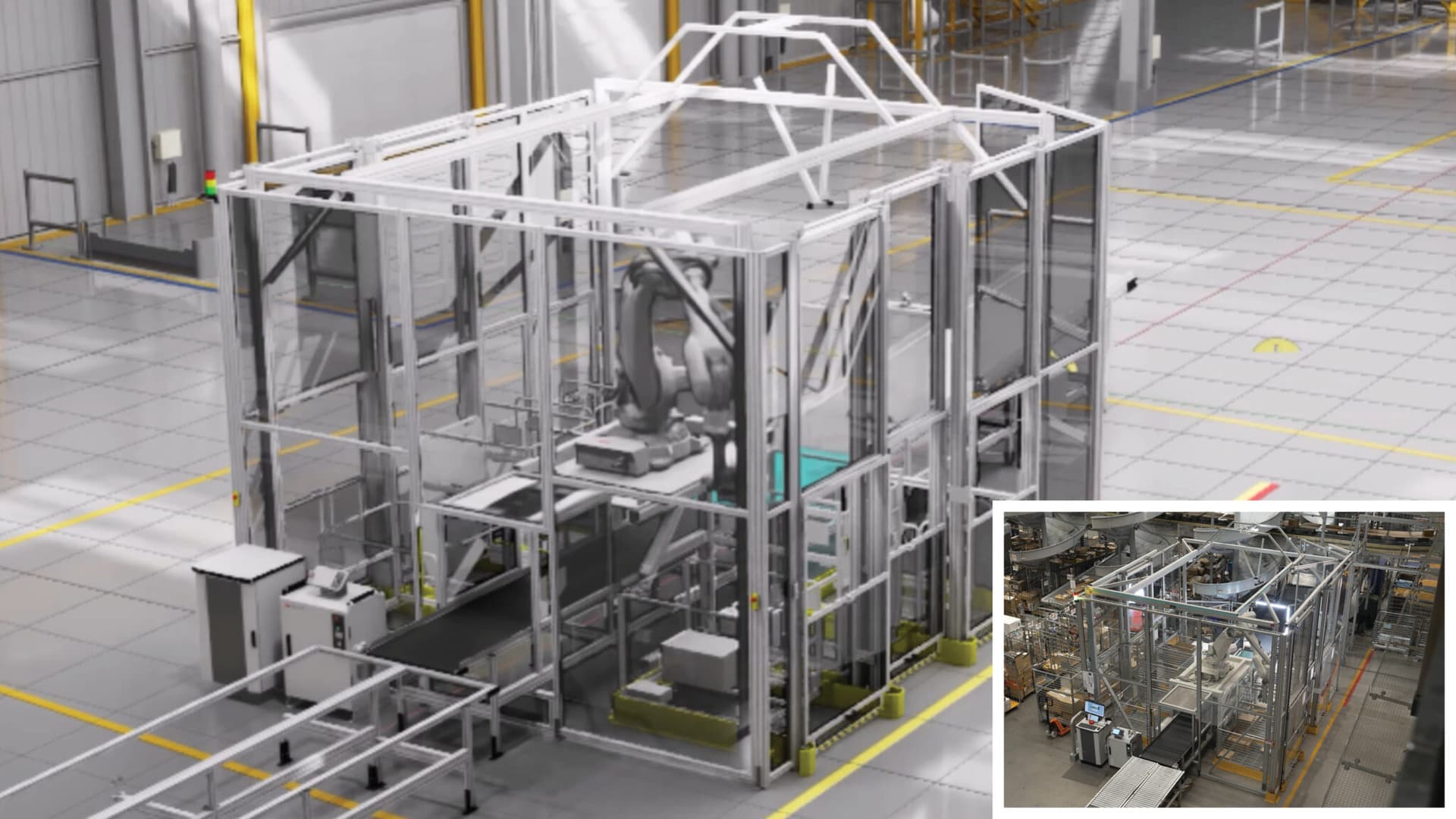
In a move set to redefine industrial automation, ABB Robotics and NVIDIA have announced a breakthrough partnership that brings industrial-grade physical AI directly to manufacturing floors worldwide. The collaboration, announced on March 9, 2026, integrates NVIDIA's Omniverse simulation libraries into ABB's RobotStudio programming and simulation suite, creating a new product called RobotStudio HyperReality scheduled for release in the second half of 2026.
Closing the Sim-to-Real Gap
The partnership addresses what industry leaders have called the "sim-to-real gap"—the persistent challenge of translating virtual robot training into reliable real-world performance. By leveraging NVIDIA Omniverse's physically accurate simulation capabilities, ABB Robotics claims to have achieved up to 99% accuracy in bridging this divide.
"Combining RobotStudio with the physically accurate simulation power of NVIDIA Omniverse libraries, we have closed technology's long-standing 'sim-to-real' gap—a huge milestone to deploying physical AI with industrial-grade precision, for real-world customer applications," said Marc Segura, president of ABB Robotics.
Technical Breakthrough and Capabilities
The integration enables synthetic images generated in Omniverse to feed directly into AI training pipelines, allowing vision models to be trained entirely in simulation. These models can then be deployed to any number of ABB robots globally with the reliability demanded by industrial applications.
Deepu Talla, vice president of robotics and edge AI at NVIDIA, emphasized the significance: "The industrial sector needs physically accurate simulation to bridge the gap between virtual training and the real-world deployment of AI-driven robotics at scale. Integrating NVIDIA Omniverse libraries into RobotStudio brings advanced simulation and accelerated computing to ABB Robotics' unique virtual controller technology."
Tangible Business Impact
The companies project substantial operational improvements for manufacturers:
- Up to 40% reduction in deployment costs
- Up to 50% acceleration in time-to-market
- Dramatic reduction in engineering time
- Enhanced scalability for manufacturers of all sizes
These improvements stem from the ability to test, validate, and optimize robotic systems entirely in simulation before physical deployment, minimizing costly real-world trial-and-error.
Early Adoption and Pilot Programs
The technology is already attracting significant interest from ABB's global customer base. Early pilots include:

Foxconn: The world's largest electronics manufacturer is testing the solution for consumer electronics assembly applications. This represents a major validation for high-volume, precision manufacturing environments.
Workr: A U.S.-based robotic workforce company is leveraging the technology to help small and medium-sized manufacturers address critical labor shortages. Workr will showcase their implementation at NVIDIA's GTC conference.
Historical Context and Industry Evolution
ABB Robotics brings over 50 years of industrial automation expertise to the partnership, having pioneered the first generation of fully electric industrial robots and advanced digital twin simulation through RobotStudio. NVIDIA contributes its leadership in accelerated computing and AI simulation technologies.
Marc Segura contextualized the announcement: "For more than 50 years, ABB Robotics has led the evolution of intelligent industrial automation... Today, using NVIDIA accelerated computing and simulation technologies, we have removed the last barriers to making industrial and physical AI a reality at a global scale."
Implications for Manufacturing
The partnership signals several transformative shifts for industrial automation:
Democratization of Advanced Robotics: By reducing deployment complexity and cost, the technology could make sophisticated automation accessible to smaller manufacturers who previously couldn't justify the investment.
Accelerated Innovation Cycles: The ability to simulate and validate robotic systems virtually could dramatically shorten product development cycles across multiple industries.
Labor Market Adaptation: As companies like Workr demonstrate, the technology could help address persistent labor shortages while creating new high-skill technical roles focused on robotic system design and maintenance.
Supply Chain Resilience: More predictable and efficient robotic deployment could enhance manufacturing flexibility and responsiveness to market changes.
Looking Ahead to 2026 Deployment
With RobotStudio HyperReality scheduled for release in late 2026, the industry now has a clear timeline for when these capabilities will become commercially available. The extended timeline suggests both the complexity of the integration and the companies' commitment to delivering a robust, production-ready solution.
The partnership between ABB Robotics and NVIDIA represents more than just another technology collaboration—it marks a potential inflection point in how industrial automation is conceived, developed, and deployed. By successfully bridging the sim-to-real gap, the companies are paving the way for a new era of intelligent, adaptable, and economically accessible industrial robotics.
Source: NVIDIA Blog, ABB Robotics Business Wire announcement, March 2026