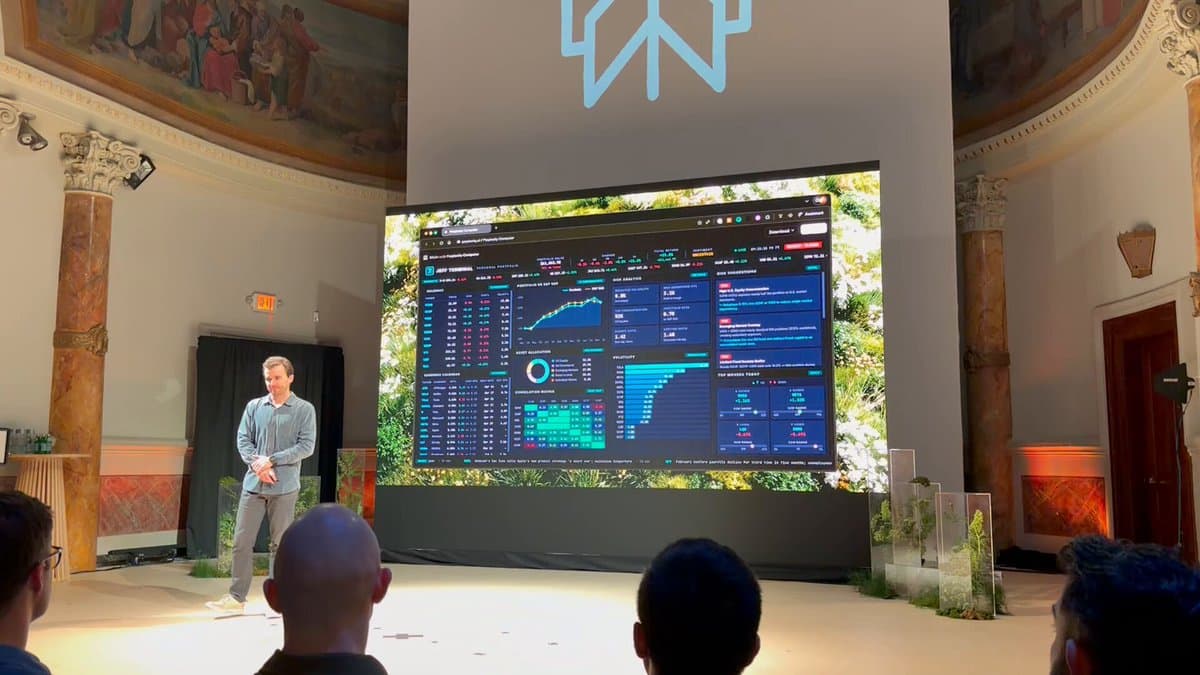
Artificial intelligence is fundamentally reshaping the landscape of stock and portfolio management, moving beyond traditional approaches that have dominated financial markets for decades. According to AI observer Rohan Paul, platforms like Perplexity Computer are at the forefront of this transformation, demonstrating how AI can integrate portfolio data with real-time market information and contextualize it against broader market movements.
The Traditional Approach vs. AI-Driven Management
For generations, portfolio management has relied on human expertise, historical data analysis, and established financial models. While these methods have served investors reasonably well, they often struggle with the sheer volume of data available in today's markets and the speed at which market conditions change. Traditional approaches typically involve periodic portfolio reviews, manual data gathering, and reactive decision-making based on historical patterns.
AI-powered systems like Perplexity Computer represent a paradigm shift by offering continuous monitoring, real-time data integration, and predictive analytics that can identify opportunities and risks far more quickly than human analysts could manage alone.
How Perplexity Computer Works
While specific technical details aren't provided in the source material, the core innovation appears to be the platform's ability to join portfolio data with real-time market data and prices, then contextualize this information against overall market movement. This represents several significant advancements over traditional portfolio management tools:
Real-time data integration: Unlike traditional systems that might update once per day or even less frequently, AI systems can process market data as it becomes available, allowing for more timely decisions.
Contextual analysis: By analyzing portfolio performance against broader market trends, these systems can distinguish between systemic market movements and security-specific developments, providing more nuanced insights.
Automated correlation analysis: AI can identify complex relationships between different assets and market factors that might escape human notice, potentially uncovering hidden risks or opportunities.
The Broader Trend in Financial AI
Perplexity Computer represents just one example of a much larger trend toward AI adoption in finance. Across the industry, firms are deploying machine learning algorithms for everything from algorithmic trading to risk assessment, fraud detection, and customer service. What makes portfolio management particularly ripe for AI disruption is the combination of structured data (portfolio holdings), semi-structured data (financial reports), and unstructured data (news, social media sentiment) that must be synthesized to make informed decisions.
Implications for Investors and Financial Professionals
The rise of AI in portfolio management carries significant implications:
- Democratization of sophisticated analysis: Tools that were once available only to large institutional investors may become accessible to individual investors and smaller firms.
- Changing roles for financial advisors: Rather than replacing human advisors entirely, AI may augment their capabilities, allowing them to focus on strategy, client relationships, and complex judgment calls while AI handles data analysis.
- Increased market efficiency: As more investors use AI tools, markets may become more efficient at pricing information, potentially reducing arbitrage opportunities but creating more stable pricing.
- New risk factors: AI-driven trading could introduce new systemic risks, including herding behavior if multiple systems reach similar conclusions simultaneously.
Challenges and Considerations
Despite the promise of AI in portfolio management, significant challenges remain:
- Data quality and bias: AI systems are only as good as the data they're trained on, and historical financial data may contain biases or fail to account for unprecedented market conditions.
- Explainability: Many AI models operate as "black boxes," making it difficult to understand why they're making specific recommendations—a particular concern in regulated financial environments.
- Overfitting: There's a risk that AI systems might be too finely tuned to historical patterns and fail to adapt to novel market conditions.
- Regulatory compliance: Financial markets are heavily regulated, and AI systems must operate within existing frameworks while new regulations specific to AI in finance are developed.
The Future of AI in Portfolio Management
Looking forward, we can expect several developments in this space:
Increased personalization: AI systems will likely become better at tailoring portfolio recommendations to individual investor goals, risk tolerance, and even behavioral tendencies.
Integration of alternative data: Beyond traditional market data, AI systems may increasingly incorporate satellite imagery, supply chain information, consumer sentiment data, and other unconventional data sources.
Explainable AI advancements: As regulatory pressure mounts and user demand for transparency grows, we'll likely see more development of AI systems that can explain their reasoning in understandable terms.
Hybrid human-AI approaches: The most successful implementations will probably combine AI's data processing capabilities with human judgment, creativity, and ethical oversight.
Conclusion
The emergence of platforms like Perplexity Computer signals a fundamental shift in how portfolios are managed. By integrating real-time data with contextual market analysis, AI is moving portfolio management from a periodic, reactive discipline to a continuous, proactive practice. While challenges remain around transparency, regulation, and implementation, the trend toward AI-enhanced portfolio management appears irreversible. As these technologies mature, they promise to make sophisticated investment analysis more accessible while potentially improving returns and managing risks more effectively than traditional approaches alone.
Source: Rohan Paul (@rohanpaul_ai) on X/Twitter, discussing Perplexity Computer's approach to AI-powered portfolio management.