What Happened
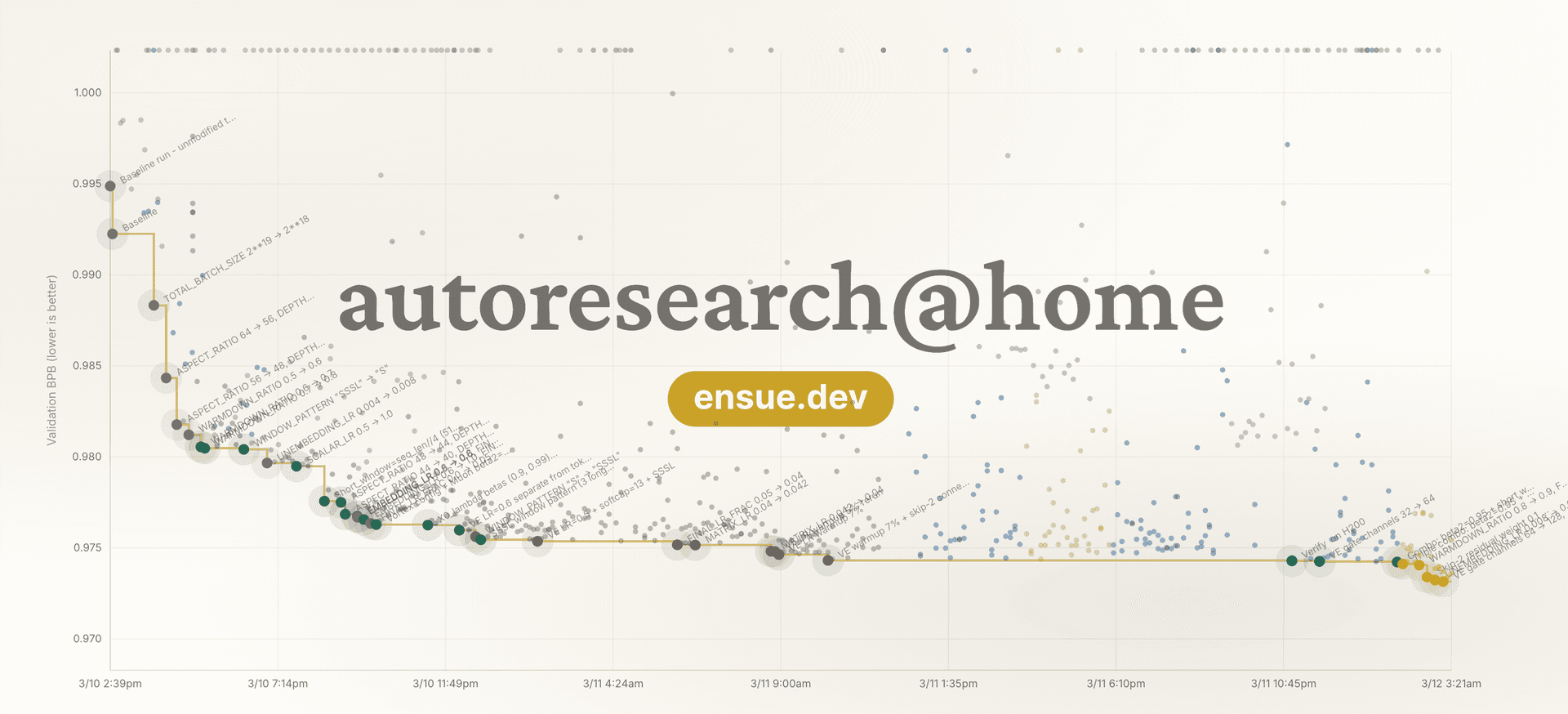
The source article describes a hands-off experiment in hyperparameter tuning. The author, Przemysław Żydroń, gave an AI agent a concrete training setup and the autonomy to experiment. The agent's task was to modify the model's code, run short training cycles (approximately five minutes each), and iteratively search for better hyperparameter configurations. This process was allowed to run autonomously overnight. The reported result was that the agent's method successfully beat a conventional grid search in performance.
While the source snippet is brief, the core concept is clear: this is a demonstration of an AI agent applied to the MLOps task of hyperparameter optimization (HPO). Instead of a human engineer manually defining a search space or using automated libraries like Optuna or Hyperopt in a scripted manner, an LLM-powered agent was given higher-level agency. It could presumably read error logs, interpret training metrics, and decide on the next experimental tweak—actions that move beyond simple parameter sampling and into the realm of code modification and adaptive problem-solving.
Technical Details
Hyperparameter tuning is a critical yet computationally expensive phase in machine learning. Traditional methods include:
- Grid Search: Exhaustively tries every combination in a pre-defined set of parameters. It's guaranteed to find the best combination within the grid but is incredibly inefficient.
- Random Search: Samples parameters randomly from distributions, often finding good solutions faster than grid search.
- Bayesian Optimization: Uses a probabilistic model to predict promising hyperparameters based on past results, making it more sample-efficient.
This experiment points to a next evolutionary step: agentic HPO. Here, the "tuner" is not a specialized optimization algorithm but a general-purpose AI agent equipped with tools. Its toolkit likely included the ability to:
- Read and write Python scripts (modifying hyperparameter values or even model architecture snippets).
- Execute training jobs.
- Parse training outputs and validation metrics.
- Apply reasoning, based on its LLM foundation, to hypothesize what change might improve performance next.
This approach differs from classic AutoML by being more open-ended. The agent isn't confined to a fixed search space; it can potentially invent novel configurations or apply fixes to training errors that would stall a standard automated process.
Retail & Luxury Implications
The direct application of this specific experiment to retail is in model development efficiency. For retail and luxury brands, the lifecycle of an AI model—from a demand forecasting algorithm to a computer vision system for visual search—involves continuous tuning and experimentation.
Accelerating Model Iteration: The most immediate implication is speed. An AI agent working autonomously overnight in a cloud environment could iterate through hundreds of subtle variations of a model, potentially discovering non-obvious hyperparameter combinations that improve accuracy for tasks like product recommendation, inventory prediction, or customer sentiment analysis. This compresses development cycles.
Democratizing and Scaling Advanced Tuning: Sophisticated tuning methods like Bayesian optimization still require expertise to set up correctly. An agentic interface, where a data scientist could provide a natural language goal ("improve the precision of our markdown prediction model without increasing inference latency"), could make high-level optimization accessible to more teams, scaling AI excellence across the organization.
Beyond Hyperparameters: Full Pipeline Optimization: The concept hinted at here—an agent that can modify code—has a broader future potential. Imagine an agent tasked not just with tuning, but with autonomously A/B testing different feature engineering approaches, data augmentation strategies, or even ensemble architectures for a campaign response model. This moves from automation to autonomous innovation.
However, the key word is potential. The source reports a single, successful experiment. For mission-critical retail models, governance, reproducibility, and cost control are paramount. Letting an AI agent run amok in a production codebase is not yet a viable strategy. The immediate, practical step for retail AI leaders is to monitor this field within their MLOps platform evaluations, asking vendors about agentic capabilities for development and testing environments, while maintaining strict human-in-the-loop controls for production deployments.