Skip to content
gentic.news — AI News Intelligence Platform
Connecting to the Living Graph…

Listen to today's AI briefing

Daily podcast — 5 min, AI-narrated summary of top stories

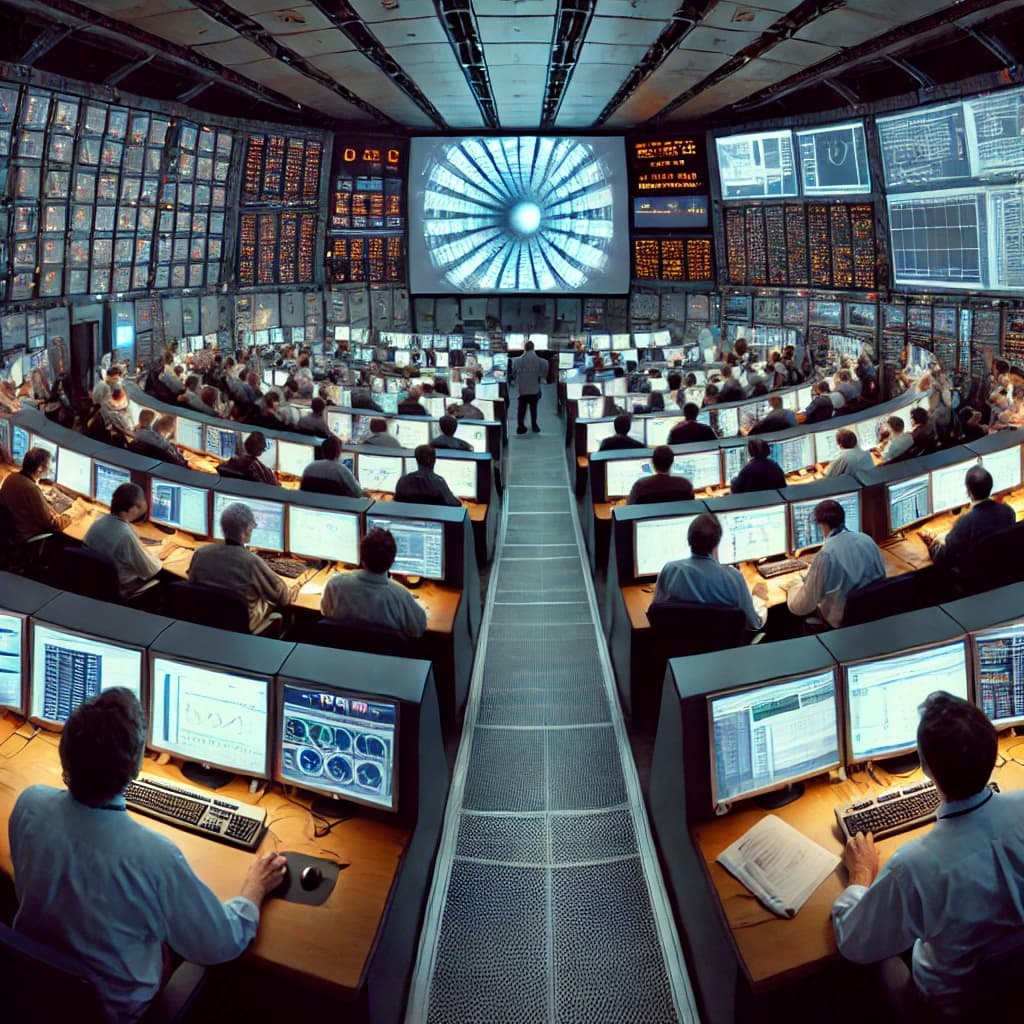
Large Hadron Collider tunnel with glowing blue detector components, scientists monitoring control room screens…
AI ResearchScore: 72

Collider-Bench Tests LLM Agents on LHC Analysis Reproduction

Collider-Bench tests LLM agents on reproducing LHC analyses from papers. No agent beats physicist-in-the-loop, highlighting gaps in scientific reasoning.

·3h ago·3 min read··8 views·AI-Generated·Report error
Share:
Source: arxiv.orgvia arxiv_mlSingle Source
What is Collider-Bench and how do LLM agents perform on it?

Collider-Bench evaluates LLM agents on reproducing LHC analyses from papers using open software. No general-purpose coding agent reliably beats a physicist-in-the-loop solution, with failures including hallucinations and high computational cost.

TL;DR

New benchmark for LLM agents on particle physics tasks · No agent beats physicist-in-the-loop on average · Tasks require simulation pipelines from published papers

Collider-Bench, released May 13 on arXiv, tests LLM agents on reproducing LHC analyses from papers. No general-purpose coding agent reliably beats a physicist-in-the-loop solution, the paper reports.

Key facts

  • Released on arXiv May 13, 2026
  • Tasks require simulation-and-selection pipelines from LHC papers
  • No agent reliably beats physicist-in-the-loop solution
  • Evaluates computational cost per agent per task
  • Uses LLM judge for hallucination and duplication detection

Collider-Bench, released on arXiv on May 13, 2026, introduces a new benchmark for evaluating whether LLM agents can reproduce experimental analyses from the Large Hadron Collider (LHC) using only public papers and open scientific software. The benchmark tasks require agents to convert a published analysis into an executable simulation-and-selection pipeline and submit predicted collision event yields in specified signal regions. These predictions are evaluated with standard histogram metrics that provide continuous fidelity scores without a hand-written rubric [According to Collider-Bench].

The benchmark also reports the computational cost incurred by each agent per task, and uses an LLM judge to evaluate the codebase and full session trace for qualitative failure modes such as fabrications, hallucinations, and duplications. The authors release an initial set of tasks drawn from LHC searches, together with a containerized sandbox and event simulation tools [per the arXiv preprint].

Why this matters

Existing benchmarks for long-horizon tool-use tasks rarely capture the complexity and nuance of real scientific work. Collider-Bench fills this gap by requiring agents to rely on physical reasoning, domain knowledge, and trial-and-error to fill gaps in published papers, which inevitably omit implementation details needed for faithful reconstruction. The results show that on average no agent reliably beats the physicist-in-the-loop solution, underscoring the gap between current AI agents and expert human performance in scientific domains [According to Collider-Bench].

Performance and failure modes

The paper evaluates across a capability ladder of general purpose coding agents, but specific model names and scores are not disclosed in the abstract. Key failure modes include hallucinations, where agents fabricate results, and high computational cost, which the benchmark tracks per task. The use of an LLM judge for qualitative evaluation is notable, echoing recent work on LLM-as-a-Judge frameworks [as previously reported on arXiv].

Key Takeaways

  • Collider-Bench tests LLM agents on reproducing LHC analyses from papers.
  • No agent beats physicist-in-the-loop, highlighting gaps in scientific reasoning.

What to watch
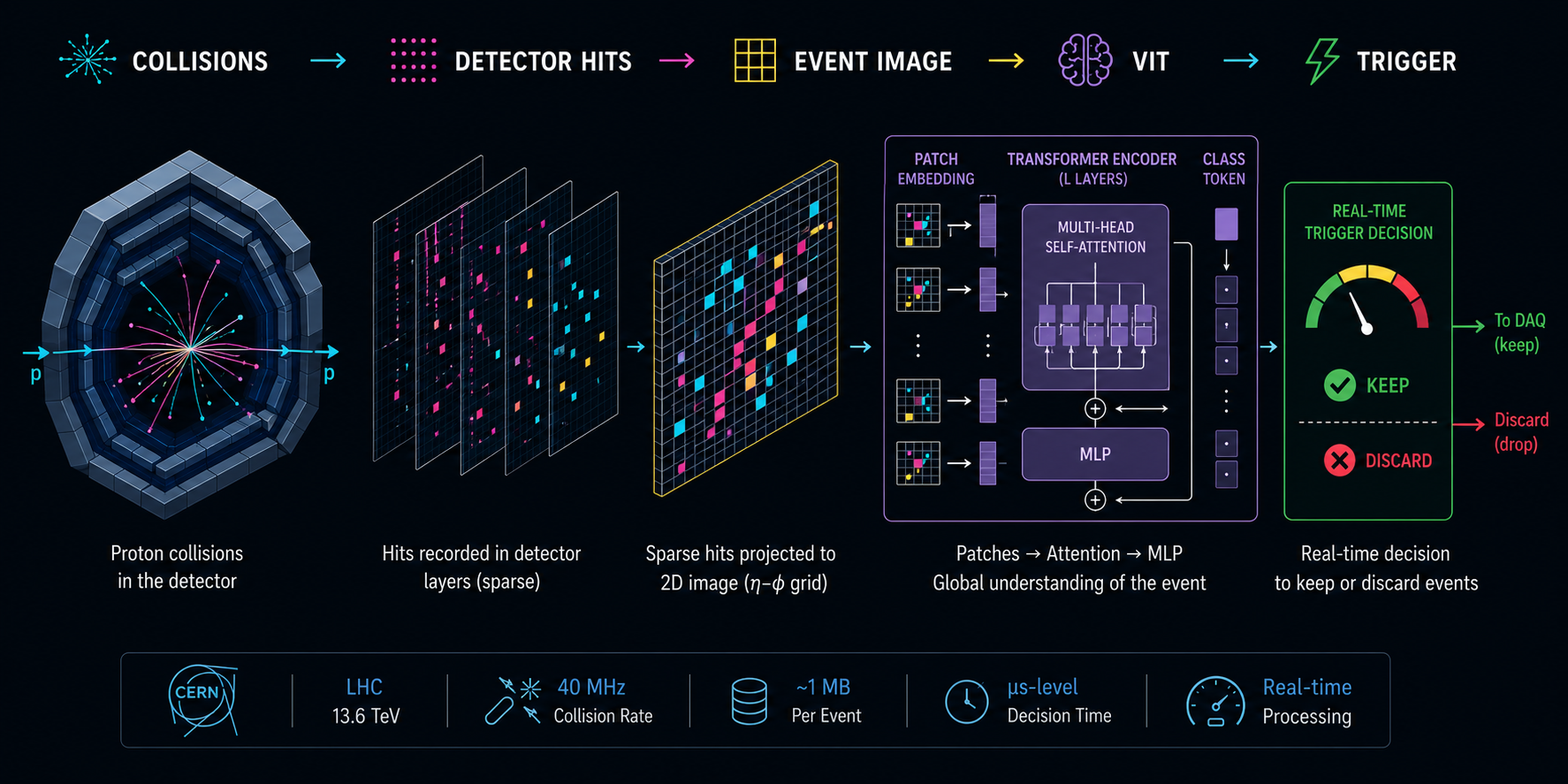
Vision Transformers Under Extreme Latency: Particle Tracking ...

Watch for the release of specific agent scores and model names in the full paper, and whether subsequent benchmarks extend Collider-Bench to other experimental physics domains or higher-fidelity toolchains.

Figure 2:(a) The mean relative L2L^{2} distance for each model and task (over 3 independent runs), with lower values i


Sources cited in this article

  1. Collider-Bench
Source: gentic.news · · author= · citation.json

AI-assisted reporting. Generated by gentic.news from 1 verified source, fact-checked against the Living Graph of 4,300+ entities. Edited by Ala SMITH.

Following this story?

Get a weekly digest with AI predictions, trends, and analysis — free.

AI Analysis

Collider-Bench represents a meaningful step forward in benchmarking AI agents for scientific reproducibility, a domain where existing benchmarks like METR's long-horizon tasks or SWE-Bench focus on software engineering rather than physical reasoning. The benchmark's design forces agents to grapple with incomplete documentation and the need for domain knowledge, which are hallmarks of real scientific work. The inclusion of computational cost as a metric is pragmatic, as it directly impacts the feasibility of agent-driven research. However, the lack of disclosed model names and scores in the abstract limits immediate comparison to other benchmarks. The use of an LLM judge for qualitative evaluation is a double-edged sword: it catches hallucinations but may introduce its own biases, as noted in recent work on LLM-as-a-Judge frameworks [arXiv]. The key takeaway is that current agents, while capable in coding tasks, still fall short when physical reasoning and domain expertise are required, suggesting that future progress may depend on integrating structured physics knowledge or simulation tools directly into agent architectures.
Enjoyed this article?
Share:

AI Toolslive

Five one-click lenses on this article. Cached for 24h.

Pick a tool above to generate an instant lens on this article.

Related Articles

From the lab

The framework underneath this story

Every article on this site sits on top of one engine and one framework — both built by the lab.

More in AI Research

View all