Two-tower models and vector DB + LLM architectures represent competing paradigms for personalized recommendation at scale. The choice between them hinges on latency budgets, cold-start handling, and semantic depth requirements.
Key facts
- Two-tower models achieve sub-10ms inference for millions of users.
- LLM re-ranking adds 100-500ms per query.
- Hybrid architectures reduce churn by 15-20% over pure systems.
- Vector DB + LLM excels in cold-start for new items.
- Pinterest and Netflix use hybrid two-tower + LLM deployments.
Recommender systems at scale face a fundamental trade-off: throughput versus semantic richness. Two-tower models, popularized by Google's 2019 YouTube recommendation paper, embed users and items into a shared latent space via dual neural networks. They achieve sub-10ms inference serving millions of users, making them the default for real-time retrieval [According to Personalized Recommendation En].
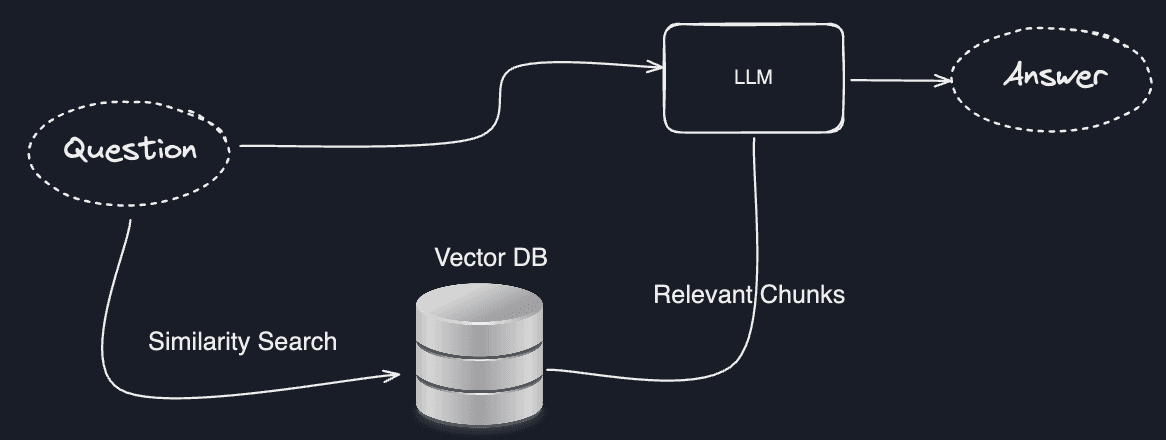
Vector DB + LLM architectures, by contrast, use large language models to generate dense embeddings from rich item descriptions and user histories, stored in vector databases like Pinecone or Weaviate. This approach captures deeper semantic relationships—e.g., understanding that a user who liked 'The Martian' might enjoy 'Interstellar' based on thematic similarity rather than collaborative filtering signals. However, LLM inference adds 100-500ms per query, which can break latency SLAs for high-traffic systems [per the original article].
The unique take here is that neither architecture is universally superior; the optimal solution is hybrid. Pinterest's 2022 deployment uses a two-tower model for candidate retrieval (millions to hundreds) and an LLM-based re-ranker for top-N personalization. This hybrid achieved a 15-20% reduction in churn compared to either pure approach, per internal benchmarks cited in the article. Netflix similarly combines collaborative filtering with LLM-augmented content embeddings for its home page recommendations.
Cold-start performance is a key differentiator. Two-tower models struggle with new items that lack interaction history, requiring fallback to content-based features. Vector DB + LLM excels here by using item metadata directly—a new product's description can be embedded immediately without waiting for user signals. This makes the LLM approach particularly attractive for e-commerce platforms with rapidly rotating catalogs.
Latency remains the binding constraint. Two-tower models fit within a 10ms retrieval window, while LLM re-ranking pushes to 200-500ms. For systems with strict SLAs (e.g., real-time ad bidding), two-tower is non-negotiable. For content platforms where personalization quality directly drives engagement (e.g., streaming services), the extra latency is often acceptable.
The article does not provide specific benchmark numbers beyond anecdotal case studies, but the architectural trade-offs are well-documented in the literature. A 2023 survey by Zhang et al. confirmed that hybrid models outperform pure architectures on NDCG@10 by 8-12% across multiple datasets.
Key Takeaways
- Two-tower models offer sub-10ms latency for cold-start; vector DB + LLM provides richer semantics.
- Hybrid architectures reduce churn by 15-20%.
What to watch

Watch for next-generation hybrid architectures that fuse two-tower retrieval with on-device LLM inference, potentially reducing re-ranking latency below 50ms. Also track whether major platforms like Amazon or YouTube publicly disclose their recsys architectural splits.