What Happened
A new paper from researchers (affiliation not specified, but submitted to arXiv) introduces ASPIRE (Adaptive Spectral graPh collaborative fIlteRing framEwork), a framework that makes graph filters in spectral collaborative filtering fully learnable. The paper, titled "ASPIRE: Make Spectral Graph Collaborative Filtering Great Again via Adaptive Filter Learning," addresses a fundamental limitation in existing methods: they rely on manually tuned hyperparameters rather than adaptive, learned filters.
The core insight is that traditional recommendation objectives introduce a bias that causes a "low-frequency explosion" — a spectral phenomenon where low-frequency signals dominate, preventing effective learning of graph filters. ASPIRE overcomes this by disentangling the filter learning objective through a bi-level optimization approach.
Technical Details
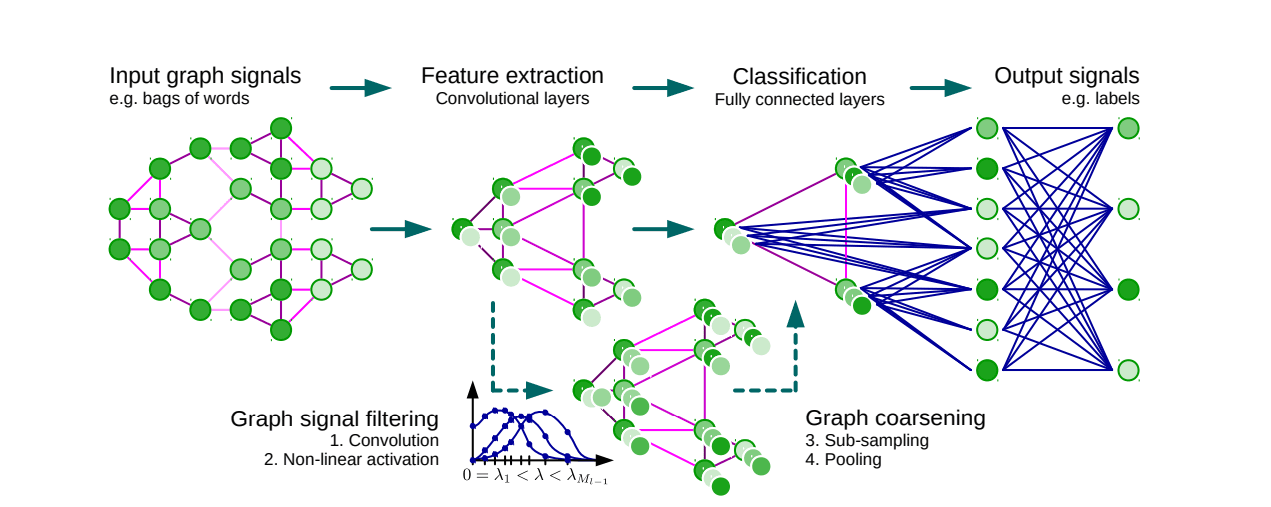
Graph collaborative filtering uses graph neural networks (GNNs) to model user-item interactions as a graph, where nodes represent users and items, and edges represent interactions. The graph filter determines how signals propagate through this graph. Spectral methods analyze this in the frequency domain.
Key technical contributions:
- Identification of low-frequency explosion: The paper shows mathematically how standard recommendation objectives bias filters toward low-frequency components, limiting expressivity.
- Bi-level optimization: ASPIRE separates the filter learning from the recommendation task, allowing filters to adapt to data characteristics without manual tuning.
- Generalizability: The learned filters match the performance of carefully engineered task-specific designs across multiple datasets. Importantly, ASPIRE also works with LLM-powered collaborative filtering, suggesting compatibility with modern large language model approaches.
Experiments demonstrate "excellent recommendation performance, spectral adaptivity, and training stability."
Retail & Luxury Implications
While the paper does not mention retail or luxury specifically, collaborative filtering is the backbone of recommendation systems in e-commerce. For luxury retailers like LVMH, Kering, or Richemont, recommendation quality directly impacts customer experience and revenue.

Potential applications:
- Product recommendations: More adaptive filters could better capture nuanced user preferences for luxury goods, where purchase patterns are sparse and highly personal.
- Cold-start scenarios: LLM-powered CF integration could help with new products or users, where traditional CF struggles.
- Cross-brand personalization: For conglomerates, a unified recommendation system across brands could benefit from more expressive filters.
However, the paper is research-stage. Production deployment would require engineering effort for integration into existing recommendation pipelines.
Business Impact
- Recommendation accuracy: The paper claims learned filters match or exceed manually tuned designs. In retail, even 1% improvement in recommendation relevance can drive significant revenue.
- Reduced manual effort: Eliminating hyperparameter tuning reduces engineering time and allows faster iteration on recommendation models.
- LLM compatibility: As luxury brands experiment with LLM-powered personalization (e.g., virtual assistants, conversational commerce), ASPIRE's demonstrated effectiveness with LLM-based CF is relevant.
Implementation Approach
- Complexity: Moderate. Requires understanding of spectral graph theory and bi-level optimization. Not a plug-and-play solution.
- Data requirements: Standard user-item interaction data. No additional data needed beyond what recommendation systems already use.
- Integration: Would replace or augment existing graph CF components in a recommendation pipeline. Likely requires custom implementation; no open-source code was mentioned in the abstract.

Governance & Risk Assessment
- Maturity: Research. Not yet validated in production environments at scale.
- Privacy: No additional privacy concerns beyond standard recommendation systems.
- Bias: The paper focuses on accuracy, not fairness. As with all collaborative filtering, potential for popularity bias or filter bubbles exists and should be evaluated.
gentic.news Analysis
This paper arrives amid a wave of advances in recommendation systems research. Just days ago, arXiv published a paper diagnosing failure modes of LLM-based rerankers in cold-start recommendations (April 21), and another on exploration saturation in recommender systems (April 21). ASPIRE addresses a different but complementary problem: the fundamental expressivity of graph filters.
The connection to LLM-powered collaborative filtering is noteworthy. As we covered in "LLM Agents Will Reshape Personalization" (April 23) and "ItemRAG: A New RAG Approach for LLM-Based Recommendation" (April 23), the industry is actively exploring hybrid approaches combining traditional CF with large language models. ASPIRE's demonstrated effectiveness in this context suggests it could be a building block for next-generation recommendation architectures.
MIT, which has been active in AI for recommendation (including their recent RLM handling 10M+ tokens on April 23 and the collaborative paper on AI assistance harming performance on April 17), is not directly involved in this paper, but the research aligns with the broader trend toward more adaptive, learnable models in information retrieval.
For retail AI leaders: this is a technical advance worth monitoring, but not yet production-ready. The key takeaway is that the field is moving toward fully learned filters, which could eventually reduce engineering overhead and improve recommendation quality. Keep this on your radar for when implementations mature.