Recent analysis from Epoch AI researchers suggests a paradigm shift in how we think about artificial intelligence progress. While much public attention focuses on model architectures and algorithmic breakthroughs, the real leverage point may be something more fundamental: scaling the right ideas with massive computational resources.
The Efficiency Multiplier: Compute Over Algorithms
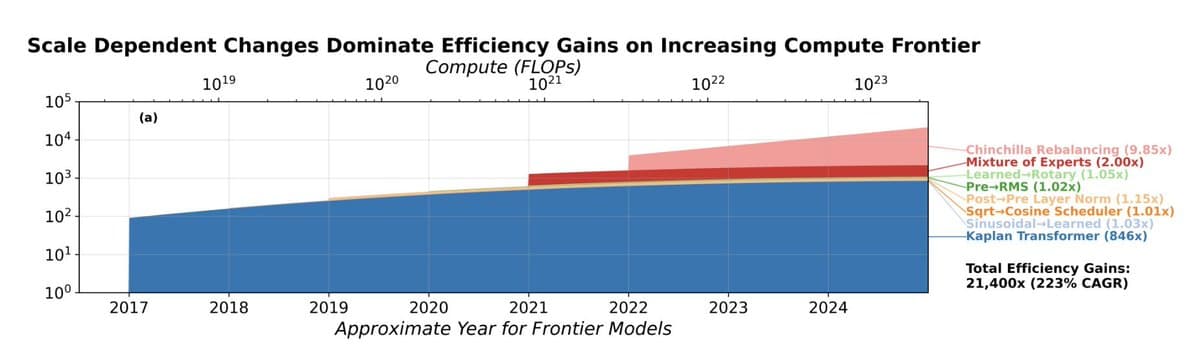
According to estimates discussed in the latest Epoch Reports, AI software progress may deliver approximately 10× efficiency gains per year, though with significant uncertainty. This represents a potentially transformative acceleration in how quickly AI capabilities can advance when computational resources are properly aligned with innovative approaches.
The traditional narrative has emphasized algorithmic improvements as the primary driver of AI progress. While these remain important, the emerging perspective suggests that computational scaling—when applied to the right concepts—can multiply the impact of those algorithmic advances exponentially.
The Nuance of Scaling Strategy
The critical insight here isn't simply "more compute equals better AI." As the analysis notes, there's important nuance: scaling must be applied to the right ideas. This represents a strategic shift from indiscriminate computational investment to targeted scaling of promising approaches.
This distinction matters because computational resources remain expensive and environmentally impactful. The most effective AI development strategies will identify which ideas merit massive scaling and which should be refined further before receiving substantial computational investment.
Historical Context: From Compute-Limited to Idea-Limited Progress
This perspective represents an evolution in how the AI community understands progress constraints. In earlier eras of AI development, computational limitations were often the primary bottleneck. Today, with increasingly accessible cloud computing and specialized hardware, the constraint has shifted toward identifying and developing the ideas worth scaling.
The implications are profound for research institutions, startups, and established tech companies alike. Organizations that master the art of identifying scalable ideas and efficiently applying computational resources to them may gain significant competitive advantages.
The 10× Efficiency Frontier
The estimated 10× annual efficiency gains from proper compute scaling represent what might be called "the scaling multiplier effect." When algorithmic improvements combine with optimized computational deployment, the resulting acceleration could dramatically shorten timelines for achieving advanced AI capabilities.
However, researchers caution about the "very wide uncertainty" surrounding these estimates. The actual multiplier effect depends on numerous factors including hardware innovations, software optimization techniques, and the fundamental scalability of different AI approaches.
Strategic Implications for AI Development
This analysis suggests several strategic implications:
- Research Prioritization: Organizations should focus on identifying which research directions have the highest scaling potential
- Infrastructure Investment: Computational infrastructure becomes even more strategically important when properly aligned with promising ideas
- Talent Development: Teams need both conceptual innovators and scaling experts who understand how to maximize computational efficiency
- Resource Allocation: The most effective AI development may involve smaller teams exploring ideas, with rapid scaling of the most promising approaches
Environmental and Economic Considerations
The emphasis on computational scaling raises important questions about sustainability and accessibility. Massive compute requirements could exacerbate existing concerns about AI's environmental impact and potentially create barriers to entry for smaller organizations.
However, if efficiency gains materialize as projected, the same computational resources could deliver dramatically more capability over time, potentially mitigating some environmental concerns through improved efficiency.
The Future of AI Progress
This perspective suggests we may be entering an era where computational strategy becomes as important as algorithmic innovation. The most successful AI organizations will likely be those that excel at both generating novel ideas and efficiently scaling them with computational resources.
As one observer noted on social media regarding these findings: "The real leverage isn't just better models—it's scaling the right ideas with massive compute." This succinctly captures the emerging consensus that infrastructure strategy is becoming a primary differentiator in AI development.
Source: Analysis based on Epoch AI research discussed by @kimmonismus on Twitter/X