Brookfield Asset Management expanded its Bloom Energy financing partnership to $25 billion from $5 billion on Tuesday. The fivefold increase signals a structural shift: investors now treat energy certainty as a financeable asset, not a routine utility cost.
Key facts
- Brookfield-Bloom partnership expanded from $5B to $25B
- Deal announced Tuesday, framework established October 2025
- Bloom fuel-cell projects to be funded globally
- ai-infrastructure-fund" class="entity-chip">Brookfield AI Infrastructure Fund targets $100B deployment
- Brookfield has invested over $100B in digital infrastructure
Brookfield Asset Management on Tuesday said it expanded its financing partnership with Bloom Energy to $25 billion from $5 billion to accelerate on-site generation for hyperscalers and AI developers contending with grid interconnection delays. According to Data Center Knowledge Beyond more funding for fuel-cell projects, the move signals a broader shift: investors are treating energy certainty as a core element of AI infrastructure, not a routine utility.
Brookfield and Bloom first established their financing framework in October 2025. By multiplying it fivefold, the companies plan to fund Bloom fuel-cell projects globally and shorten deployment timelines by pairing financing with on-site power, allowing projects to advance while they await utility interconnection.
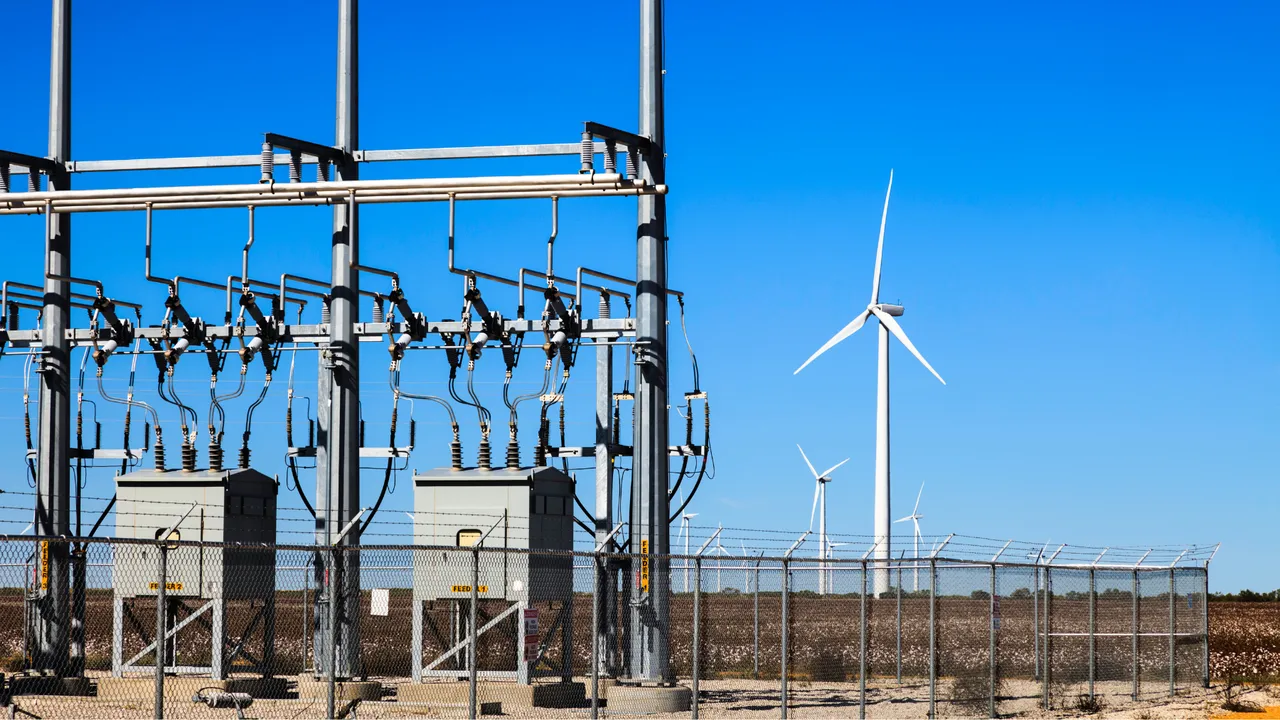
As interconnection timelines stretch and power availability increasingly dictates project schedules, on-site generation is evolving from backup to a primary tool for delivering campuses on time. Brookfield's approach integrates capital and generation from day one, enabling operators to align investments in power, compute, and data center infrastructure.
Neil Osnato, founder of Persistence Analytics Group, told Data Center Knowledge that the expansion represents more than a larger commitment but cautioned against treating behind-the-meter generation as a standalone asset class. "I don't think behind-the-meter power should automatically be viewed as a new asset class in isolation," Osnato said. "Rather, it is part of a broader transition where energy certainty becomes a financeable asset."
Brookfield said the expansion fits within its AI Infrastructure Fund, launched in late 2025 with a goal of deploying $100 billion across AI factories, power solutions, compute infrastructure, and strategic capital partnerships. Brookfield says it has already invested more than $100 billion in digital infrastructure and clean power assets.
This deal transforms power from an operational expense into a structured financial product. Hyperscalers can now underwrite new data centers based on guaranteed megawatt delivery schedules, not grid connection timelines. That compresses project risk into a single financeable bundle—capital, fuel cells, and compute infrastructure—potentially accelerating the build-out of AI factories by months to years.
What to watch
Watch for Brookfield's Q3 2026 AI Infrastructure Fund deployment report, specifically whether the $25B Bloom allocation is fully committed within 12 months, and whether other asset managers (e.g., BlackRock, KKR) announce similar bundled power-financing frameworks.
Source: datacenterknowledge.com
[Updated 03 Jul via dck_news]
In a joint statement, Brookfield and Bloom said the framework is designed to compress deployment timelines by bundling capital with power, compute, and data center infrastructure from the outset, advancing a new model for AI factories [per Data Center Knowledge]. Neil Osnato elaborated that investors are increasingly allocating capital not just to servers and buildings, but to the ability to deliver dependable megawatts on schedule when the grid cannot.