Key Takeaways
- The author details implementing the open-source Evidently AI library to monitor a Kafka-powered movie recommender for data drift.
- This is a hands-on guide to a fundamental MLOps task for maintaining live AI systems.
What Happened

The source is a technical case study published on Medium. The author, Saketh Yalamanchili, documents his experience implementing the Evidently AI monitoring tool on CineFlow, a real-time movie recommendation system he built for a course. The system is powered by Kafka for data streaming.
The core narrative is practical: he applied Evidently AI to "real data" from this system to catch data drift—the phenomenon where the statistical properties of the live, incoming data diverge from the data the model was originally trained on. This drift, if undetected, silently degrades model performance. The article's value is in the applied demonstration of setting up this monitoring, not in announcing a new algorithm or research breakthrough.
Technical Details: The "How" of Drift Detection
While the full article is behind a Medium paywall, the premise is clear from the snippet and title. Implementing monitoring in a real-time context involves several key technical steps:
- Instrumenting the Data Stream: Integrating Evidently AI's calculators or monitors into the Kafka pipeline to analyze data batches or events as they flow through CineFlow.
- Defining a Reference Dataset: Establishing a baseline (likely a snapshot of training data or a known-good production period) against which all incoming data is compared.
- Choosing Metrics: Configuring which aspects of the data to monitor. For a recommender, this could include:
- Feature Drift: Shifts in user demographics (age, location), interaction types (click, view, purchase), or item metadata.
- Prediction Drift: Changes in the distribution of the model's output scores.
- Data Quality: Sudden spikes in missing values or invalid entries.
- Alerting & Visualization: Setting thresholds and configuring dashboards (Evidently AI provides a UI) to alert engineers when drift exceeds acceptable limits, prompting investigation or model retraining.
The author's work underscores that building the model is only part of the battle; deploying a reliable, self-healing system requires this layer of operational intelligence.
Retail & Luxury Implications
For retail and luxury, where recommendation engines are the digital salesfloor, this case study is directly applicable. The consequences of undetected drift are not academic; they directly impact revenue and customer experience.
Concrete Scenarios of Drift in Retail:
- Seasonal & Trend Shifts: A model trained on winter coat data will drift when spring dresses become the dominant category. Without monitoring, it may keep recommending heavy outerwear.
- Campaign-Induced Shifts: A major marketing campaign for a new handbag line will suddenly change user interaction patterns. Drift detection helps you understand if the model is adapting or becoming confused.
- Cohort Drift: Your brand successfully attracts a new, younger demographic. Their feature distributions (browsing time, price sensitivity, preferred categories) will differ from your historical base. Monitoring catches this shift, signaling it may be time to segment or retrain.
- Inventory & Catalog Changes: Adding a new product category (e.g., homeware for a fashion brand) introduces entirely new features. Drift monitoring alerts you to this "new state" of your data universe.
The Business Impact: An unmonitored, drifting recommender leads to irrelevant suggestions, abandoned carts, and eroded brand perception of exclusivity and personalization. For a luxury house, a poorly timed or off-brand recommendation can feel intrusive, not insightful. Proactive drift detection is a guardrail for brand integrity and commercial performance.
Implementation Approach for Retail Teams
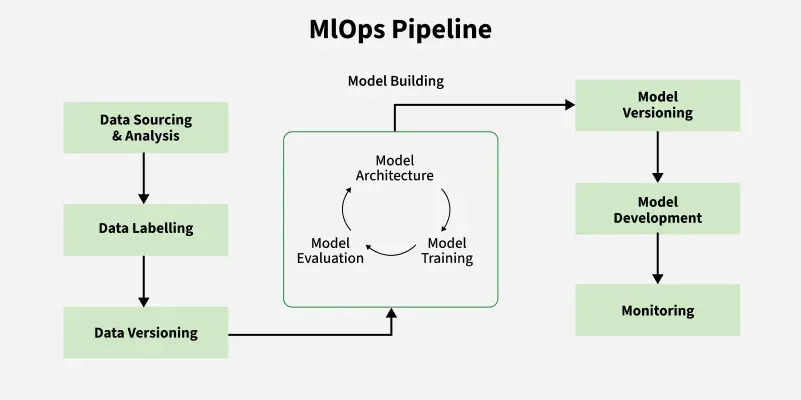
Adopting a tool like Evidently AI involves:
- Integration Complexity: Medium. It requires embedding the library into your existing ML serving pipeline (e.g., alongside Seldon, KServe, or custom Flask/FastAPI endpoints). For real-time systems, this means streaming integration (Kafka, Kinesis).
- Defining the "Golden" Reference: This is a strategic decision. Will you use the original training set, a snapshot from last quarter, or a dynamically updating window? The choice depends on how fast your retail domain evolves.
- Ownership: This is an MLOps/ML Engineering task, not a data science research task. It requires collaboration between data scientists (to define what to monitor) and platform engineers (to implement it robustly).
Governance & Risk Assessment
- Maturity: High. Drift detection is a well-established MLOps practice. Evidently AI is a mature open-source tool with significant industry adoption.
- Privacy: Monitoring aggregate data distributions is generally low-risk, but teams must ensure no sensitive raw user data is inadvertently exposed in monitoring dashboards.
- Bias Amplification: Drift detection is a diagnostic tool. It can alert you to a shift that may exacerbate bias (e.g., a model starts ignoring a newly acquired customer segment), but it does not, by itself, correct for bias. That requires separate intervention.
gentic.news Analysis
This practical guide fits squarely into the ongoing operationalization of AI in retail. It moves beyond the model-building phase we often cover—like the recent arXiv study on data scaling in traditional recommenders—and into the critical, less-glamorous work of maintenance. That study argued for the continued value of more data; this article addresses what happens when that live data starts to change underneath your model.
Furthermore, it complements our coverage of advanced architectural research, such as the IAT compression technique for sequence modeling. While IAT aims to make complex user history models more efficient, Evidently AI ensures that whatever model you deploy—simple or complex—remains reliable in production. The two represent different layers of the stack: core algorithm innovation versus production robustness.
For luxury AI leaders, the takeaway is clear: competitive advantage will increasingly come from reliability and adaptability, not just algorithmic sophistication. A perfectly personalized model that degrades unnoticed during the holiday season is a liability. Integrating tools like Evidently AI represents a necessary step towards mature, responsible, and resilient AI systems that protect both margin and brand equity.