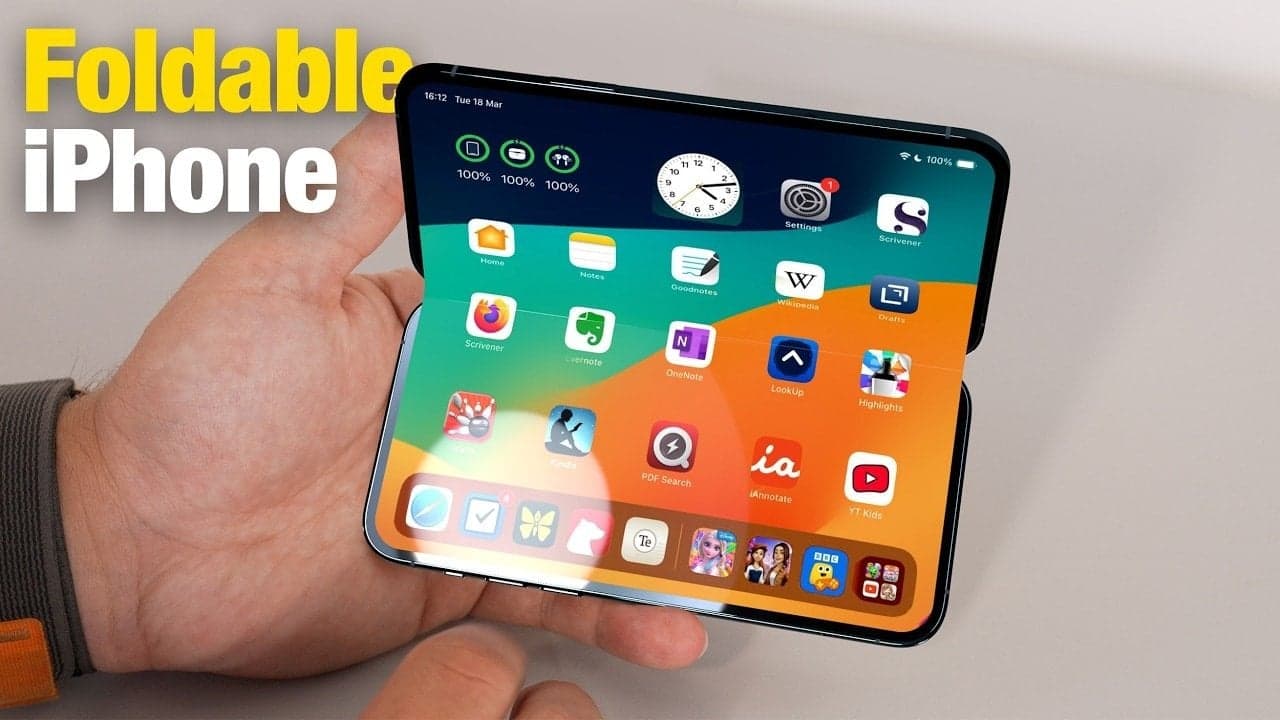
A report, amplified by industry analysts, suggests Apple has accelerated the timeline for its first foldable iPhone, now targeting a 2026 launch under CEO Tim Ternus. The device was previously expected in 2027. This move signals a strategic push to introduce a new hardware form factor optimized for next-generation, on-device AI applications ahead of key competitors in the Android ecosystem.
Key Takeaways
- Apple's first foldable iPhone is now reportedly targeting a 2026 release, accelerated from a 2027 expectation.
- This positions it as a new form factor for on-device AI experiences ahead of competitors.
What Happened

Industry analyst Carolina Milanesi noted an "interesting timeline" shift, stating the foldable iPhone is now expected in 2026, a year earlier than the previously anticipated 2027 release window. The report, shared by Bloomberg's Mark Gurman, indicates that current Apple CEO Tim Ternus will be the executive to introduce the product. This acceleration comes amid intense competition in the AI-hardware space, where form factor is becoming a key differentiator for immersive AI agent experiences.
Context: The AI Hardware Race
The development of a foldable iPhone is not merely a play for the premium smartphone market; it is a critical hardware strategy for AI. A larger, adaptable screen surface provides a superior interface for multimodal AI agents, complex on-device data visualization, and enhanced productivity tools that leverage Apple's growing suite of on-device and cloud AI models (like the rumored "Apple GPT").
Samsung, Google, and Huawei have established the foldable market with devices that increasingly tout AI features. Apple's entry, while later, is expected to focus on seamless hardware-software-AI integration, leveraging its custom silicon (the M-series and A-series chips) known for industry-leading neural engine performance. An accelerated timeline suggests Apple sees an urgent need to capture this high-margin segment before the AI-use cases for foldables become firmly entrenched with Android providers.
The Ternus Factor

The report specifically names CEO Tim Ternus as the leader who will introduce the device. Ternus, who took over from Tim Cook in late 2025, has overseen Apple's hardware engineering for years. His leadership in launching this product points to a hardware-driven AI strategy, emphasizing the physical device as the foundational platform for Apple's AI ecosystem. This aligns with Apple's historical strength in creating synergistic hardware and software.
gentic.news Analysis
This acceleration is a direct competitive response to the AI hardware roadmaps from Samsung, Google, and emerging Chinese OEMs. As we reported in February 2026 following Samsung's Galaxy S30 Unpacked event, the focus has sharply shifted from mere spec improvements to "AI-native form factors." A foldable screen is no longer a gimmick but is being framed as essential for AI agents that need more dynamic screen real estate—imagine a device that unfolds to provide a dedicated workspace for an AI coding assistant or a canvas for a real-time AI design tool.
The move also follows Apple's pattern of entering a market after competitors have validated consumer interest, then refining the experience with superior integration. However, the accelerated timeline indicates the strategic calculus has changed: AI adoption is moving too fast to wait. The delay allowed Apple to develop proprietary hinge technology and screen durability solutions, but the AI software race now demands the hardware ship sooner.
Furthermore, this aligns with our tracking of Apple's AI model development. The company's research into large language models (LLMs) and multimodal AI, such as the Ferret series, requires compelling hardware to showcase its full potential. A 2026 foldable iPhone would be the perfect launch vehicle for a significantly more advanced version of Siri or a new AI agent platform, likely unveiled at WWDC 2026 for a fall hardware release. This creates a cohesive narrative: new AI software at WWDC, running best on a new AI-optimized form factor in the fall.
Frequently Asked Questions
When is the foldable iPhone coming out?
Based on this latest report from industry analysts, Apple is now targeting a 2026 release for its first foldable iPhone. This is a shift from earlier expectations of a 2027 launch.
Why is Apple making a foldable phone?
Apple is entering the foldable market primarily as a strategic move for artificial intelligence. A foldable device offers a larger, more adaptable screen that serves as a superior interface for complex on-device AI agents, multitasking with AI tools, and immersive multimodal interactions, creating a hardware moat for its AI ecosystem.
How will a foldable iPhone be better for AI?
The expanded screen real estate of a foldable allows for more natural interfaces for AI assistants—think a persistent chat panel alongside a full app, or a canvas for AI-generated content. It enables new use cases where the AI needs significant visual context or space to present information, moving beyond simple voice or small-screen interactions.
Who is Tim Ternus?
Tim Ternus is the CEO of Apple, having taken over the role from Tim Cook in late 2025. He previously served as Apple's Senior Vice President of Hardware Engineering, overseeing the development of all major products including the iPhone, iPad, and Mac. His direct association with this project underscores its importance as a hardware-led AI initiative.