A brief demonstration posted on X (formerly Twitter) has sparked discussion among developers about the evolving capabilities of large language models in frontend development. The user @intheworldofai reported that OpenAI's GPT-5.5 model successfully generated a functional web application that mimics core features of Microsoft Excel.
Key Takeaways
- A user demonstrated GPT-5.5 creating a web-based spreadsheet with formatting and grid behavior.
- This showcases incremental progress in AI's ability to generate complex, interactive frontend code from natural language.
What Happened

The user prompted GPT-5.5 to "create Excel." In response, the AI generated the code for a web-based spreadsheet application. According to the user, the resulting application was "scarily accurate," with an interface and behavior that felt "almost identical" to the familiar desktop software. Key features noted included proper visual formatting and interactive grid behavior, suggesting the model produced more than static HTML tables—it likely generated JavaScript for cell interaction and state management.
The shared video preview shows a grid interface with cells, column headers (A, B, C), and a formula bar, closely resembling the standard Excel UI.
Context
This demonstration fits into the ongoing trend of AI assistants moving beyond simple code completion to generating complete, interactive applications from high-level descriptions. It follows a series of incremental releases from OpenAI, including the GPT-4o update in May 2024 which emphasized multimodal reasoning, and the more recent GPT-4.5 series which showed improved coding benchmarks. The leap to a "5.5" designation, while not officially confirmed by OpenAI, suggests a significant iterative update focused on complex task execution.
For frontend development specifically, tools like GitHub Copilot, Cursor, and v0 by Vercel have steadily increased the level of abstraction at which developers can work. This demo implies a model capable of synthesizing knowledge of UI frameworks (like React), CSS for styling, and JavaScript for business logic into a cohesive, working project from a single, vague instruction.
gentic.news Analysis
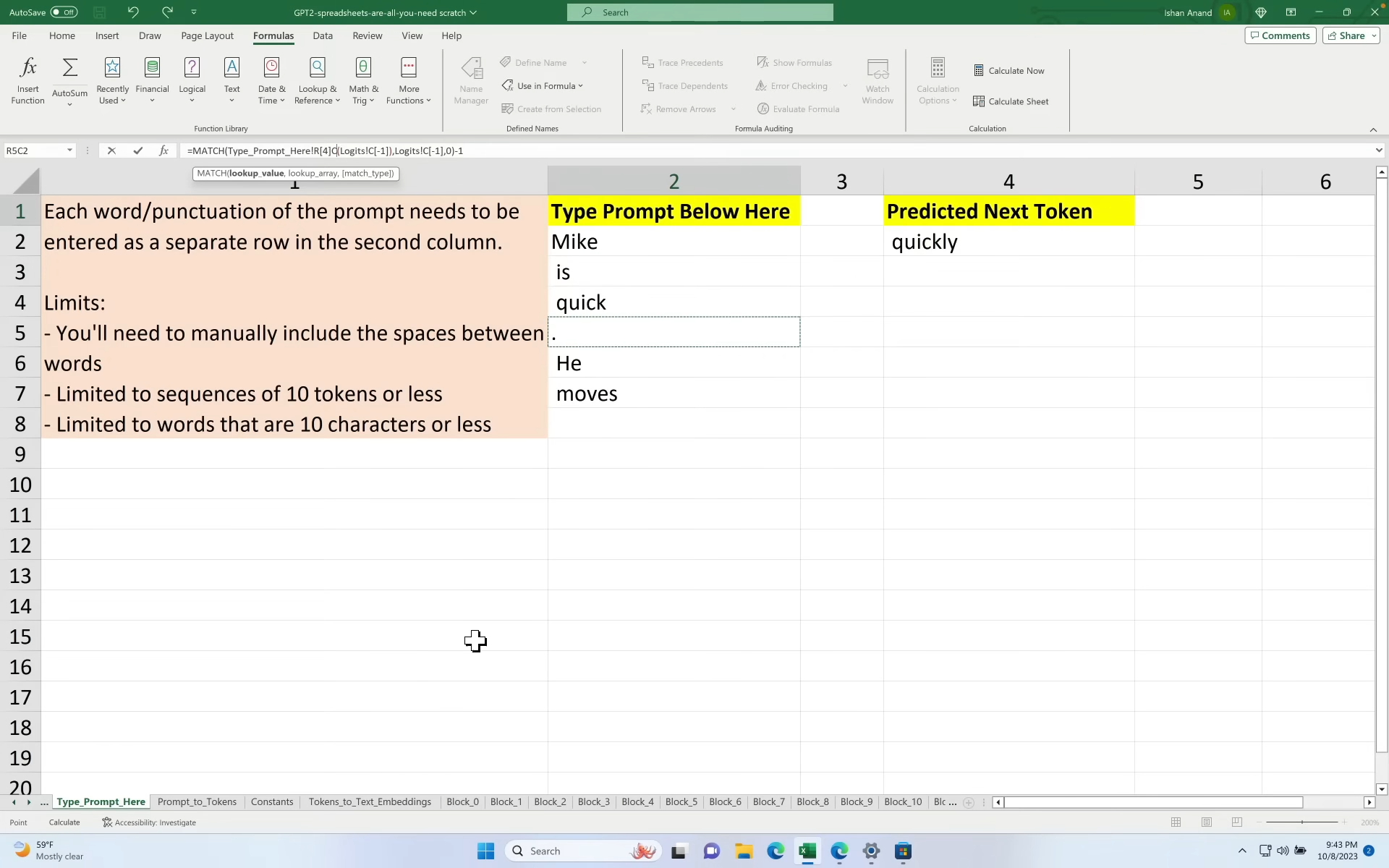
This demo, while anecdotal, points to two significant, converging trends in AI-assisted development. First, it highlights the continued erosion of the boundary between specification and implementation. The prompt "create Excel" is a product goal, not a technical specification. For a model to successfully interpret this as a request to build a web-based spreadsheet with a grid UI, formula bar, and interactive cells demonstrates a profound understanding of both software archetypes and user intent. This aligns with the trajectory we noted in our coverage of Claude 3.5 Sonnet's "projects" feature and Google's Gemini 2.0 Pro's complex reasoning improvements, where models are increasingly tasked with open-ended, multi-step creation.
Second, this showcases the maturation of multi-file, full-stack code generation. A functional Excel clone isn't a single script; it requires an HTML structure, CSS for layout and styling, and JavaScript for the core spreadsheet logic (cell references, formula parsing, state management). GPT-5.5's apparent ability to produce this coherent bundle suggests improvements in architectural reasoning and context management across different languages and file types. This is a direct challenge to existing AI-powered tools like Cursor's Agent mode or Replit's AI Workspace, which are designed to manage such multi-file projects.
However, practitioners should temper excitement with skepticism. A viral demo proves a point-in-time capability, not a reliable, production-ready tool. The real test is consistency, handling edge cases, and integrating with existing codebases and build systems. The true impact will be measured when this capability is productized within OpenAI's API or ChatGPT interface, allowing for systematic evaluation of its success rate and limitations in generating complex applications.
Frequently Asked Questions
Is GPT-5.5 officially released?
No. As of April 2026, OpenAI has not officially announced a model named "GPT-5.5." The name used in the demo likely refers to an internal or preview version. OpenAI's last major confirmed model series was GPT-4.5. The "5.5" designation suggests it could be a significant iterative update, but its status, capabilities, and release timeline are not public.
Can AI now build any software from a simple prompt?
Not reliably. While demos like this are impressive, they represent a "best-case" output. Building production-grade software requires handling countless edge cases, integrating with specific APIs and databases, following security best practices, and fitting into a larger architectural context. Current AI can dramatically accelerate prototyping and generate boilerplate, but human developers are still essential for design, integration, testing, and maintenance.
What does this mean for frontend developers?
This trend signifies a shift in the developer's role rather than an elimination. The value will move further from writing initial implementation code toward higher-level tasks: defining precise requirements, curating and refining AI outputs, designing system architecture, and ensuring quality, accessibility, and performance. Developers who master using AI as a collaborative tool for rapid prototyping and exploration will likely see increased productivity.
How does this compare to other AI coding tools?
Most current AI coding tools (GitHub Copilot, Amazon Q Developer, Tabnine) focus on inline code completion or chat-based assistance within a file. This demo suggests a model capable of project-level generation, creating a multi-file application from a single prompt. This places its purported capability closer to specialized agents or platforms like Smol Developer or v0, which are explicitly designed for generating full applications from descriptions, though typically with more structured inputs.