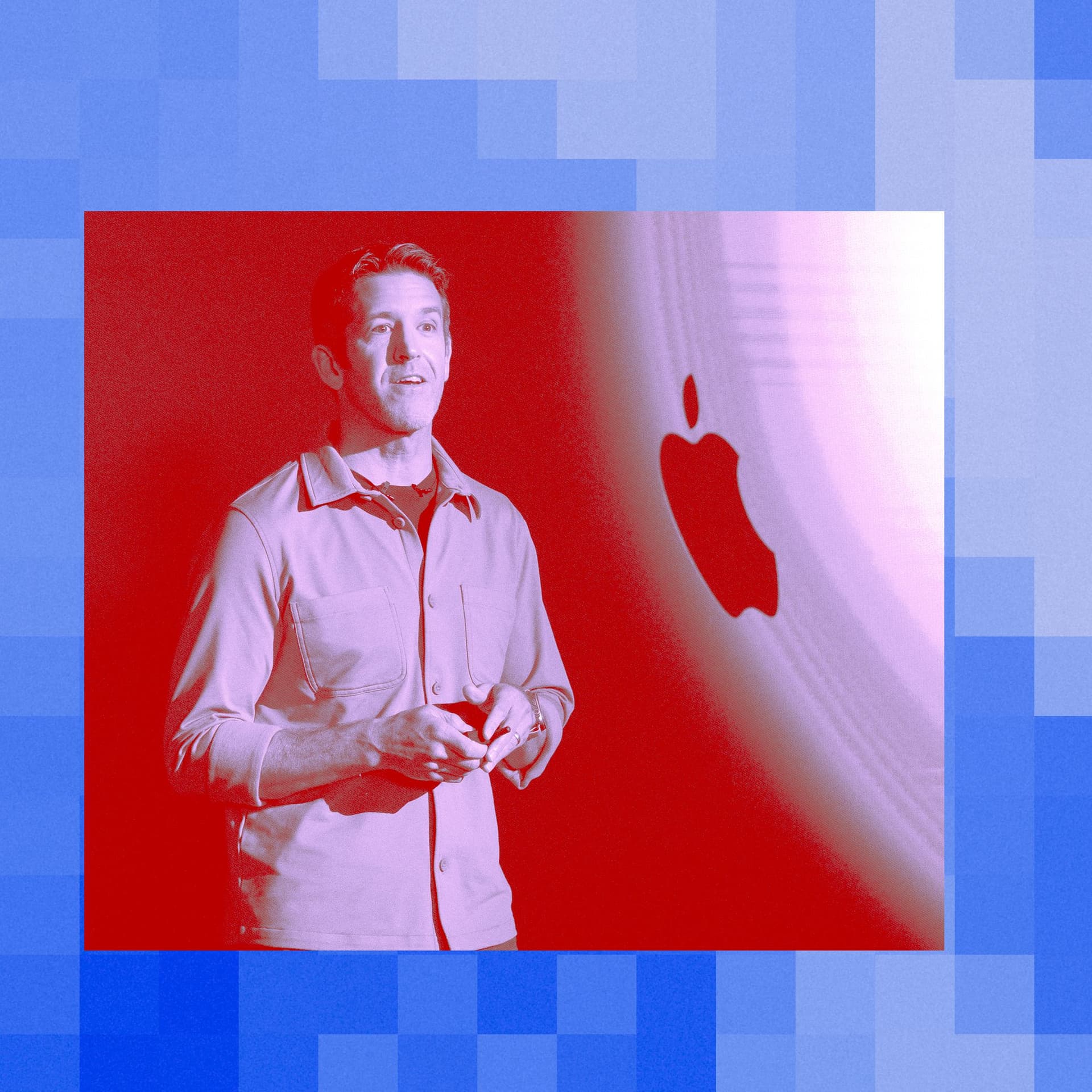
A brief social media post from industry observer @kimmonismus marks what many see as a symbolic passing of the torch at Apple: "Another era ends. Steve Jobs had the ideas. Tim Cook created the logistics for Apple's success. Now it's up to John Ternus."
While not an official corporate announcement, the sentiment captures a widely recognized shift within the Cupertino giant. The leadership baton for Apple's most critical technological frontier—artificial intelligence—has decisively landed with John Ternus, Apple's Senior Vice President of Hardware Engineering.
Key Takeaways
- Apple's AI leadership transitions to John Ternus, marking a new era following Steve Jobs' vision and Tim Cook's operational success.
- This comes as Apple accelerates its generative AI push with Apple Intelligence.
What Happened
The source points to the culmination of a multi-year transition. Steve Jobs' era (1976-2011) was defined by visionary product concepts and disruptive design. Tim Cook's tenure as CEO (2011-present) mastered global supply chains, operational scale, and services monetization, turning Apple into a $3 trillion company.
Now, as Apple fully commits to an AI-integrated future with its Apple Intelligence platform, the responsibility for executing this technically complex vision falls to Ternus. He is the executive now most visibly steering the hardware-software integration essential to Apple's AI differentiation, particularly with on-device processing via custom silicon.
Context: The Rise of Ternus
John Ternus joined Apple in 2001 and rose through the ranks of hardware engineering. He was instrumental in the design of every iPad generation and numerous Mac models. His promotion to SVP of Hardware Engineering in 2021, reporting directly to Tim Cook, placed him in charge of all hardware engineering, including the division responsible for Apple's custom silicon (M-series, A-series chips).
This hardware leadership role became the de facto center of gravity for Apple's AI strategy. Apple's approach to AI—emphasizing privacy, on-device processing, and seamless integration—is fundamentally dependent on the capabilities of its in-house silicon. The Neural Engine, a core component of Apple chips since the A11 Bionic, is Ternus's domain. The success of Apple Intelligence, announced at WWDC 2024 and now rolling out, hinges on the performance and efficiency of the hardware his team designs.
gentic.news Analysis
This informal "era" designation is less about corporate hierarchy and more about recognizing the focal point of execution. Tim Cook remains CEO, but the technical roadmap for Apple's core competitive response in the generative AI race—a response years in the making—is being implemented under Ternus's purview.
This transition occurs at a critical juncture. As we reported in June 2024 (Apple Unveils 'Apple Intelligence' Platform, Deep iOS 18 Integration), Apple is betting its ecosystem on deeply integrated, privacy-focused AI. This strategy directly contrasts with the cloud-heavy, large-parameter models of competitors like OpenAI and Google. Ternus's challenge is to continue the exponential scaling of on-device AI performance (through the Neural Engine and GPU cores) while maintaining the battery life and thermal profiles expected of Apple devices. The recently released M4 chip, with a significantly upgraded Neural Engine, is the first major hardware built under this new imperative.
The pressure is immense. The "AI PC" category is being aggressively defined by Microsoft and partners like Qualcomm (with its Snapdragon X Elite), challenging Apple's long-held performance-per-watt advantage in mobile computing. Ternus's hardware engineering team must deliver generational leaps in AI compute not just for Macs, but across iPhone, iPad, and eventually, the anticipated Apple Vision Pro and other wearables. His era will be judged on whether Apple Silicon can maintain an insurmountable lead for on-device AI workloads, making the cloud-centric alternative seem slow, expensive, and less private.
Frequently Asked Questions
Who is John Ternus?
John Ternus is Apple's Senior Vice President of Hardware Engineering, a role he assumed in 2021. He oversees all hardware engineering, including the development of iPhone, iPad, Mac, AirPods, and more critically, Apple's custom silicon chips (M-series, A-series) which contain the Neural Engine for AI processing. He is now the key executive responsible for building the hardware foundation of Apple's AI strategy.
Is Tim Cook leaving Apple?
No, Tim Cook remains the Chief Executive Officer of Apple. The commentary about an "era ending" refers to the primary source of Apple's strategic advantage shifting from operational logistics (Cook's strength) back to deep, integrated technical innovation in the AI age, led by Ternus's hardware engineering. Cook continues to lead the company overall.
What is Apple's AI strategy under Ternus?
The strategy, branded Apple Intelligence, focuses on practical, privacy-preserving AI features deeply integrated into iOS, iPadOS, and macOS. It emphasizes on-device processing using Apple Silicon's Neural Engine for speed and privacy, with larger requests routed to cloud-based models ("Private Cloud Compute") running on Apple-owned servers with specialized security guarantees. Ternus's role is to ensure the hardware enables this seamless, powerful, and private experience.
How does Apple's AI hardware compare to competitors?
Apple's current edge lies in the unified vertical integration of its hardware and software. The Neural Engine in its chips is optimized for the specific AI models (like large language and diffusion models) that Apple Intelligence uses. Competitors like Qualcomm and Intel are pushing hard with new NPUs (Neural Processing Units) for Windows PCs, but they lack control over the entire operating system stack. Ternus's task is to widen this integration advantage with each new chip generation.