What Happened

In a brief post on X (formerly Twitter), user @kimmonismus predicted that Apple's 2026 Worldwide Developers Conference (WWDC) will be "the most exciting one," citing three key developments:
- A new Apple CEO
- The first deep integration of a useful AI model (specifically Google's Gemini) into iOS
- Exciting new macOS features
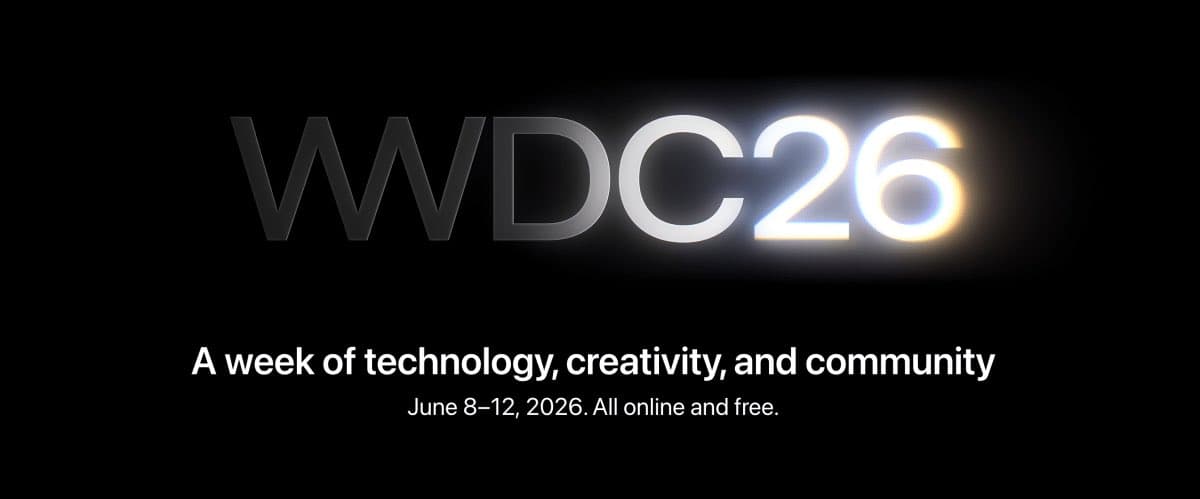
The tweet, shared on April 5, 2026, expresses anticipation for the event, which typically takes place in early June.
Context
WWDC is Apple's annual developer conference where the company unveils major software updates and occasionally new hardware. A new CEO would mark a significant leadership transition — Tim Cook has held the role since 2011. Deep integration of a third-party AI model like Gemini into iOS would be a departure from Apple's historically in-house approach to AI and machine learning (e.g., Siri, Core ML).
This claim aligns with broader industry trends: Apple has been reportedly exploring partnerships with AI model providers. In 2024, there were rumors of talks with Google about licensing Gemini for iPhone features. If true, this would bring state-of-the-art generative AI capabilities directly to hundreds of millions of iOS devices.
What to Watch

- Official confirmation: This is a single, unverified tweet. Apple has not announced a CEO change or Gemini integration. Treat as speculation until official sources confirm.
- Competitive landscape: Google, Samsung, and Microsoft have already integrated generative AI into their mobile and desktop operating systems (e.g., Galaxy AI, Copilot+). Apple's move would close a gap.
- Privacy implications: Apple positions privacy as a core value. Deep AI integration would likely involve on-device processing (via Apple's Neural Engine) rather than cloud-only, to preserve user privacy.
gentic.news Analysis
This tweet, while thin on evidence, touches on two high-stakes narratives for Apple in 2026: leadership succession and AI strategy. Tim Cook's tenure has been defined by services growth and supply chain mastery, not AI breakthroughs. A new CEO could signal a pivot toward more aggressive AI deployment — or simply a planned transition.
The mention of Gemini specifically is notable. Apple has historically preferred vertical integration (building its own chips, operating systems, services). Licensing a competitor's AI model would be a pragmatic concession: Google's Gemini models have consistently outperformed Apple's Siri-based offerings in benchmarks. If Apple integrates Gemini deeply into iOS (e.g., into Siri, Photos, Messages, and developer APIs), it could instantly make the iPhone more competitive against Samsung's Galaxy AI and Google's Pixel features.
However, deep integration also creates dependencies. Apple would need to negotiate data-sharing terms, model update schedules, and privacy safeguards. The tweet offers no details on whether this would be a cloud-based or on-device deployment — a critical distinction for user privacy.
Finally, the claim about "exciting new macOS features" is too vague to analyze. Historically, macOS WWDC announcements focus on continuity features (e.g., Universal Control), performance improvements, and developer tools. Generative AI features on Mac (e.g., writing assistants, code generation in Xcode) would align with the broader Gemini integration story.
Frequently Asked Questions
Is Apple really going to integrate Gemini into iOS?
There is no official confirmation. The claim comes from an unverified tweet. However, industry rumors dating back to 2024 suggested Apple was in talks with Google about licensing Gemini for iPhone features. We recommend awaiting Apple's official WWDC announcement.
Who will be the new Apple CEO?
The tweet does not name a successor. Tim Cook is the current CEO. Potential internal candidates include Jeff Williams (COO) and Craig Federighi (software engineering chief), but no official succession plan has been disclosed.
What is WWDC 2026 expected to announce?
If the tweet is accurate, key announcements would include a new CEO, deep Gemini integration into iOS 20 (likely named), and new macOS 17 features. Typical WWDC also includes developer tools, AR/VR updates (Vision Pro), and hardware announcements (MacBook Pro, Mac Pro).