Apple is undertaking a significant internal retraining effort, sending close to 200 members of its Siri organization to a multi-week bootcamp focused on AI-assisted coding. According to a report from The Information, the engineers will learn to use tools like Claude Code and Codex. This move signals a major shift in development methodology for Apple's flagship AI team.
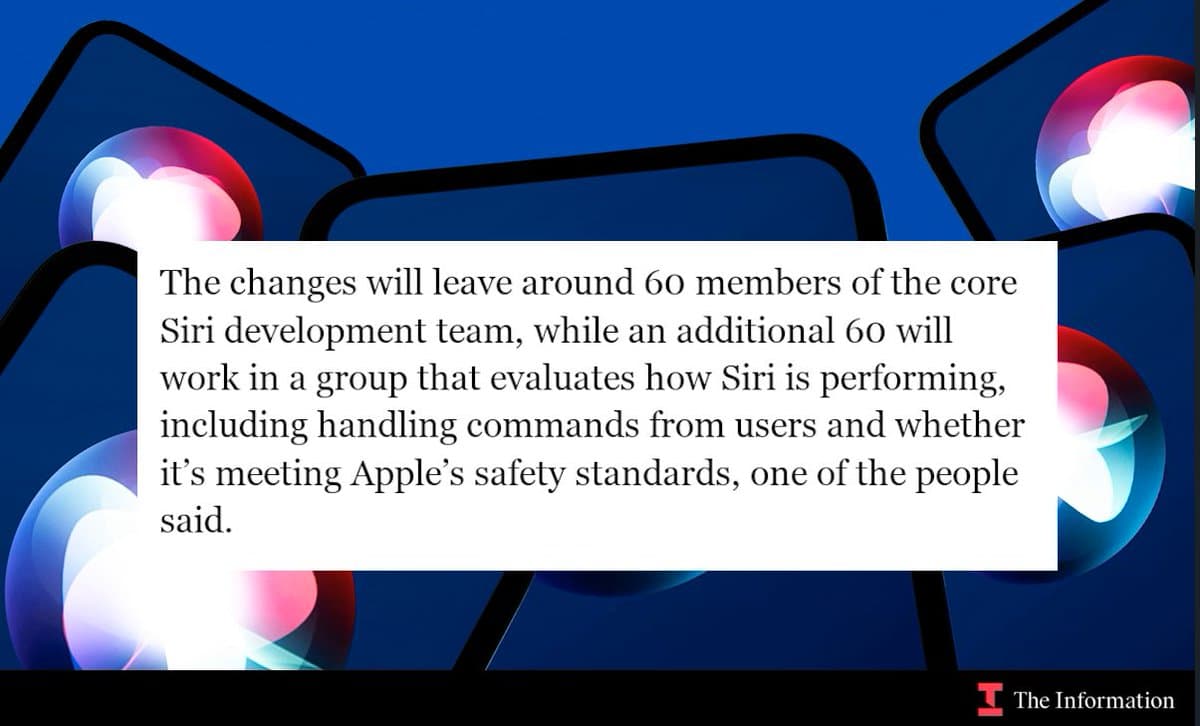
Roughly 60 engineers will remain behind to maintain core Siri development, with another 60 focused on evaluations and safety checks. The timing is critical: the bootcamp concludes just two months before Apple's Worldwide Developers Conference (WWDC) in June, where the company is expected to finally unveil a long-delayed, Gemini-powered overhaul of Siri.
Key Takeaways
- Apple is sending ~200 Siri engineers to a multi-week bootcamp to learn AI coding tools like Claude Code and Codex.
- This retraining precedes the expected June WWDC unveiling of a Gemini-powered Siri overhaul.
What Happened

The core of the story is a workforce transformation. Apple is not hiring new talent with AI coding skills; it is proactively retraining a large portion of its existing Siri engineering corps. The bootcamp structure suggests an intensive, curriculum-driven approach to adopting AI pair-programming tools, moving beyond ad-hoc experimentation to mandated upskilling.
The tools named—Claude Code (Anthropic's coding assistant) and Codex (the model behind GitHub Copilot, from OpenAI/Microsoft)—are notable. They represent best-in-class external AI systems, indicating Apple is willing to train its engineers on competitors' technologies to accelerate its own product development.
Context and Timing
This retraining wave is directly tied to a pivotal product milestone. For years, Siri has been criticized for lagging behind competitors like Google Assistant and Amazon's Alexa in natural language understanding and contextual awareness. Apple's partnership with Google to integrate Gemini AI into Siri, first reported in March 2024, represented a strategic admission that it needed external help to leapfrog the competition.
The reported "long-delayed" overhaul suggests internal development hurdles. Sending 200 engineers to bootcamp now implies that mastering AI-assisted development is seen as a prerequisite for successfully building, integrating, and maintaining the new Gemini-powered Siri architecture in time for its planned debut.
The Implicit Admission
The report frames this as Apple admitting its "own Siri engineers need to go back to school." This is a stark acknowledgment of a skills gap. The rapid evolution of large language models (LLMs) and AI tooling has created a new paradigm for software development. Apple's move confirms that even engineers at one of the world's most sophisticated tech companies must systematically relearn core parts of their craft to stay relevant. It prioritizes fluency in prompt engineering, AI code generation, and LLM-augmented debugging over traditional methods.
What to Watch

The success of this retraining will be measured at WWDC. A smooth unveiling of a demonstrably more capable Siri will validate the bootcamp strategy. Conversely, further delays or a lackluster showing could point to deeper integration challenges beyond engineer upskilling.
Internally, this could reshape Apple's engineering culture. Widespread adoption of AI coding tools typically boosts productivity but also changes workflow and code review processes. How Apple manages this transition—balancing the speed gains from AI with its renowned focus on security and privacy—will be critical.
gentic.news Analysis
This story is less about a new AI model and more about the industrialization of AI skills transfer. Apple's bootcamp is a canonical example of how leading tech firms are addressing the LLM skills gap at scale. It follows a pattern we've seen across the industry in 2025-2026, where companies move from pilot programs to mandatory retraining. For instance, our coverage of Microsoft's "AI-First" internal mandate showed a similar top-down push.
The choice of tools is analytically significant. By training engineers on Claude Code (Anthropic) and Codex (OpenAI/Microsoft), Apple is effectively benchmarking its internal tools against the market leaders. This suggests that, for now, external tools are superior or more mature for developer education. It also subtly reinforces the competitive landscape: Apple's key AI partner for Siri is Google (Gemini), but its engineers are being trained on tools from Google's direct competitors. This reflects the fragmented, best-of-breed approach companies are taking in the LLM toolchain.
Finally, this retraining underscores the high stakes of the Siri reboot. Apple's AI credibility, which has faced scrutiny compared to Google, OpenAI, and Microsoft, is heavily invested in this launch. The bootcamp is a clear signal that Apple is not just licensing Gemini's technology; it is restructuring its human capital to properly implement and evolve it. The coming months will test whether this investment in human upskilling, combined with Gemini's capabilities, is enough to finally close the perceived AI gap with its rivals.
Frequently Asked Questions
Why is Apple sending Siri engineers to a coding bootcamp?
Apple is retraining approximately 200 Siri engineers to use AI-assisted coding tools like Claude Code and Codex. This is a proactive upskilling initiative to ensure its development team can effectively build and maintain the new, more complex AI architecture powering the upcoming Gemini-based Siri overhaul.
What AI tools are Apple engineers learning?
According to the report, the bootcamp curriculum includes Claude Code (Anthropic's coding assistant) and Codex (the model from OpenAI that powers GitHub Copilot). These are leading third-party AI coding tools, indicating Apple is using external platforms to train its engineers for maximum effectiveness.
When will the new Gemini-powered Siri be released?
Apple is expected to unveil the overhauled Siri at its Worldwide Developers Conference (WWDC) in June. The timing of this engineer bootcamp, ending just two months before WWDC, suggests the company is in the final preparation phase for this launch.
Does this mean Apple's internal AI tools are lacking?
The use of external tools for training doesn't necessarily mean Apple's internal tools are deficient for production. It often indicates that third-party tools are better suited for education and skill acquisition due to their broader documentation, community support, and established training methodologies. It allows engineers to learn core concepts before potentially transitioning to proprietary internal systems.