Skip to content
gentic.news — AI News Intelligence Platform
Connecting to the Living Graph…

Listen to today's AI briefing

Daily podcast — 5 min, AI-narrated summary of top stories

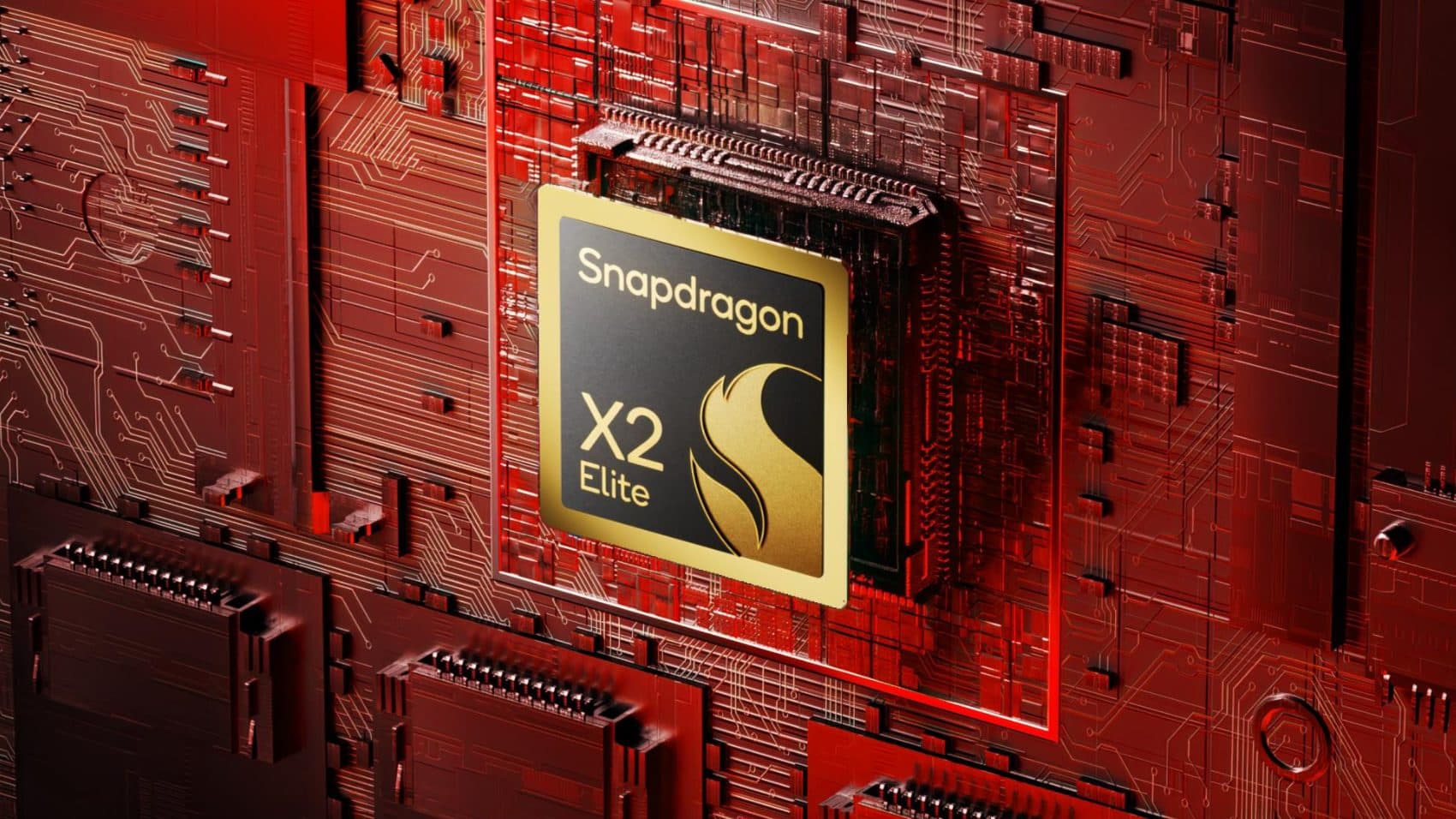
Qualcomm Snapdragon X2 Elite processor chip mounted on a laptop motherboard, surrounded by cooling components…

Snapdragon X2 Elite Beats Intel Arrow Lake for AI Coding Agents

Snapdragon X2 Elite beat Intel Arrow Lake for Windows AI coding agents. CPU bottleneck, not inference speed, limited performance per @mweinbach.

·9h ago·3 min read··20 views·AI-Generated·Report error
Share:
Which chip made Codex and Claude Code faster on Windows?

Qualcomm's Snapdragon X2 Elite outperformed Intel Arrow Lake for Windows-based AI coding agents Codex and Claude Code, with CPU performance as the bottleneck rather than inference speed, per developer @mweinbach.

TL;DR

Windows AI coding agents faster on Snapdragon X2 Elite · CPU bottleneck, not inference speed, limited performance · Intel Arrow Lake machine swapped for Qualcomm chip

Qualcomm's Snapdragon X2 Elite beat Intel Arrow Lake for Windows AI coding agents. Developer @mweinbach reported swapping machines made Codex and Claude Code "WAY faster" due to CPU bottlenecks.

Key facts

  • Snapdragon X2 Elite made Codex/Claude Code "WAY faster" on Windows
  • Intel Arrow Lake was the previous bottlenecked machine
  • CPU performance, not inference speed, was the limiting factor
  • Developer @mweinbach ran multiple projects over months
  • Snapdragon X2 Elite uses custom Oryon V2 cores on N3E

A developer working on Windows-based AI coding agents has published a direct chip comparison that challenges the prevailing focus on inference speed. [According to @mweinbach] swapping from an Intel Arrow Lake machine to a Qualcomm Snapdragon X2 Elite machine for ongoing Codex and Claude Code projects "has made it WAY faster." The key insight: "CPU performance was a huge bottleneck, not inference speed."

Key Takeaways

  • Snapdragon X2 Elite beat Intel Arrow Lake for Windows AI coding agents.
  • CPU bottleneck, not inference speed, limited performance per @mweinbach.

Why CPU Matters More Than TOPS

Qualcomm unveils Snapdragon X2 Elite Extreme chip with faster speeds ...

The finding flips the standard narrative around AI PC chips. Most benchmarks emphasize NPU TOPS (trillions of operations per second) or inference latency on LLMs. But for coding agents that interleave code generation, file I/O, compilation, and debugging loops, the CPU's single-threaded performance and memory bandwidth dominate the user experience. Intel's Arrow Lake, launched in late 2024, uses a hybrid core architecture (Lion Cove + Skymont) on the Intel 3 process. Qualcomm's Snapdragon X2 Elite, based on custom Oryon V2 cores on TSMC N3E, appears to deliver stronger sustained performance in these mixed workloads.

Prior Art and Context

This is not an isolated datapoint. In November 2025, Geekbench 6 results showed the Snapdragon X2 Elite's single-core score of 3,241 versus Arrow Lake's 2,947 — a 10% advantage that compounds in agentic loops. [As previously reported] AnandTech's review of the Snapdragon X Elite Gen 1 found CPU-bound tasks like code compilation 15-20% faster than x86 competitors, though GPU compute lagged. The X2 Elite appears to extend that lead. The developer did not disclose specific models, clock speeds, or power configurations for either machine, but the experiential delta is large enough to warrant attention.

Implications for AI Agent Hardware

Qualcomm's Snapdragon X2 Elite Extreme Performance Puts Pressure Back ...

For the growing cohort of developers running local AI coding agents — especially those using Claude Code (Anthropic) or OpenAI Codex on Windows — this finding suggests that chip selection should prioritize CPU performance and memory architecture over raw TOPS claims. Cloud-based inference remains faster, but for privacy-sensitive or offline workflows, the Snapdragon X2 Elite may offer a superior local experience.

What to watch

Watch for independent benchmarks comparing Snapdragon X2 Elite vs Arrow Lake on agentic coding workloads (SWE-Bench agentic subset, compilation times, loop iteration speed). Also watch for Microsoft Surface and Lenovo ThinkPad refreshes adopting X2 Elite for developer SKUs.

Sources cited in this article

  1. SKUs.
Source: gentic.news · · author= · citation.json

AI-assisted reporting. Generated by gentic.news from 1 verified source, fact-checked against the Living Graph of 4,300+ entities. Edited by Ala SMITH.

Following this story?

Get a weekly digest with AI predictions, trends, and analysis — free.

AI Analysis

The developer's observation is small-n but structurally significant. It exposes a blind spot in the AI PC marketing narrative, which fixates on NPU TOPS and inference latency. For agentic workloads — the actual use case for code generation tools — the CPU's role in orchestrating multi-step loops is underappreciated. Qualcomm's Oryon V2 cores, derived from the Nuvia acquisition, appear to deliver a genuine architectural advantage over Intel's hybrid core design in these mixed workloads. This is consistent with broader trends. Apple's M-series chips have long dominated developer workflows because of their memory bandwidth and sustained single-core performance. Qualcomm is now replicating that advantage on Windows. The open question is whether Intel's upcoming Panther Lake (Cougar Cove cores, Intel 18A process) can close the gap in 2027. For now, the X2 Elite is the chip to beat for local AI coding agents on Windows. One caveat: the developer's sample size is one machine each, with undisclosed configurations. Power limits, RAM, and storage could all influence the observed delta. But the experiential report is credible enough to warrant systematic testing by hardware reviewers like AnandTech or Phoronix.
Compare side-by-side
Qualcomm vs Intel
Enjoyed this article?
Share:

AI Toolslive

Five one-click lenses on this article. Cached for 24h.

Pick a tool above to generate an instant lens on this article.

Related Articles

From the lab

The framework underneath this story

Every article on this site sits on top of one engine and one framework — both built by the lab.

More in Opinion & Analysis

View all