HydraDB secured $6.5M for a persistent agent memory layer, targeting the session-gap problem that context-window scaling never addressed. [According to @kimmonismus] The round's source—not a frontier lab—reveals memory as a startup thesis.
Key facts
- HydraDB raised $6.5M for persistent agent memory.
- Context windows scaled to 1M tokens without solving session persistence.
- RAG and manual context injection are current workarounds.
- Frontier labs did not lead the round.
- Investor and valuation were not disclosed.
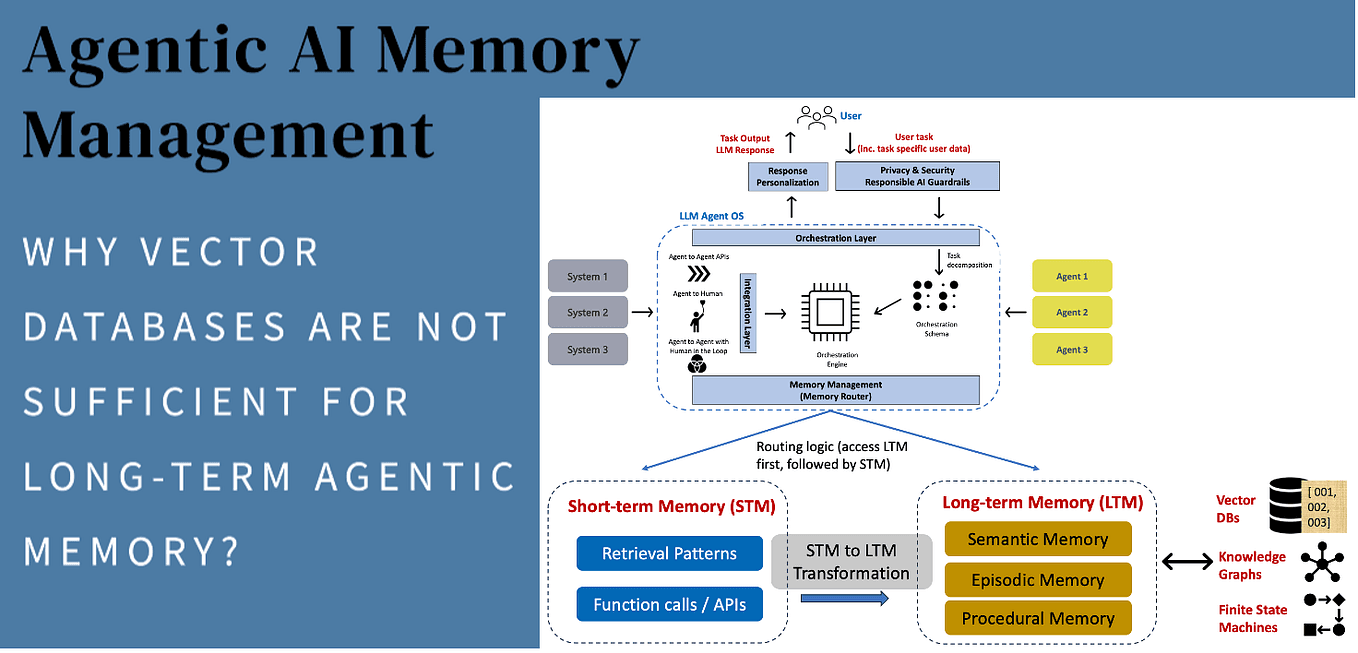
For two years the AI industry obsessed over context window size—Gemini's 1M, Claude's 200K, GPT-4's 128K. Meanwhile the actual problem never moved: agents don't remember anything between sessions. Teams patched the gap with RAG pipelines and manual context injection, calling that memory. [According to @kimmonismus]
HydraDB is going at the layer everyone routed around. One API, sessions that persist, knowledge that compounds across agents. The $6.5M raise—investor unnamed in the source—carries a structural signal: the money came from outside the frontier labs. Those labs (OpenAI, Anthropic, Google DeepMind) had the compute to solve persistence but spent it on scaling. So memory became a startup's whole thesis instead of a line item in theirs.
This is a contrarian bet. The industry consensus treats memory as a solved-to-good-enough problem with RAG + KV-cache tricks. HydraDB argues that agents need a database layer that remembers across invocations, not a vector store bolted onto a prompt. The first-party evidence is thin—no benchmark numbers, no customer names—but the thesis is structurally sound: if agents ever execute multi-hour workflows across multiple APIs, persistent session memory becomes table stakes.
What the $6.5M buys
HydraDB's pitch is a single API for session persistence. Compare this to the current stack: developers stitch together Redis for state, Pinecone for vector search, and a cron job to dump context. HydraDB offers a unified persistence layer that compounds knowledge across agent sessions. The company did not disclose the investor or valuation in the source material.
The frontier lab blind spot
The tell in the $6.5M is who raised it: not a frontier lab. Those labs treat memory as an engineering detail—a cache to optimize, not a product. They had the compute to solve persistence and spent it on scaling. So memory became a startup's whole thesis. This mirrors the database market: every cloud provider had a key-value store, but Redis became a company because nobody wanted to build it themselves.
Key Takeaways
- HydraDB raised $6.5M for persistent agent memory, solving the session-gap problem context windows ignored.
- The round signals memory as a startup thesis.
What to watch

Watch for HydraDB's first customer deployment and whether it publishes benchmark comparisons against RAG-based memory baselines. Also track if any frontier lab files a patent for persistent agent memory—a sign the thesis has legs.