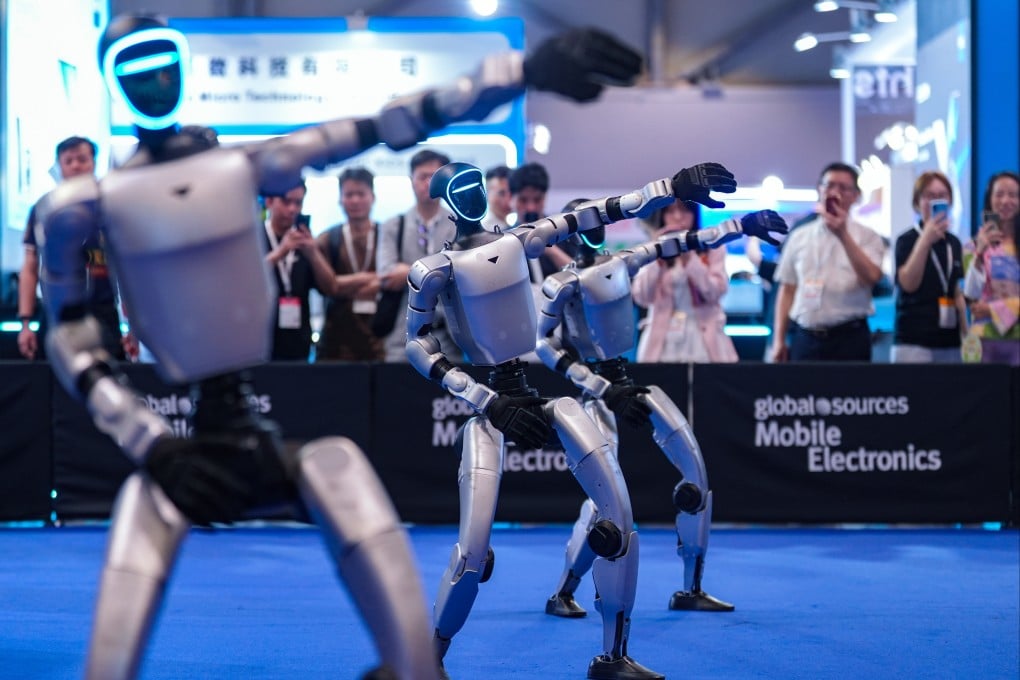
Nvidia, Unitree Robotics, and Sharpa unveiled the H2+ humanoid robot reference design at Computex 2026. The platform aims to standardize development workflows for physical AI researchers.
Key facts
- H2+ announced at Computex 2026 in Taipei
- Partners: Nvidia, Unitree Robotics, Sharpa
- Design streamlines data collection to deployment
- Unitree has shipped over 10,000 robots globally
- No pricing or availability disclosed
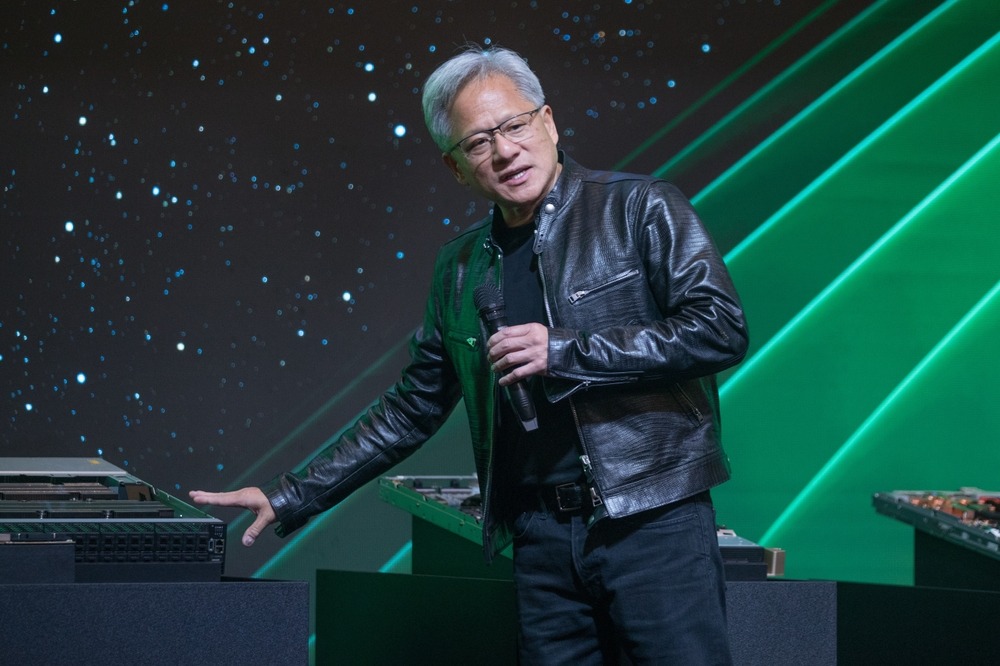
Nvidia has partnered with Chinese robotics champion Unitree Robotics and Singapore robotic hand maker Sharpa to release a new humanoid robot reference design to accelerate innovation in the global humanoid industry, the US chip giant’s CEO, Jensen Huang, announced on Monday at Computex in Taipei [per SCMP].
The new design, called H2+ or Isaac GR00T, will support industry-wide humanoid robotics research by streamlining the full development workflow for developers, including data collection, policy training and real-world deployment. “For agentic systems, robotic systems and physical AI, data is the hardest problem,” Huang said in his keynote speech.
Why this matters beyond the press release
Reference designs are Nvidia's classic playbook: provide the blueprint, make CUDA and its hardware indispensable, then let partners compete on integration. The H2+ announcement is structurally identical to Nvidia's strategy with DGX for AI training or DRIVE for autonomous vehicles — offer a validated stack that reduces time-to-market, lock in developer mindshare, and collect recurring software revenue via Isaac Sim and Omniverse.
Unitree brings mass-manufactured humanoid hardware (the H1 and H2 series), while Sharpa contributes dexterous end-effector technology. Nvidia contributes simulation, training, and inference silicon (likely Blackwell or Vera Rubin GPUs, though the company did not specify exact silicon). The combination targets the hardest bottleneck in physical AI: data generation and policy transfer from simulation to reality.
What’s missing
Nvidia did not disclose pricing, availability, or a specific benchmark for H2+. The company also did not name any early-access customers or reference deployments. The announcement is a reference design — a blueprint, not a shippable product. Competitors like Tesla’s Optimus and Figure AI are already demonstrating real-world task execution, while H2+ remains a paper specification.
Historical context
This is not Nvidia’s first humanoid robotics push. The company launched Isaac Sim in 2021 and the GR00T foundation model for humanoid robots in 2024. What’s new is the explicit partnership with a Chinese hardware manufacturer (Unitree) and a Singaporean component maker (Sharpa), signaling Nvidia’s intent to serve the Asian robotics supply chain directly, rather than through Western OEMs.
Unitree, best known for its quadruped robots (Go2, B2) and the H1 humanoid, has shipped over 10,000 units globally [per public company statements]. Sharpa specializes in robotic hands with tactile sensing, a critical gap in many humanoid designs.
What to watch
Watch for Nvidia to announce early-access partners for H2+ at GTC 2027, and whether Unitree ships a commercial humanoid based on the design by H2 2027. Also monitor if Tesla or Figure AI respond with their own reference architectures.