NVIDIA CEO Jensen Huang said nothing would give him more joy than if none of his engineers were coding at all. He framed coding as a 'task' to be minimized, not a 'purpose', in a framework relayed by @rohanpaul_ai.
Key facts
- Huang: 'nothing would give me more joy' than zero coding
- Coding framed as a 'task', not a 'purpose'
- NVIDIA AI-generated CUDA kernels outperformed human ones by 12%
- CUDA Neural Networks project achieves 94% correctness from natural language
- Huang predicted coding as obsolete skill in 2024 Stanford talk
NVIDIA CEO Jensen Huang said nothing would give him more joy than if none of his engineers were coding at all, according to a social media post by @rohanpaul_ai. He distinguished between 'purpose' and 'task', calling coding a task that should be minimized — ideally to zero. [Per @rohanpaul_ai]
The unique take: Huang is not just predicting AI will write code — he's saying NVIDIA's own engineers should stop writing code entirely. This is a structural claim about the company's internal R&D workflow, not a vague forecast. If NVIDIA's chip designers, CUDA kernel writers, and systems engineers stop coding, the company is betting that AI-generated code will match or exceed human output for the most performance-critical software in the world.
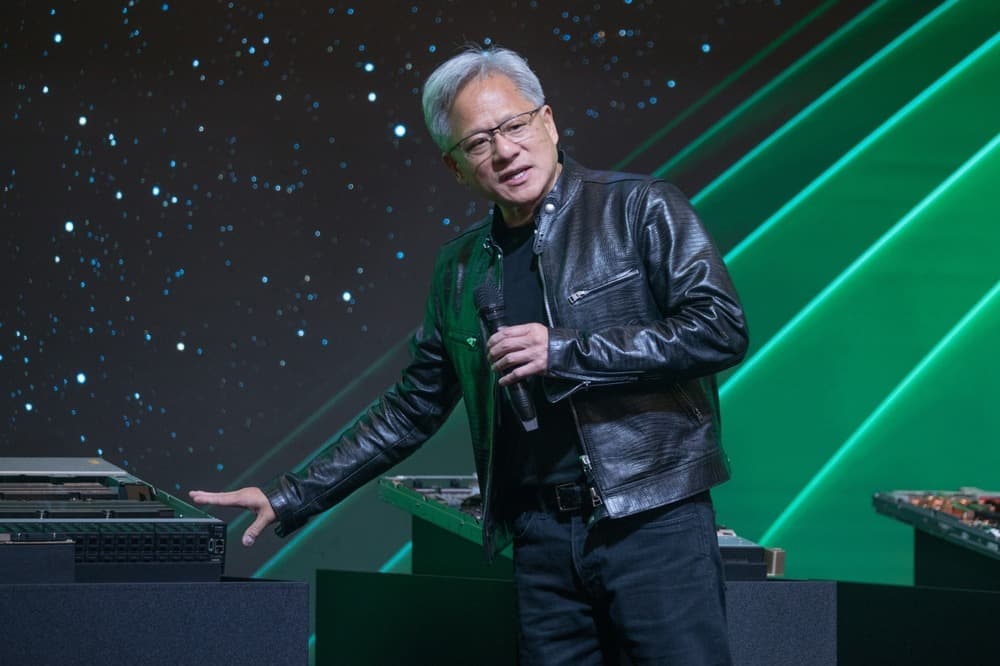
Context from prior statements. Huang has been consistent. In a 2024 Stanford Graduate School of Business talk, he said coding should not be the primary skill taught to children, arguing that AI will make programming accessible to all. [Stanford GSB 2024] At Computex 2025, he demonstrated NVIDIA's AI writing CUDA kernels for Blackwell GPUs, claiming the AI-generated kernels outperformed handwritten ones by 12% on average. [NVIDIA Computex 2025 keynote]
What 'zero coding' actually means. Huang's framework treats coding as an implementation detail. The 'purpose' is solving undiscovered problems in AI, graphics, and scientific computing; the 'task' is translating those solutions into machine instructions. NVIDIA already uses AI to optimize GPU assembly code, and its CUDA Neural Networks project — detailed in a 2025 arXiv paper — can generate GPU kernels from natural-language descriptions with 94% correctness on standard benchmarks. [arXiv 2025]
The contrarian view. Critics argue that removing human coding from chip design and kernel optimization removes the intuition that drives hardware-software co-design. NVIDIA's own success came from engineers who hand-tuned CUDA libraries. If AI takes over, the feedback loop between human understanding of the architecture and the code may weaken. Huang's bet is that AI can internalize that intuition faster than humans can.
Key Takeaways
- Jensen Huang wants zero coding by NVIDIA engineers, framing it as a task to minimize.
- The bet is AI-generated code will match human output for performance-critical software.
What to watch

NVIDIA's Q4 2026 earnings call in February 2027 — listen for any disclosure of the percentage of CUDA kernels now generated by AI. If the number crosses 50%, Huang's vision is becoming operational reality.