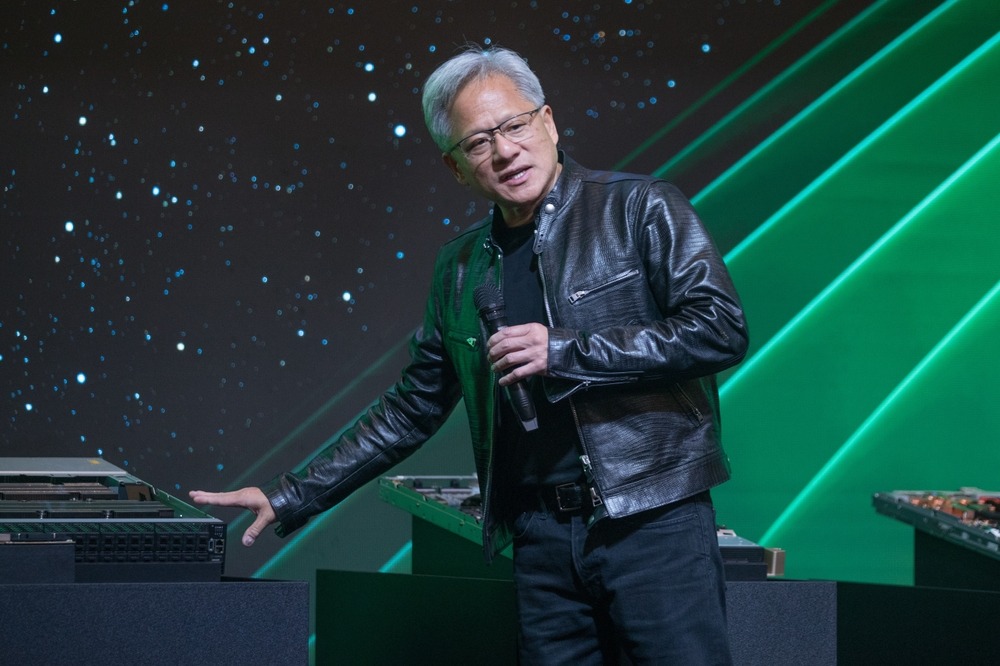
Jensen Huang said orbital datacenters are solvable because 'there's a lot of space in space.' The Nvidia CEO addressed the cooling challenge in vacuum: without convection, heat must radiate away, requiring large surface areas.
Key facts
- Jensen Huang: 'there's a lot of space in space'
- Orbital solar irradiance: ~1,360 W/m² continuous
- Cooling in vacuum requires radiative panels only
- No convection or conduction in space
- Starlink-sized satellite could host 100+ m² radiator
Jensen Huang, CEO of Nvidia, offered a characteristically terse solution to the thermal problem of orbital datacenters: 'there's a lot of space in space.' The remark, shared on X by @rohanpaul_ai, highlights a structural tension in space-based AI compute. Space offers near-infinite solar energy and no atmospheric attenuation, but cooling in vacuum is fundamentally different from Earth. Without convection or conduction, waste heat must be radiated as infrared photons. That requires large radiator panels—but as Huang notes, surface area is not scarce in orbit.
The thermal physics of vacuum
![Thermal Management for Space Data Centers [Strategy]](https://substackcdn.com/image/fetch/$s_!h9ix!,w_1200,h_675,c_fill,f_jpg,q_auto:good,fl_progressive:steep,g_auto/https://substack-post-media.s3.amazonaws.com/public/images/2d8dd8fe-e095-47f2-8e93-1996f51e3a89_2752x1536.png)
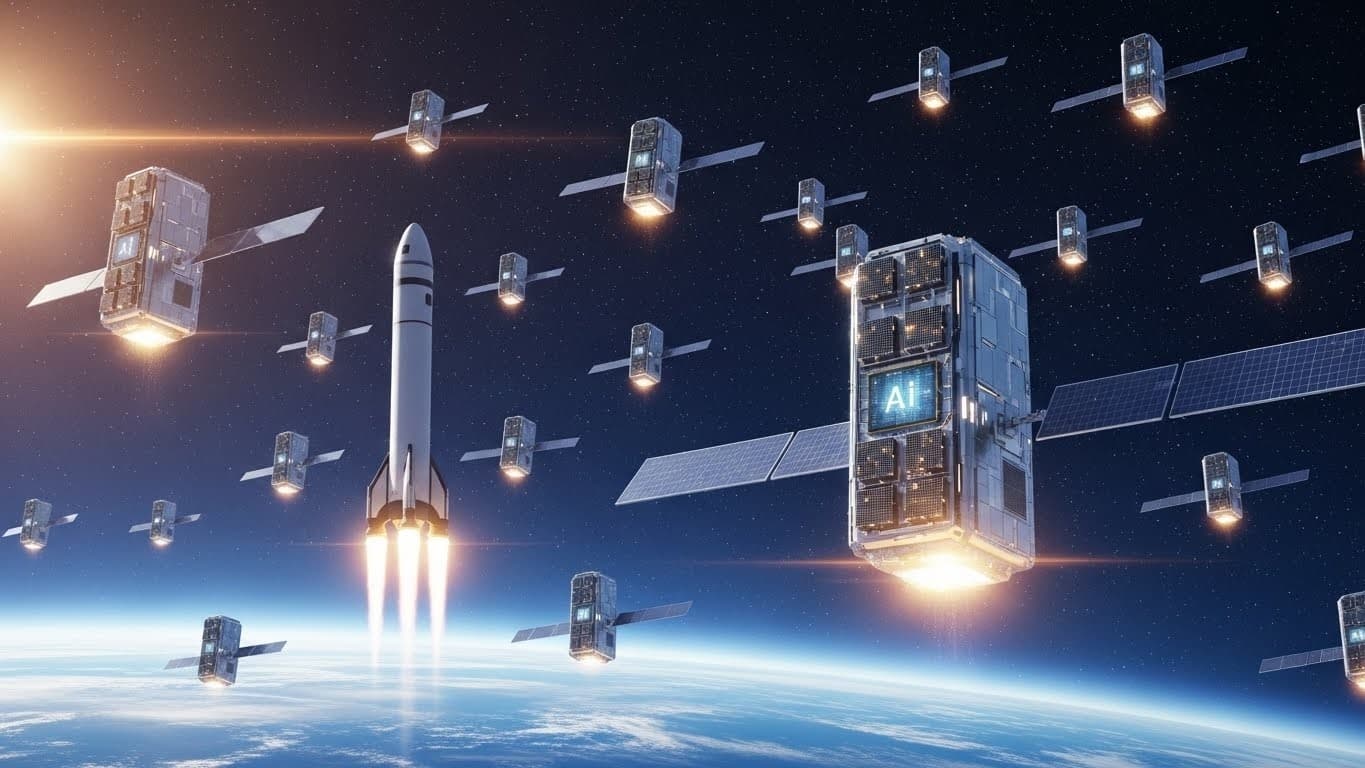
On Earth, datacenters rely on air or liquid cooling to move heat away from GPUs. In space, the only heat transfer mechanism is radiation, governed by the Stefan-Boltzmann law: power radiated scales as surface area times temperature to the fourth power. To reject megawatts of heat from a cluster of H100 or B200 GPUs, a radiator array tens of meters across would be needed. However, as Huang implies, orbital real estate is effectively free compared to terrestrial constraints. A single Starlink-sized satellite could host a radiator film hundreds of square meters, deployed like a solar sail.
Energy abundance in orbit
Orbital solar panels receive ~1,360 W/m² of sunlight continuously (outside Earth's shadow), roughly 7x the average terrestrial irradiance after atmospheric losses. Combined with 24/7 operation (no night, no weather), an orbital datacenter could run GPUs at full throttle without curtailment. The bottleneck shifts from energy cost to thermal management—exactly the problem Huang says is solvable with 'space.'
Unique take: The real bet is on in-space manufacturing

What the AP wire would miss: Huang's quip is not about physics but economics. The reason orbital datacenters remain speculative is not cooling—it's launch cost and assembly. Radiator panels large enough for a GPU cluster would need to be folded for launch and self-deployed in orbit. That requires in-space manufacturing or ultra-compact deployment mechanisms. Huang's confidence implies Nvidia sees a path to cheap, frequent launch (Starship-class) and automated orbital construction within the next decade. The cooling problem is a red herring; the real unlock is logistics.
What to watch
Watch for Nvidia's next GPU architecture (Rubin, expected 2026) and whether it includes radiation-hardened variants or thermal specs targeting vacuum operation. Also track Starship launch cadence—if SpaceX reaches weekly orbital launches by 2027, orbital datacenter pilot projects become plausible.