What Happened
Future AGI has open-sourced a platform designed to address one of the most persistent and dangerous problems in production AI systems: silent hallucination. The announcement, made via a tweet from @hasantoxr, states: "Goodbye agents that silently hallucinate in production. Future AGI just open-sourced a full platform that makes AI agents s…"
While the tweet is truncated, the core message is clear: the company has released a complete platform (not just a library or a model) that targets the specific failure mode where AI agents generate confident but incorrect outputs without any warning signals.
What the Platform Does
Silent hallucination is particularly pernicious in agentic systems because agents often operate autonomously, executing actions based on their internal reasoning. When an agent hallucinates—say, fabricating a database record, misinterpreting an API response, or inventing a function call—it can corrupt downstream systems without any human noticing until it's too late.
Future AGI's platform appears to provide:
- Runtime monitoring: Observing agent outputs in real time for signs of hallucination
- Intervention mechanisms: Automatically flagging or correcting hallucinated outputs before they reach production systems
- Open-source transparency: The full platform code is available for inspection, modification, and self-hosting
Why This Matters
Hallucination detection has been a hot topic since the early days of large language models, but most solutions have focused on:
- Post-hoc detection: Analyzing logs after the fact
- Prompt engineering: Trying to reduce hallucination through better instructions
- Fine-tuning: Training models to be more factual
What makes this announcement notable is the focus on production agentic systems—the specific context where hallucination causes the most damage. An agent that hallucinates while writing code, managing a database, or controlling an API can cause real-world harm. A detection platform that operates at runtime, rather than after the fact, addresses a genuine gap in the current tooling landscape.
Context

This follows a broader trend of open-source tooling for AI safety and reliability. Several other projects have tackled related problems:
- Guardrails AI: Provides input/output guardrails for LLM applications
- LangSmith: Offers tracing and evaluation for LLM chains
- Weights & Biases Prompts: Monitors prompt performance
Future AGI's approach appears distinct in its focus on agentic systems specifically, rather than general LLM applications.
gentic.news Analysis
Silent hallucination in production agents is arguably the single biggest barrier to deploying autonomous AI systems in enterprise environments. Companies are willing to tolerate occasional errors in chatbots, but when an agent autonomously executes actions—especially those with financial or operational consequences—even a 1% hallucination rate can be catastrophic.
Future AGI's open-source move is strategically smart for two reasons. First, it builds trust: enterprises are far more likely to adopt a solution they can inspect and self-host. Second, it creates a community around the problem, potentially accelerating development of detection techniques far faster than a closed-source product could.
The open-source nature also means that the platform's effectiveness will be rapidly tested by the community. If it works well, it could become the de facto standard for agent hallucination detection, much like how Guardrails AI became the default for LLM input/output validation.
However, the announcement is light on technical specifics. We don't know:
- What detection techniques the platform uses (embedding similarity? confidence scoring? consistency checks?)
- Benchmark results against other hallucination detection methods
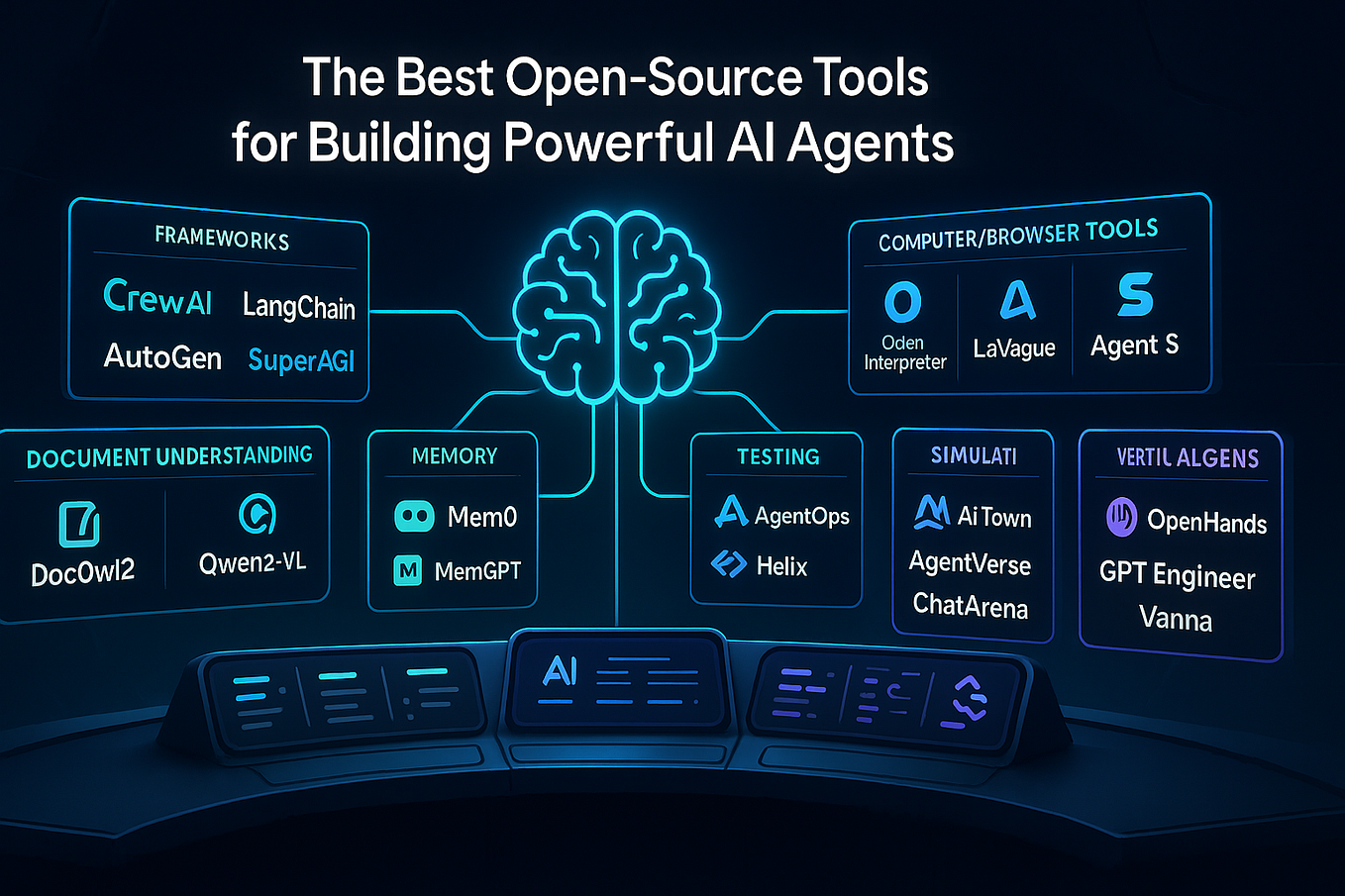
- Supported agent frameworks (LangChain? AutoGPT? Custom?)
- Latency overhead for real-time monitoring
These details will be critical for practitioners evaluating whether to integrate this platform into their production stacks. Without benchmarks or technical documentation, the announcement is more of a promise than a proven solution.
Frequently Asked Questions
What is silent hallucination in AI agents?
Silent hallucination occurs when an AI agent produces incorrect or fabricated outputs without any warning signals, such as low confidence scores or error messages. Unlike obvious errors, silent hallucinations appear plausible and can corrupt downstream systems before being detected.
How does Future AGI's platform detect hallucinations?
The specific detection techniques have not been detailed in the announcement. Based on common approaches in the field, it likely uses a combination of embedding similarity checks, confidence scoring, and consistency validation against known facts or API responses.
Is the platform free to use?
Yes, the platform has been open-sourced, meaning the code is freely available for use, modification, and self-hosting. However, future AGI may offer commercial support or managed hosting services in the future.
Which agent frameworks does the platform support?
This has not been specified in the announcement. Practitioners should check the GitHub repository for supported integrations, which may include LangChain, AutoGPT, CrewAI, or custom agent implementations.