In a recent discussion on the All-In Podcast, venture capitalist Chamath Palihapitiya presented a provocative thesis: the rise of AI-powered coding agents is systematically dismantling the concept of the "10x engineer." His argument, distilled from a clip shared by Rohan Pandey, draws a direct parallel to how artificial intelligence solved the game of chess, removing mystery and intuition to reveal a landscape of optimal, calculable moves.
Key Takeaways
- Chamath Palihapitiya argues AI coding agents are eliminating the '10x engineer' by making the most efficient code paths obvious to all, similar to how AI solved chess.
- This reduces technical differentiation and shifts the basis of engineering value.
What Happened

Palihapitiya's core claim is that AI agents in software development are performing a similar function to chess engines like Stockfish. They are making the most efficient "code paths"—the optimal sequences of logic and structure to solve a programming problem—objectively obvious and accessible to every developer.
"I'm going to say something controversial: I don't think developers anymore have good judgment. Developers get to the answer, or they don't get to the answer, and that's what agents have done. The 10x engineer used to have better judgment than the 1x engineer, but by making everybody a 10x engineer, you're taking judgment away. You're taking code paths that are now obvious and making them available to everybody."
He elaborates with the chess analogy: "It's effectively like what happened in chess: an AI created a solver so everybody understood the most efficient path in every single spot to do the most EV-positive (expected value positive) thing. Coding is very similar in that way; you can reduce it and view it very reductively, so there is no differentiation in code."
Context: The Evolving Value of Engineering Judgment
The "10x engineer" is a longstanding, if debated, concept in Silicon Valley folklore. It refers to a developer whose productivity, output quality, and technical judgment are an order of magnitude greater than an average peer. This superiority was often attributed not just to typing speed, but to deep, intuitive judgment—the ability to see cleaner architectures, foresee scaling issues, and choose the most elegant and maintainable solution paths that others might miss.
Palihapitiya's argument suggests that AI coding assistants (like GitHub Copilot, Cursor, or advanced agentic systems like Devin from Cognition AI) are commoditizing this high-level judgment. When an AI can instantly suggest the most efficient, secure, and performant way to implement a feature, the unique value of an individual engineer's experience-based insight diminishes. The process becomes, in his words, "reductive."
The Immediate Implication: A Shift in Developer Value
If this thesis holds, the foundational skills that distinguish elite engineers are shifting. The value is moving away from knowing or intuiting the single best code path and toward other dimensions:
- Problem Definition & Product Sense: The ability to correctly frame business problems, ask the right questions, and understand what to build in the first place.
- System Design & Integration: While an agent might write a perfect microservice, architecting how dozens of services interact in a scalable, resilient system remains a complex, high-judgment task.
- Working with Ambiguity: Translating vague, non-technical requirements into a spec an AI can execute.
- Validation & Testing: Ensuring the "obvious" code path suggested by the AI is correct for the specific, messy context of a production environment.
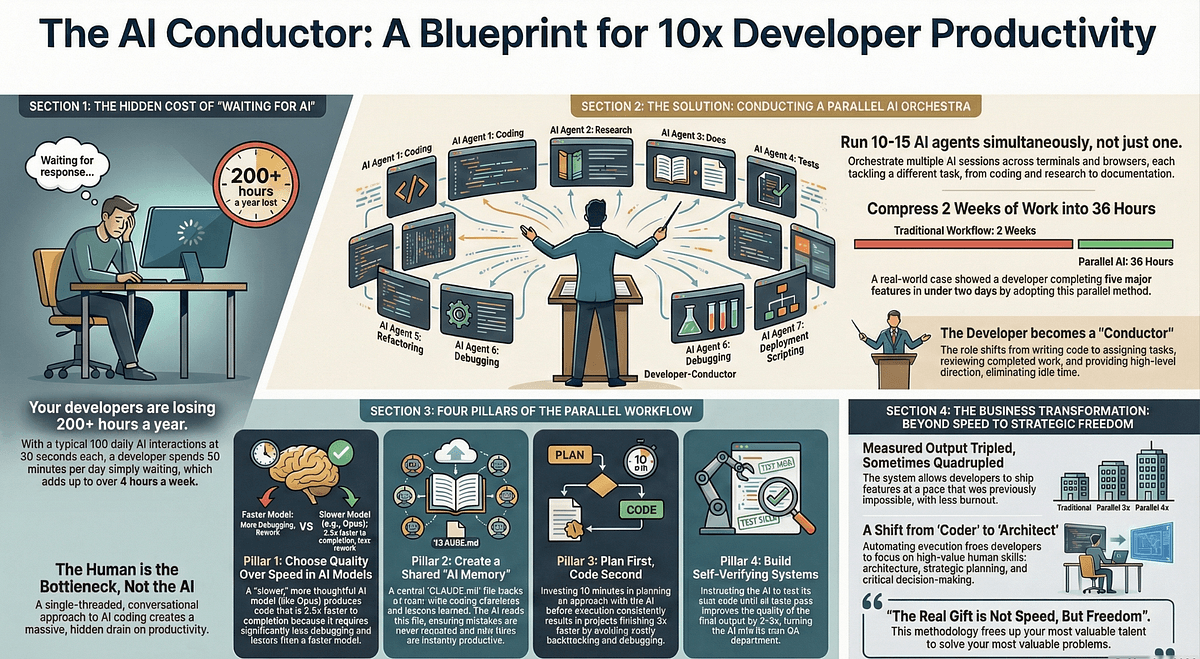
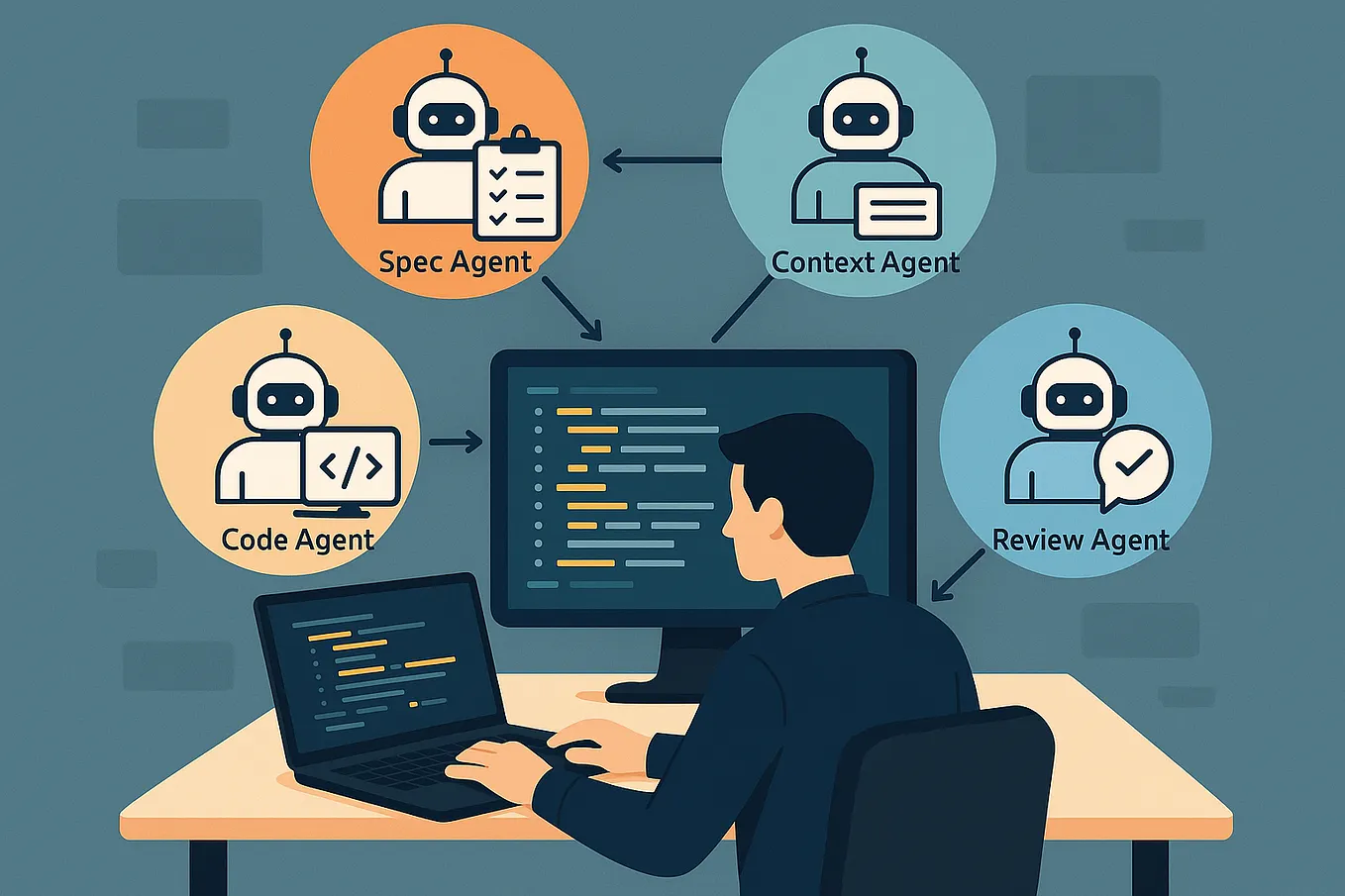
In this new paradigm, the developer's role becomes less about being the sole source of technical brilliance and more about being a conductor and verifier of AI-generated solutions.
gentic.news Analysis
Palihapitiya's commentary is less a report on a specific product launch and more an insightful observation of a macro-trend that has been accelerating throughout 2025 and into 2026. It directly connects to the rapid maturation of agentic AI systems we've been tracking. Earlier this year, our coverage of Cognition AI's Devin highlighted its ability to autonomously tackle entire software projects on Upwork, a tangible step toward the "reductive" coding process Chamath describes. Similarly, the emergence of open-source coding agents and the deepening integration of LLMs into IDEs have steadily democratized access to high-quality code generation.
This trend also reframes the competitive landscape. It creates pressure on platforms like GitHub (Microsoft) and Replit to build the most context-aware, efficient agents, as these tools become the primary interface for development. Conversely, it raises the stakes for companies whose value proposition is uniquely human-centric problem-solving or system-level innovation.
However, the "end of judgment" claim may be premature. Current AI agents, while impressive, still struggle with novel, multi-step problems requiring deep, out-of-distribution reasoning—the very domain where 10x judgment shines. They are exceptional pattern matchers and synthesizers of known solutions. The differentiation may not disappear but migrate: from judging how to code a solution to judging which of several AI-proposed solutions is best, or knowing when the AI's "obvious" path is wrong for subtle, context-specific reasons. The elite engineer of 2026 might be the one with the 10x judgment in prompting, validating, and integrating AI output.
Frequently Asked Questions
What is a "10x engineer"?
A "10x engineer" is a theoretical concept describing a software developer whose productivity and impact are perceived to be ten times greater than an average peer. This is attributed not just to speed, but to superior technical judgment, architectural foresight, and the ability to write cleaner, more maintainable, and more scalable code.
How are AI coding agents like ChatGPT or GitHub Copilot changing software development?
AI coding agents act as powerful autocomplete and suggestion systems that can generate whole functions, debug code, and explain complex logic. They reduce boilerplate work, help developers discover optimal syntax or libraries faster, and can teach less experienced coders. They are making standard programming tasks and common solutions more accessible and uniform.
Does this mean software engineers will become obsolete?
No, but their role is evolving. The demand is shifting from purely writing syntax to higher-level skills: defining problems, designing systems, integrating AI-generated code safely, and managing complex projects. Engineers will spend less time on implementation details and more on architecture, review, and directing AI tools.
Is coding now "solved" like chess?
Not exactly. While AI has "solved" chess in the sense that an engine can always find the objectively best move from any given position, software engineering is an open-ended, creative field with ill-defined goals and constantly changing constraints. AI has solved many common sub-problems of coding, but the overall task of understanding vague requirements, designing novel systems, and making business trade-offs remains a profoundly human-led challenge.