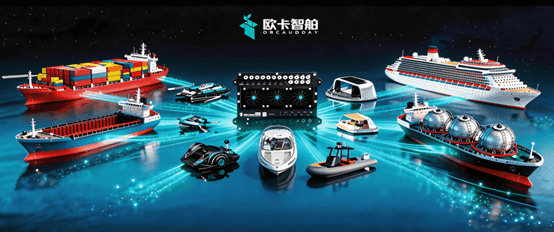
Chinese autonomous boat developer ORCAUBOAT has secured a landmark $27.4 million in Series B+ financing, marking the largest single investment round ever recorded in China's water-surface autonomous driving industry. This substantial capital injection, reported by Pandaily, represents a significant vote of confidence in maritime autonomy technology and positions ORCAUBOAT as a clear frontrunner in the rapidly evolving sector.
The funding round arrives as ORCAUBOAT's core product, the ORCA Autonomous Perception and Avoidance System (ORCA-APAS), demonstrates impressive global traction. The system has already been deployed across 12 countries, accumulating a staggering operational record of over 750,000 kilometers of unmanned navigation. This real-world mileage provides a crucial dataset that is likely accelerating the system's learning algorithms and reliability.
The ORCA-APAS System: Navigating Complex Waters
While specific technical details of the ORCA-APAS system are not elaborated in the source, its deployment scale suggests a sophisticated integration of sensors, computer vision, and AI decision-making protocols. Autonomous surface vessels (ASVs) must contend with a uniquely challenging environment: variable weather, unpredictable currents, complex maritime traffic rules, and the need for long-range obstacle detection. Successfully navigating 750,000 kilometers indicates that ORCAUBOAT's AI has achieved a high degree of proficiency in processing this chaotic sensory input and executing safe navigation commands.
The timing of this funding is noteworthy, coming shortly after the publication of SkillsBench on February 16, 2026, which was heralded as the first comprehensive benchmark for evaluating AI agent skills and reliability. While not directly mentioned in the ORCAUBOAT report, the emergence of such standardized evaluation frameworks is critical for the entire autonomous systems industry. For a company like ORCAUBOAT, demonstrable, benchmarked reliability is paramount for regulatory approval and commercial customer trust. The company's massive real-world operational data could serve as a powerful validation tool against such benchmarks.
Implications for Global Shipping and Logistics
The successful deployment across 12 countries points to diverse applications, likely including inland waterway logistics, port operations, hydrographic surveying, and environmental monitoring. Autonomous boats promise to revolutionize these sectors by reducing operational costs, enhancing safety by removing crews from dangerous environments, and optimizing routes for fuel efficiency. This record funding enables ORCAUBOAT to scale manufacturing, deepen R&D, and pursue more ambitious pilot projects, potentially bringing fully autonomous commercial shipping closer to reality.
China's significant investment in this area also highlights a strategic push to lead in the future of logistics and maritime technology. As global trade continues to rely heavily on maritime transport, autonomy offers a path to greater efficiency and resilience in supply chains.
The Road Ahead: Challenges and Opportunities
Despite the progress, the path forward involves significant hurdles. Maritime regulations are internationally complex and vary by region, requiring careful navigation. Public and regulatory acceptance of large, fully unmanned vessels in busy shipping lanes will take time and relentless proof of safety. Furthermore, the AI systems must be robust against adversarial conditions like sensor spoofing or extreme weather.
ORCAUBOAT's new capital provides the resources to address these challenges head-on. The funding can be directed toward not only technological refinement but also crucial efforts in standardization, regulatory engagement, and public demonstration. The company's extensive operational history is its strongest asset in these endeavors.
This landmark round sets a new financial benchmark for the industry, signaling to other startups and investors that maritime autonomy is a serious and fundable frontier of AI application. It underscores a broader trend of AI moving beyond terrestrial and aerial vehicles to conquer the final frontier of routine transportation: the world's waterways.
Source: Pandaily