What Happened
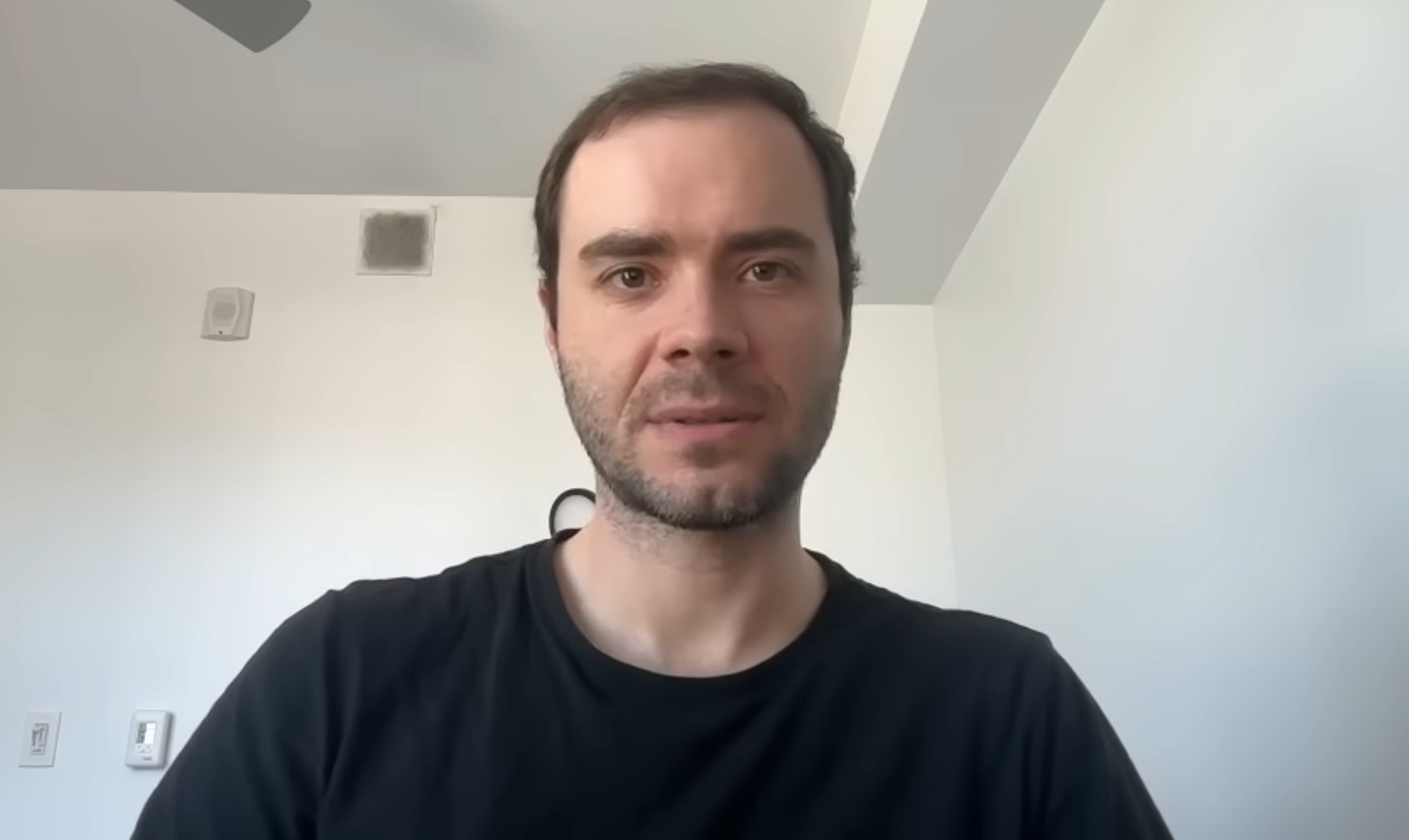
On May 31, 2025, AI developer Rohan Paul shared a brief observation about Clawdbot creator Peter Steinberger (@steipete). According to Paul, Steinberger had a moment of realization while watching his AI agent, Clawdbot, perform a complex, multi-step task autonomously.
The agent was presented with an Opus audio file (.opus), a format it reportedly lacked native support for. Without explicit step-by-step instruction, the agent:
- Identified the file type as Opus audio.
- Executed a local conversion using FFmpeg, a command-line multimedia framework, on a Mac.
- Searched for and used an OpenAI API key to authenticate a request.
- Made a
curlcall to an OpenAI endpoint (likely the Whisper or Audio API) to transcribe the converted audio file into text.
The source material is a social media post, not a technical paper or product announcement. It describes a single, observed instance of agentic behavior. No performance benchmarks, failure rates, or architectural details are provided.
Context: Clawdbot and AI Agents
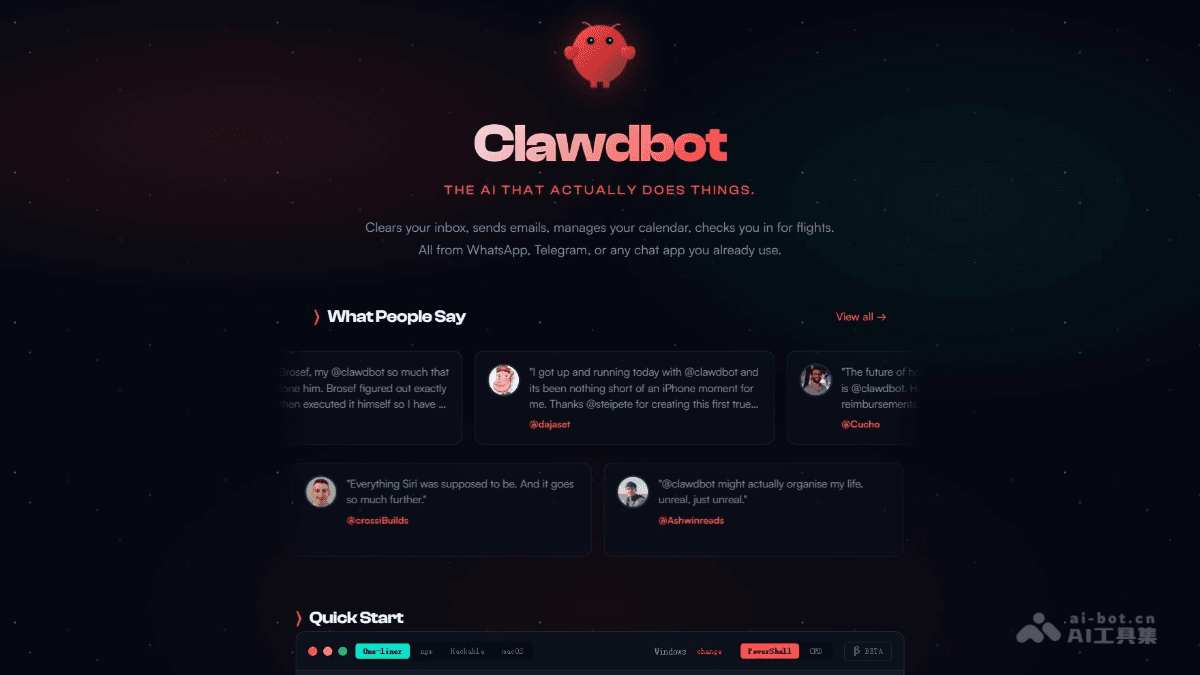
Clawdbot is an AI agent project by independent developer Peter Steinberger. While not a widely documented commercial product, it represents the growing category of AI agents—systems that can perceive their environment, make decisions, and execute actions using tools (like code interpreters, APIs, or CLI commands) to achieve a goal.
The specific task demonstrated—audio file processing—is a common but non-trivial challenge. It requires:
- File type recognition (MIME type or extension analysis).
- Tool selection (knowing FFmpeg can convert audio formats).
- Tool execution (constructing the correct FFmpeg command).
- API orchestration (finding credentials, formatting a request to a third-party service).
This observed workflow moves beyond simple single-API calls and into the realm of sequential tool use, a key research focus for advancing agent capabilities.
gentic.news Analysis
This observation, while anecdotal, fits directly into the accelerating trend of practical AI agent deployment that gentic.news has been tracking. It follows a pattern of incremental but significant demonstrations from independent developers and research labs. For instance, our recent coverage of OpenAI's o1 model family highlighted its improved reasoning and tool-use capabilities for coding tasks. While o1 focuses on chain-of-thought reasoning for code, Clawdbot's demonstration applies similar sequential decision-making to a concrete system-level task: file processing and API integration.
The agent's ability to leverage a local tool (FFmpeg) before a cloud API (OpenAI) is noteworthy. It suggests a design pattern where agents can offload processing locally when possible, potentially reducing cost, latency, and privacy concerns compared to sending raw data to a cloud service. This aligns with the broader industry movement towards hybrid AI systems, combining powerful local models with selective cloud API calls, a trend we noted in our analysis of Apple's on-device AI strategy.
However, key questions remain unanswered by this single demonstration. What is the underlying model or framework powering Clawdbot's planning? Is it using a ReAct (Reasoning + Acting) pattern, a code-generating LLM, or a specialized agent architecture? How robust is this workflow—does it handle errors in conversion, missing API keys, or network failures? The developer's moment of realization suggests this behavior may have been emergent or unexpectedly robust, pointing to the rapid progress in base LLMs' ability to decompose and execute multi-modal tasks.
For practitioners, the takeaway is that the building blocks for capable, generalist agents are maturing quickly. The challenge is shifting from "can an LLM use a tool?" to "can we build reliable, secure systems where LLMs orchestrate multiple tools over extended sequences?" This demonstration is a data point suggesting the answer is increasingly "yes."
Frequently Asked Questions
What is Clawdbot?
Clawdbot is an AI agent project created by independent developer Peter Steinberger. It appears to be an experimental system designed to perform tasks by autonomously using various software tools and APIs, as demonstrated by its ability to process an audio file from conversion to transcription.
How did the AI agent know to use FFmpeg and the OpenAI API?
The agent likely uses a large language model (LLM) as a reasoning engine. When presented with the Opus file and a goal (e.g., "transcribe this audio"), the LLM would plan the necessary steps based on its training data, which includes knowledge of FFmpeg for media conversion and OpenAI's Whisper API for transcription. It then executes these steps by generating and running the appropriate code or shell commands.
Is this type of AI agent available to use?
Clawdbot itself appears to be a personal or developmental project by its creator and is not a widely released commercial product. However, the capabilities it demonstrates are becoming accessible through various frameworks. Developers can build similar agents using platforms like LangChain, LlamaIndex, or Microsoft's AutoGen, combined with LLMs that have strong tool-use and coding abilities, such as OpenAI's o1-preview, Claude 3.5 Sonnet, or open-source models fine-tuned for function calling.
What are the main challenges with AI agents like this?
The primary challenges are reliability and safety. An agent must correctly decompose a task every time, handle edge cases and errors gracefully, and operate within safe boundaries (e.g., not executing dangerous system commands or leaking API keys). Ensuring robust, predictable performance beyond curated demonstrations is the central engineering hurdle for bringing advanced agents from research to production.
.jpg)