.jpg&w=1920&q=75)
What Happened
A recent social media post from AI researcher @kimmonismus summarizes a key prediction circulating among industry leaders: 2026 is projected as the year AI agents will achieve success across all major domains.
The post references three specific data points:
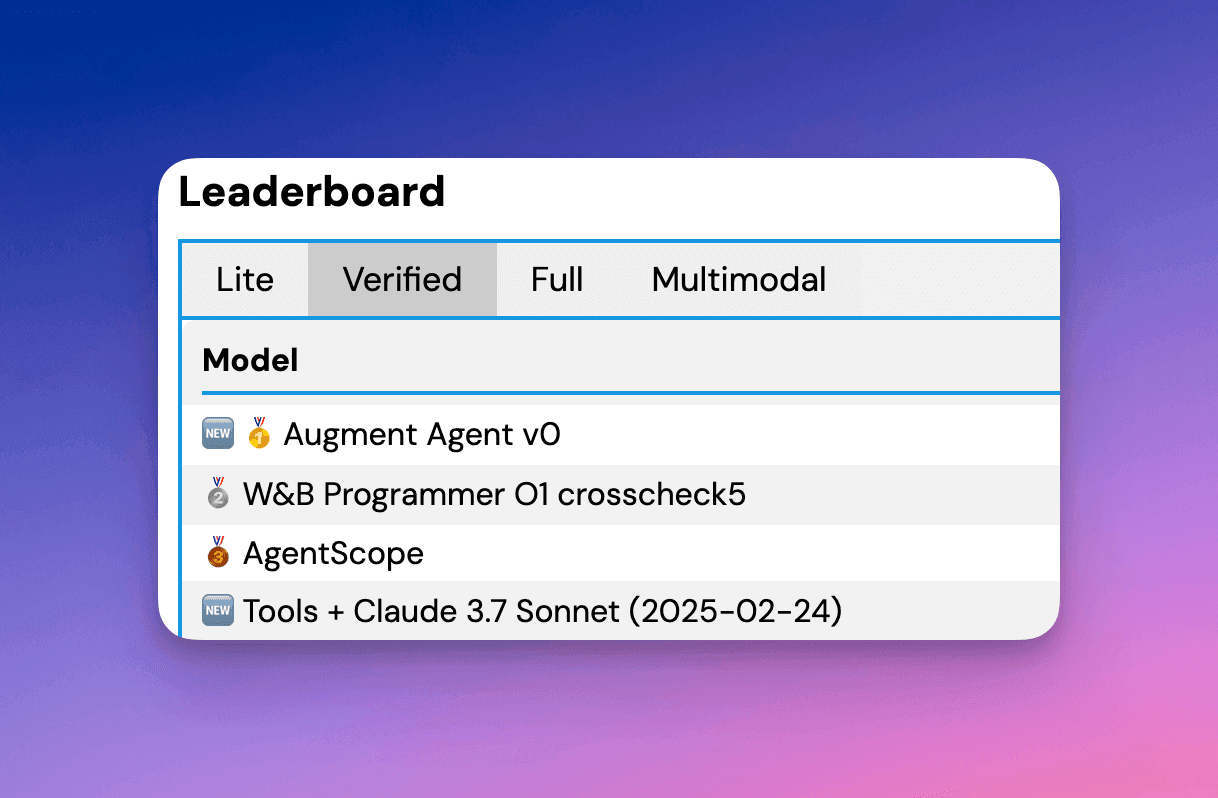
- Agentic coding breakthroughs have already occurred, with Claude Code cited as bringing this capability "into the spotlight."
- Mira Murati (CTO of OpenAI) has stated that AI development "remains on a path of exponential development."
- Jensen Huang (CEO of NVIDIA) has framed the current AI progression as moving from early generative AI to "reasoning with o1" (referencing OpenAI's o1 model) and now entering "the era of Agents."
The core argument presented is that the initial domain-specific breakthrough in coding agents signals that other domains are "poised for a breakthrough" on a similar timeline.
Context
This prediction builds on several observable trends:
- Coding as a leading indicator: The development of capable coding assistants (GitHub Copilot, Claude Code, Cursor) has demonstrated that AI can successfully operate as an agent within a well-defined, tool-rich environment. The logic follows that similar agentic capabilities should transfer to other structured domains.
- The reasoning frontier: The mention of OpenAI's o1 model highlights the industry's focus on moving beyond next-token prediction toward systems with more deliberate, chain-of-thought reasoning capabilities—a prerequisite for reliable agentic behavior.
- Infrastructure readiness: NVIDIA's positioning of this shift aligns with the hardware and software stack (like the NVIDIA NIM microservices and CUDA libraries) being optimized to support the low-latency, multi-step execution required by agents.
No specific technical roadmap, benchmarks, or research papers are cited in the source to substantiate the 2026 prediction. The statement appears to be a synthesis of high-level industry sentiment rather than a detailed technical forecast.