What Happened
A new tool called GitAgent has launched, positioning itself as "Docker for AI agents." Its core proposition is to solve the architectural fragmentation in AI agent development by providing a standardized runtime layer. Currently, developers building autonomous systems must commit to a single ecosystem—such as LangChain, AutoGen, CrewAI, OpenAI Assistants, or Claude Code—each with proprietary methods for defining agent logic, memory persistence, and tool integration. GitAgent aims to abstract these framework-specific details, allowing developers to write an agent once and deploy it across multiple frameworks.
Context: The Fragmentation Problem
The launch comes at a time when the AI agent landscape is both expanding and splintering. Major players have recently doubled down on their own agentic ecosystems. On the same day as GitAgent's announcement, OpenAI launched its own AI agent builder called "Frontier." Anthropic's Claude Code, which uses the Model Context Protocol (MCP), represents another distinct approach. This creates a significant lock-in risk for developers; choosing a framework like LangChain for a project can make it difficult to migrate to AutoGen or leverage Claude Code's capabilities later without a complete rewrite.
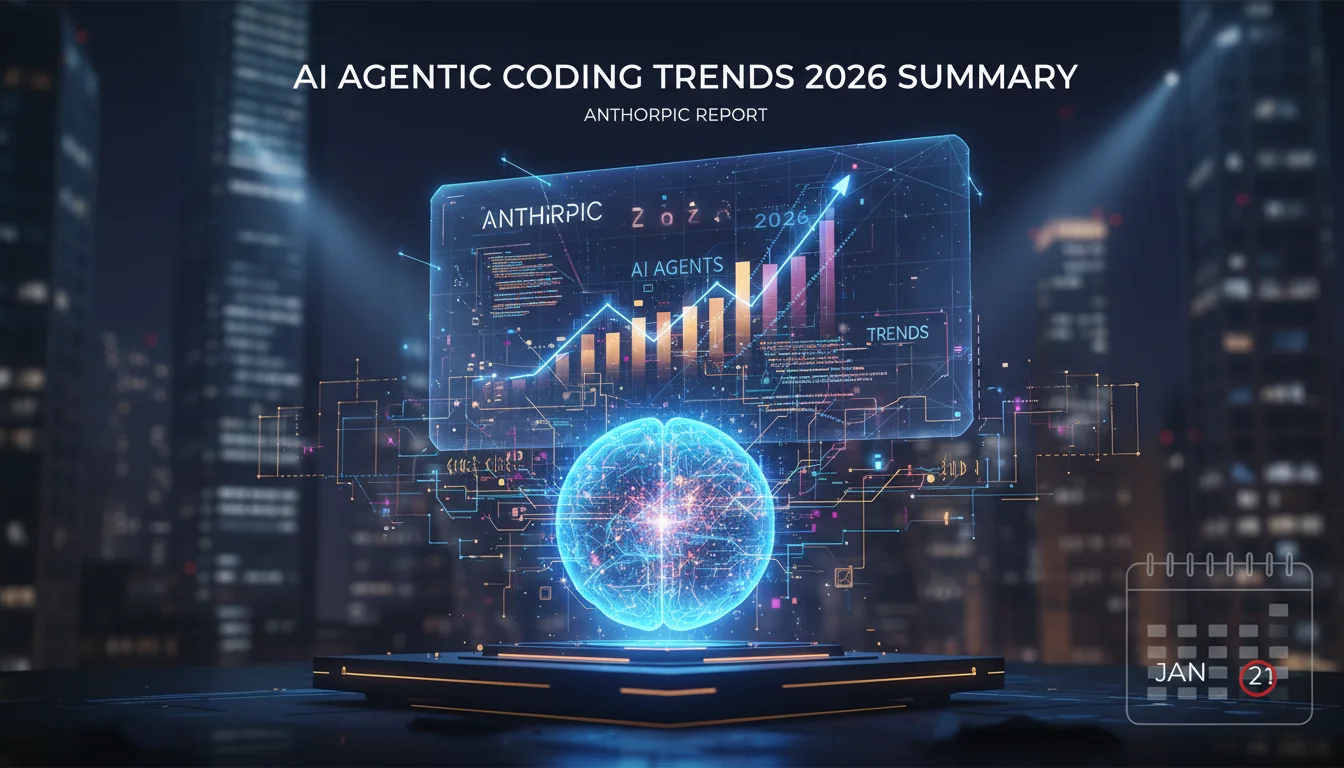
Industry forecasts, including predictions that 2026 will be a breakthrough year for AI agents, highlight the urgency for interoperability tools. As agents cross critical reliability thresholds and begin transforming programming capabilities, the cost of fragmentation increases.
What GitAgent Does
While the source announcement is light on specific technical implementation details, the analogy to Docker is clear. Docker provides a consistent environment for applications regardless of the underlying host system. Similarly, GitAgent appears to provide a containerized, standardized environment for an AI agent's core logic. This would theoretically allow:
- Write Once, Run Anywhere: Developers define the agent's goals, reasoning process, and tool usage in a framework-agnostic format within a GitAgent container.
- Framework Abstraction: The GitAgent runtime handles the translation of this logic into the API calls and structures required by the target framework (e.g., LangChain's chains, AutoGen's group chats, Claude Code's MCP).
- Portability: An agent could be tested in a local LangChain setup, deployed in a production AutoGen pipeline, or executed via Claude Code, without code changes.
The value proposition is reduced vendor lock-in, easier testing across environments, and the ability to leverage the unique strengths of different frameworks for different parts of a system.
Immediate Implications and Questions
The concept addresses a genuine pain point for developers building serious applications with AI agents. A standardized runtime could accelerate adoption by lowering the initial commitment to any single framework.
However, the announcement raises immediate technical questions that will determine GitAgent's viability:
- Abstraction Depth: Can a single abstraction layer truly capture the nuanced capabilities and architectural paradigms of frameworks as different as LangChain (orchestration-focused) and Claude Code (CLI/tool-integration focused)?
- Performance Overhead: What is the latency and computational cost of the translation layer, especially for complex, multi-turn agent interactions?
- Feature Parity: How does GitAgent handle framework-specific features that have no direct equivalent in others? Will it support the full feature set of each framework or only a lowest-common-denominator subset?
- Adoption Challenge: Success depends on buy-in from the developer communities of the very frameworks it aims to abstract. It must provide compelling value without being seen as an unnecessary intermediary.
GitAgent enters a market that is rapidly consolidating around major platforms. Its success hinges on executing the difficult technical work of creating a robust, performant abstraction—a challenge akin to building a cross-platform game engine where the "platforms" are actively evolving AI frameworks.