A brief social media post from a DeepSeek staff member has broken months of silence from the Chinese AI research lab. The message, posted by user @kimmonismus, states: "A new, much larger (DeepSeek) base model will be released soon," attributing the information directly to DeepSeek staff.
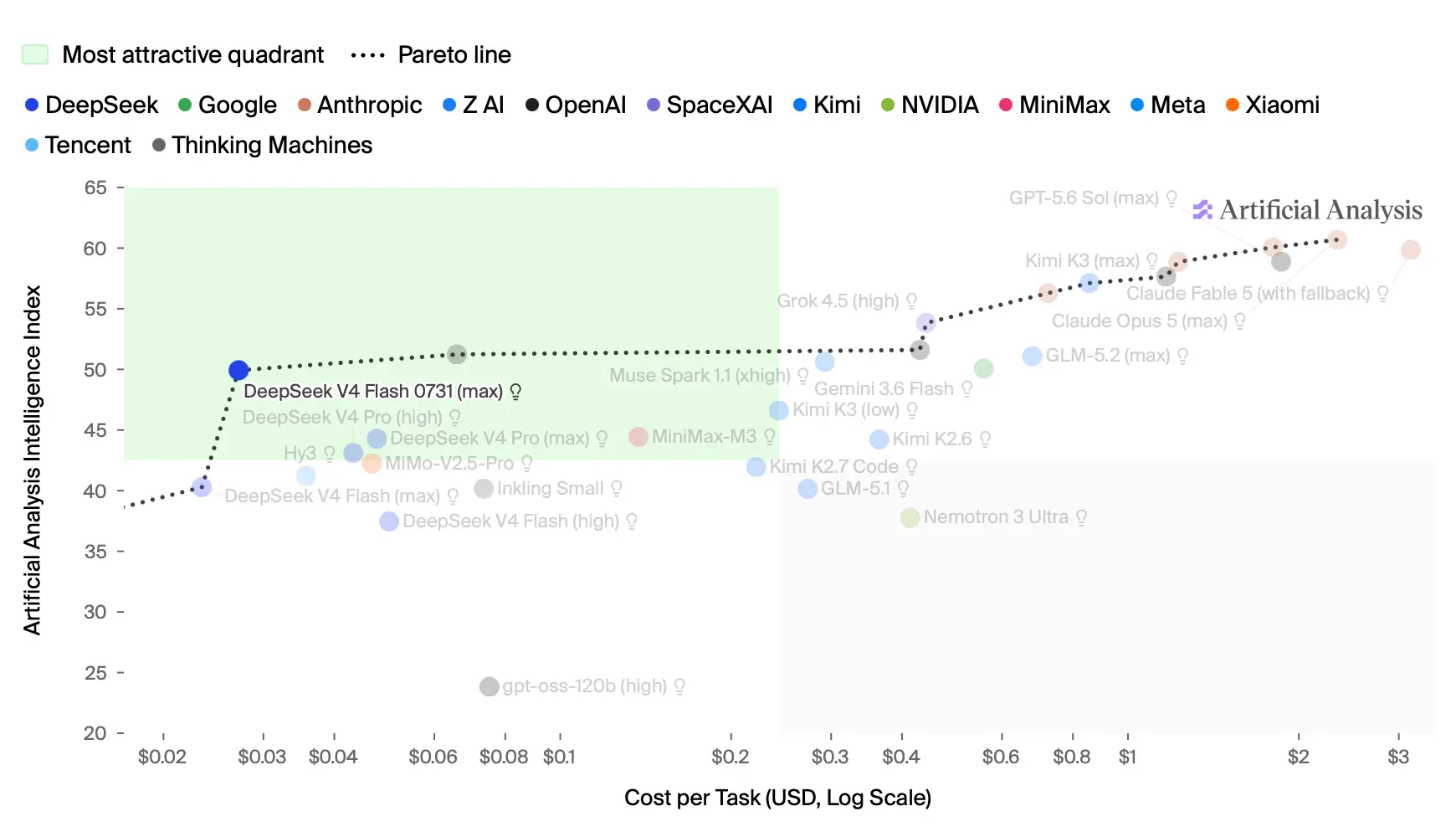
The announcement comes after a period of notable quiet from DeepSeek, which made waves in January 2025 by releasing a model that achieved reasoning capabilities comparable to OpenAI's o1-series at a significantly lower cost. That release positioned DeepSeek as a formidable, cost-efficient competitor in the global AI race.
What Happened
The source is a single-sentence confirmation of an upcoming model release. There are no technical specifications, benchmark results, or release timelines provided. The key adjectives are "new," "much larger," and "soon."
Context: Silence and Hardware Struggles
The post explicitly references the prevailing industry curiosity about DeepSeek's recent silence. This quiet period was punctuated by a significant report, as noted by the source, that DeepSeek attempted to train a model using Huawei's Ascend AI chips but failed.
This reported failure underscores a critical, non-technical challenge in the global AI ecosystem: the continued, strong dependence on NVIDIA's hardware, even for well-funded international players aiming for sovereignty or cost diversification. While other Chinese tech giants have announced progress with domestic hardware, training frontier-scale models remains a formidable engineering hurdle.
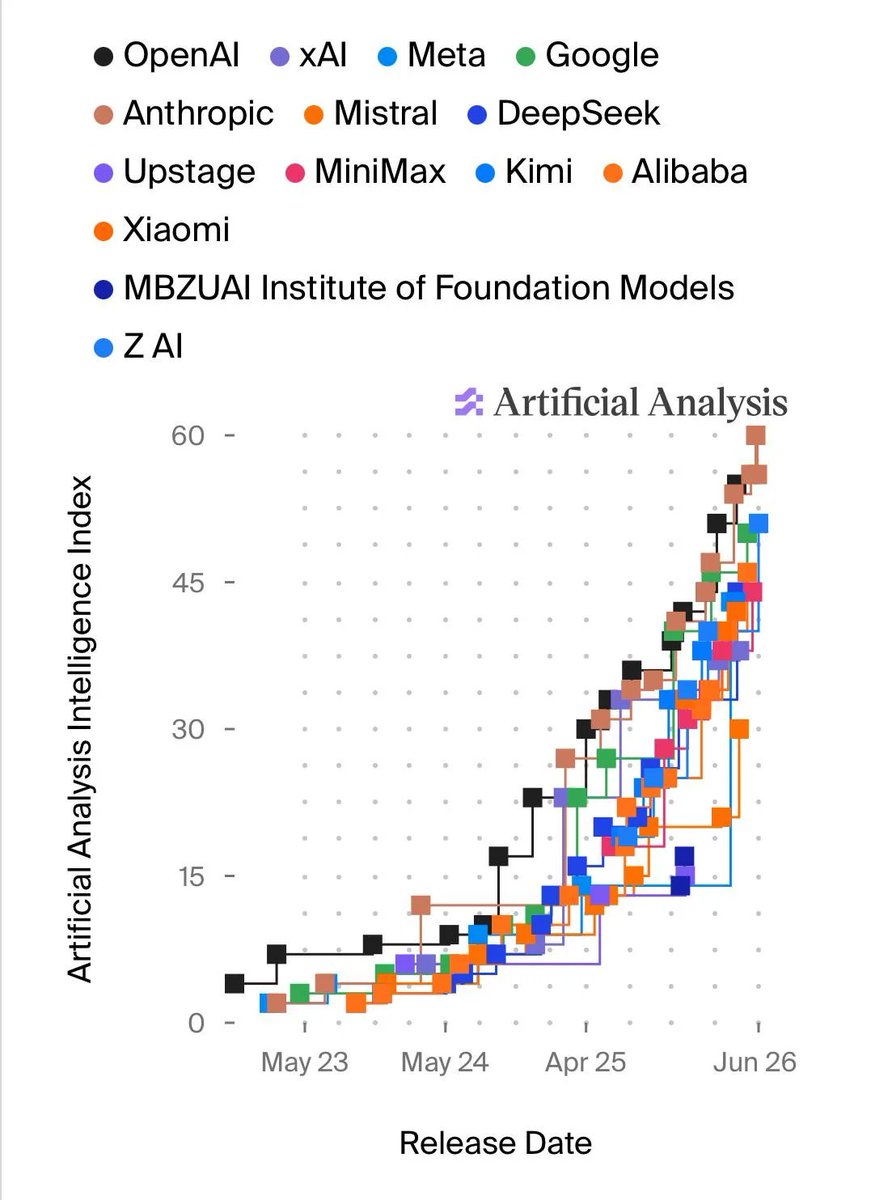
Furthermore, the source points to the competitive landscape where "other Chinese companies have caught up, though often through selective distribution." This is a likely reference to the practice of some Chinese AI firms limiting API access or model availability to specific regions or partners, a contrast to the more open release strategies of labs like DeepSeek in the past.
A Tempered Prediction
Based on this context—the hardware setback, the maturing competitive field, and the high bar set by its own prior work—the source offers a prediction: "DeepSeek won't cause the same shock as it did in January 2025... They will release a good model, but it will fall short of expectations."
The implication is that the market's expectations have been reset by DeepSeek's own previous breakthrough. Matching or incrementally improving upon the January 2025 model may not be enough to replicate the same industry impact, especially if competitors have narrowed the gap.
What We Don't Know
- Scale: "Much larger" could refer to parameter count, training compute (FLOPs), or dataset size.
- Architecture: It is a "base model," suggesting a pre-trained, non-finetuned model, not a specialized agent or reasoning model like their January release.
- Capabilities: No performance hints are given for reasoning, coding, or general knowledge.
- Release Date: "Soon" is undefined.
- Hardware: It is unconfirmed whether this new model was trained on NVIDIA GPUs following the reported Huawei attempt, or on another alternative stack.
gentic.news Analysis
This teaser must be analyzed through two interconnected lenses: technical ambition and geopolitical supply-chain reality. DeepSeek's January 2025 model proved that a lab outside the US Big Tech ecosystem could achieve frontier reasoning capabilities. However, the reported failure on Huawei chips, as referenced in our previous coverage of AI hardware dependencies, highlights the immense difficulty of replicating that success outside the NVIDIA CUDA ecosystem. The training of "much larger" models exponentially increases this infrastructure challenge.
The prediction of a "good but not shocking" model aligns with a pattern we are observing across the industry: exponential gains are giving way to harder-fought incremental improvements. The low-hanging fruit in scaling laws has been picked. For DeepSeek specifically, the shock of January 2025 was a function of both performance and price. To shock again, they would need another paradigm shift—perhaps in efficiency, multimodality, or long-context reasoning—not just a larger base model.
Furthermore, this development sits within the broader trend of Chinese AI consolidation and strategic focus. As we noted in our analysis of the US-China AI chip race, access to compute is becoming the primary bottleneck. DeepSeek's next move will be a key indicator of whether Chinese labs can sustain independent frontier research lines under these constraints, or if they will begin to align more closely with the hardware roadmaps of state-backed champions like Huawei.
Frequently Asked Questions
What did DeepSeek release in January 2025?
In January 2025, DeepSeek released a model that demonstrated chain-of-thought reasoning and problem-solving capabilities comparable to OpenAI's o1-preview series. The key impact was delivering this high-level reasoning at a reportedly significantly lower inference cost, challenging the notion that such performance was exclusive to well-resourced US labs.
Why did DeepSeek reportedly fail to train on Huawei chips?
While no official post-mortem has been published, industry reports suggest the failure was due to the immense engineering challenge of porting and optimizing large-scale model training frameworks from the mature NVIDIA CUDA ecosystem to Huawei's Ascend platform. Training frontier models requires extreme stability and efficiency across thousands of chips, a feat NVIDIA has refined over decades.
What does a "much larger base model" mean?
In this context, a "base model" typically refers to a foundational pre-trained model, like GPT-4 or Llama 3, before it is fine-tuned for specific tasks like chat or reasoning. "Much larger" most likely indicates an increase in total parameters (e.g., from 400B to 1T+) and the amount of training data and compute used. This generally aims to improve the model's fundamental knowledge and capabilities.
How does DeepSeek compare to other Chinese AI companies like Qwen or Baidu?
DeepSeek has carved a niche as a research-focused lab known for pushing raw model capability, often with more open releases (initially). Companies like Alibaba's Qwen or Baidu's ERNIE are often more integrated into commercial product suites and cloud platforms. The "selective distribution" mentioned in the source likely refers to some competitors limiting full model access to enterprise partners or specific regions.